Rabat – Morocco is able to locally manufacture most of the products it usually imports, Minister of Industry and Trade Moulay Hafid Elalamy announced.
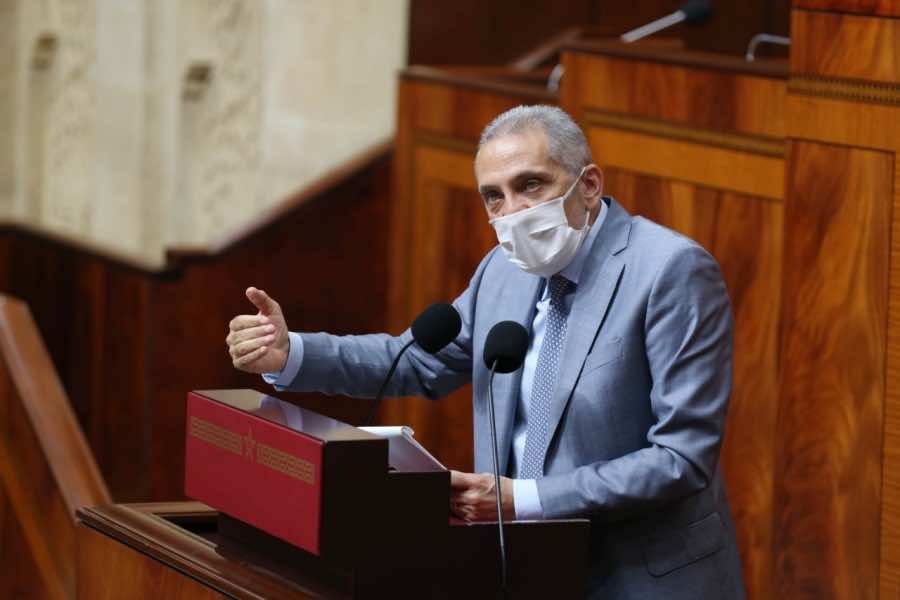
Elalamy made the statement at the House of Representatives during a session to discuss how the COVID-19 pandemic has affected Moroccan industry.
Moroccan factories currently produce 10 million face masks every day, the minister announced.
“To be honest, I have been monitoring several sectors for years, but I never imagined what we were able to achieve during the pandemic,” Elalamy said.
The COVID-19 crisis has proved Moroccans only need to be aware of their skills and competencies, he added.
“I used to have a debate with businessmen who think that the country does not have highly-skilled workers and with people who believe that all imported products will be of better quality,” Elalamy said, before giving examples contradicting such stereotypes.
“The face masks we produce, and which many [Moroccans] criticized, were tested by foreigners who found that they respect universal medical standards.”
The French Army tested Moroccan face masks in their laboratories and verified they are of good quality, Elalamy continued.
“Do we always need foreign approval before we believe in ourselves?” he asked, deploring criticism of locally-produced face masks.
The minister then encouraged the local manufacturing of all products that Morocco can easily make, instead of importing them.
“Weren’t we able to produce face masks five years ago instead of importing them from China?” he rhetorically asked.
At the end of his speech, Elalamy urged Moroccans to believe in their abilities and to work hard.
“The path that we should follow in the next months and years is very important,” he concluded.
Supporting local businesses
As a follow-up, the Ministry of Industry, Trade, and Green and Digital Economy launched a counseling and technical support program for Moroccan micro-, small-, and mid-sized businesses in the industry sector.
The program, announced on May 14, aims to prepare Moroccan companies for the period following the COVID-19 crisis by helping them develop plans to relaunch their activities. It also aims to guide businessmen on how to ensure the safety and security of their employees after they resume activity.
The plan includes six main axes: Preparing crisis management and relaunch plans, managing liquidities and finances, training human resources, securing and developing sales, optimizing production and the supply chain, and digitizing the company.
The National Agency for the Promotion of Small and Mid-Sized Businesses (MarocPME) will cover 80% of the technical support’s cost.
Businesses can apply for the program on MarocPME’s website via the link: http://candidature.marocpme.ma/formulaire-accompagnement-covid19/