Rabat – A Libyan delegation has arrived in Morocco to discuss the situation in Libya amid the lack of a consensual solution to end the conflict and rising tensions in the region.
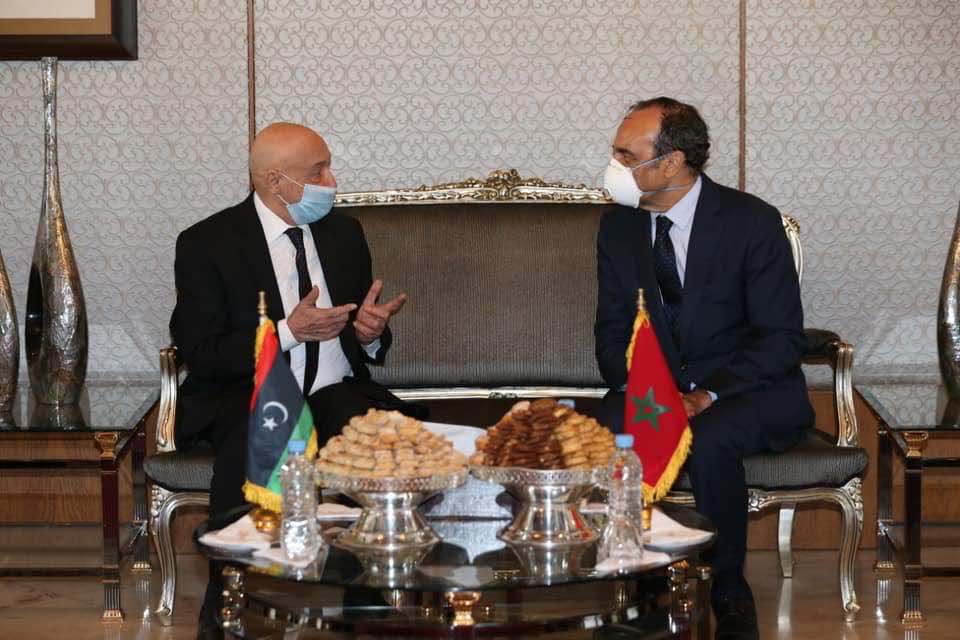
Aguila Saleh Issa, the president of the Libyan House of Representatives, is heading the delegation, which will hold talks on the situation in Libya with Moroccan officials.
The Speaker of Morocco’s House of Representatives, Habib El Malki, and the Libyan Ambassador to Morocco, Abdelmajid Saif Al-Nassr, received Saleh at the Rabat-Sale airport on Sunday, July 26.
Saleh is one of the active politicians involved in talks over the situation in Libya and has called for a political solution to end the crisis. He supports the formation of a Presidential Council and the holding of legislative and presidential elections.
Saleh also supports an Egyptian intervention in the conflict if forces allied with the Government of National Accord (GNA) attack Sirte, a city towards the center of Libya’s Mediterranean coastline. Morocco, however, is opposed to foreign intervention in the conflict.
A high-level visit amid rising regional tensions
Several Libyan officials consider Morocco to be one of the strategic mediators in the Libya crisis, promoting the 2015 Skhirat Agreement as a sound basis to resolve the conflict.
On June 23, Morocco’s Minister of Foreign Affairs Nasser Bourita spoke about the importance of the Skhirat Agreement during an emergency Arab League meeting.
Bourita said the agreement should not be abandoned, especially as there are no other viable alternatives.
“Can the Skhirat Agreement be skipped without an alternative, which would receive at least the same degree of Libyan and international support, knowing that this agreement contains provisions that have become overrun and need to be updated?” he questioned.
Morocco’s government has also condemned foreign intervention and any possible actions that would undermine the status of Libya as a sovereign country, whose legitimate rights should be safeguarded.
The government said that it welcomes any efforts and initiatives to bring Libya’s warring parties closer to dialogue and push for a solution to the crisis.
Morocco’s statements at the emergency Arab League meeting came amid escalation in the region, with vows from several countries to intervene in the Libyan conflict, including Egypt.
On July 20, the Egyptian parliament approved the deployment of armed forces abroad to fight “criminal militias.”
The approval comes amid vows from President Abdel Fattah el-Sisi that his forces could intervene in Libya if conflict nears Egypt’s western border.
Libya’s UN-recognized GNA slammed el-Sisi’s decision to authorize military intervention.
“We completely reject the Egyptian Parliament’s decision based on an illegitimate invitation by those who claim to represent the Libyan tribes under the guise of ‘parliament,'” the GNA said.
Germany also condemned the Egyptian announcement.
Morocco’s stance on foreign intervention
Morocco has long condemned foreign intervention in the Libyan conflict, stressing the pattern of such intervention having an undesirable impact on the ground.
During a virtual UN Security Council virtual meeting on July 8, Morocco’s FM called for realism to address the situation. He expressed his “disappointment” at the current state of affairs and called for “mobilization regarding the continued deterioration of the situation in Libya.”
He said foreign intervention is not “helping, in any way, the Libyan parties to rise above narrow interests and to face the challenge of forging together a better future for Libya.”