
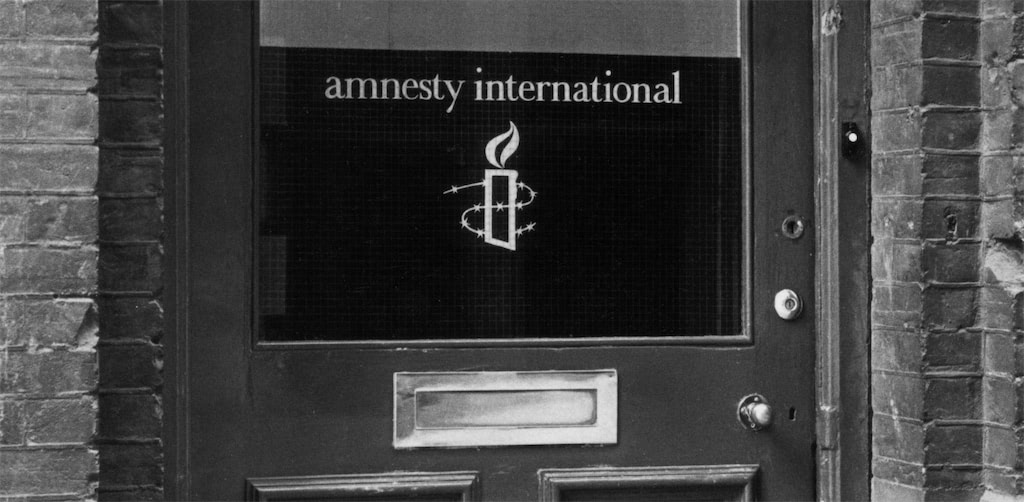
Washington, D.C. – Many commentators who discuss the reports issued by some international human rights organizations such as Amnesty International take them at face value without going deep into the issues at hand nor using critical thinking. They fail to identify untold facts and grasp the underlying agendas pushed in these reports, perhaps because they do not devote enough time to reading and conducting in-depth research.
Extensive reading, especially in different languages; the use of critical thinking; and contextualizing information is the only way to produce objective, realistic, and credible analysis.
There is a general trend among many journalists, experts, and analysts which gives credibility to every report produced by Western-based human rights organizations.
Many treat Amnesty International‘s reports as a form of sacred scripture containing unquestionable, absolute truth. Their rosy view of the world pushes them to believe that the only concerns of top executives of this human rights watchdog are the salvation of humanity and the achievement of equality, solidarity, and peace.
Many historical facts and previous positions taken by the organization show, however, that the image it has promoted about its activities is not as rosy and romantic as it appears at first glance.
In the midst of the confrontation between the Moroccan government and Amnesty International, any hasty alignment with one side at the expense of the other will prevent us from critically analyzing the controversy and thus reaching objective conclusions.
Evaluating respect for human rights or advancing an agenda?
There is no doubt that Morocco should allow people to express themselves without risking detention, uphold the freedom of expression, and welcome the existence of dissenting voices within its media landscape.
It is also true that while the country has made notable strides in the field of human rights in recent decades, Morocco still has also a long way to go in terms of improving its human rights records and aligning with international standards.
The report that Amnesty International published on June 22, however, centered on spying allegations against the Moroccan government by Moroccan journalist Omar Radi and other activists, raises a question about the agenda Amnesty International pursues. It brings to light the double standards that the international human rights organization uses in dealing with other countries.
Amnesty International’s double standards in the Edward Snowden case
In a number of instances over the past three decades, Amnesty has either sided with the most powerful countries and done their bidding, or chosen to overlook their massive human rights violations. In stark contrast to the condescending and accusatory tone of its reports on Middle Eastern countries, Amnesty International showed conspicuous double standards with its reporting on the case brought forward by Edward Snowden.
The former CIA employee revealed in 2013 that American and British intelligence agencies had been tracking internet and phone and activities of hundreds of millions of citizens across the world without any legal basis and in flagrant violation of individual freedoms and constitutional protections.
A comparison between the tone that Amnesty International has used in levelling still unsubstantiated allegations against Morocco, accusing the latter of widespread repression of journalists and activists, and the report it issued in 2017 about Snowden’s revelations, shows a shocking contrast.
The organization did not issue any denunciation of the US and the UK’s trampling of freedom of expression or the personal privacy of civilians, journalists, opinion writers, and academics who do not pose any threat to American and British national security. Nor did the report challenge the legality or legitimacy of this large-scale operation. Rather, it ceremoniously urged Washington and London to reform their laws to “ensure that they comply with international human rights law and standards, including by not allowing for indiscriminate mass surveillance.”
The irony is that many people in Morocco and elsewhere accept the same double standards and echo the narrative pushed by Amnesty International. Meanwhile, this organization turns a blind eye to the blatant rights violations of powerful countries that have spied on hundreds of millions and whose hands are stained with the blood of millions of people across the globe, especially in the Arab world.
The role of the ‘rights watchdog’ in justifying war
Amnesty International reports paved the way for Washington and London to justify their decision to wage war without any legal basis or mandate from the UN Security Council. A piece of evidence of that — which many people overlook because of their hasty reading, their weak memory, or their reverence for everything issued by Amnesty International — is the involvement of the same organization in justifying the first Gulf war against Iraq in 1991.
The organization that produces incriminating reports on Morocco in a condescending colonial overtone played a major role in mobilizing the support of the American public, facilitating the mission for the then US President, George H.W. Bush, to obtain congressional authorization to go to war against Iraq.
Throughout the 1980s, the regime of late President Saddam Hussein was one of the allies upon which Washington depended to keep the Iranian regime at bay. However, immediately after the Iraqi army invaded Kuwait on August 2, 1990, Iraq changed in the American narrative to a country that posed a threat to American interests in the Gulf.
The US administration at the time, American media, and think tanks launched a frenetic campaign to mobilize public opinion and Congressional will and persuade them of the necessity of entering a war against Iraq to force it out of Kuwait.
Iraq had enjoyed a positive image in the 1980s in the United States with its primary role in weakening Iran and preventing it from extending its hegemony over the region. It was, therefore, difficult for the American administration to persuade its people that the same ally US officials had long praised turned overnight into a US enemy. Because of this, and three months after Iraq invaded Kuwait, a majority of Americans opposed their country entering a war against Iraq.
Legitimizing manipulative testimony
In parallel, Kuwait hired several PR and lobbying firms to launch a media campaign. They aimed to demonize Iraq and to convince the American public and Congress of the necessity of military intervention to prevent Iraq from occupying an internationally recognized country.
In the context of the PR campaign carried out by PR firm Hill & Knowlton, the American Congressional Human Rights Committee heard on October 10, 1990 the testimony of a 15-year-old Kuwaiti girl named Nayirah.
The teen claimed she was a Kuwaiti war survivor and that when she was volunteering in a Kuwaiti hospital, she witnessed with her own eyes how Iraqi “soldiers come into the hospital with guns, and go into the room where … babies were in incubators. They took the babies out of the incubators, took the incubators, and left the babies on the cold floor to die.”
Although this testimony was a great shock to the American people, it did not succeed in convincing them of the need to intervene in Iraq. The turning point for public opinion was the 82-page report that Amnesty International issued on December 19, 1990. In the report, the human rights watchdog not only confirmed Nayirah’s testimony, but claimed that Iraqi soldiers took 312 Kuwaiti infants out of their incubators and killed them.
The power of ‘verifying’ a false claim
The organization said it had “verified” the credibility of the allegations made by the Kuwaiti girl. The publication became the most cited source by international media. It also became the main reference for the White House, members of Congress, and other key decision-makers to persuade the American public of atrocious alleged crimes committed by the Iraqi army against infants.
That report was a God-sent boon to both Kuwait and the then US President George H.W. Bush, who exploited its message six times in the few weeks before he declared war on Iraq. On January 9, 1990 — seven days before the war began — Bush cited the report in a letter he sent to US campuses to justify his decision.
The same report was used in a congressional hearing eight days before the war broke out. Four days after that hearing, the Senate approved the declaration of war by a narrow five-vote margin, with seven senators using the Amnesty report to justify their support for the war. Four days later, the first Gulf War began, paving the way for the overthrow of the Iraqi regime and the demolition of all state institutions, not to mention the death of hundreds of thousands of civilians.
In April 1991, two months after the end of the war, Amnesty International published another report in which it tried to distance itself from the gross allegations contained in its December 1990 report. After It had claimed in the report with confidence that it had “verified” the Kuwaiti girl’s allegations, giving credence to what she claimed, its post-war report stated that those allegations were unfounded. However, in 1992, it was revealed that the girl behind the allegations was the daughter of the then Kuwaiti ambassador to the United States.
The ‘watchdog’s’ conspicuous lack of reporting Western violations
After the 1991 war, and throughout the period in which the Iraqi people were subjected to UN sanctions, Amnesty International did not issue a single report condemning their deleterious effects on the well-being of the Iraqi people. Nor did it ever question the legitimacy and morality of those sanctions and their violations of basic human rights of the Iraqi people, chief among them the right to life and the right to access medical treatment.
Moreover, even during the misinformation campaign the United States and the UK conducted throughout 2002 to demonize former Iraqi President Saddam Hussein and call for overthrowing his regime, Amnesty International did not publish a single report warning of the repercussions of any new war on the human rights of the Iraqi people. Nor did its reports include the slightest reference or a description of the destructive impact of the decade-long sanctions imposed on all components of the Iraqi people.
For example, in its two reports on the situation of human rights in Iraq in 2001 and 2002, Amnesty International did not remotely mention the impact of sanctions on the livelihood of Iraqi people. It rather continued to recount the alleged violations of human rights against the Kurds and the Shia. This, once again, gave political cover to both American President George W. Bush and British Prime Minister Tony Blair to justify the war they decided to wage against Iraq to achieve regime change.
History books will forever remember how the US and the UK used the alleged human rights violations against the Kurds and Shiites, in addition to weapons of mass destruction, to persuade the international public opinion and the Security Council of the imperative of military intervention in Iraq.
How Amnesty lowered the bar for Western military intervention
Before the start of the second American war against Iraq, Amnesty International did not issue any report denouncing or questioning Washington and London’s decision to go to war without any legal mandate from the UN Security Council.
On the eve of the war, Amnesty International sent an open letter to the United States, Britain, and Spain asking them to abide by their international obligations related to international human rights law, and did not so much as express regret that these three countries decided to engage in unlawful warfare in flagrant violation of international law.
What is even more egregious is that in the same letter, Amnesty International urged Iraqi President Saddam Hussein to abide by his obligations. Amnesty International, which claims to defend against all human rights violations, equated the executioner and the victim. It also failed to mention in its letter the unprecedented international rejection of that war.
Double standards in reporting on Iran
Amnesty International continues to follow the same double standards in its reports. For example, it has not issued any report condemning or denouncing the economic and social repercussions of the US economic sanctions against Iran on the Iranian people. The Trump administration imposed the sanctions in late 2018 against the will of the United Nations, which had lifted them in 2015 following the nuclear deal with Iran.
In contrast, Amnesty International publishes extensive periodic reports of alleged violations of the Iranian regime against opponents. This selective reporting demonstrates the imbalance of its reports and their functioning according to a specific political agenda.
If these examples were any indication, Amnesty International is not the infallible organization that readers should trust without question. Their reports are not sacred scriptures or absolute scientific truth.
Advocates for human rights must approach Amnesty reports with a critical eye
Scientific research is subject to peer review, discussion, and scrutiny, and some even question its validity. What can we say about reports, not subject to the same level of critical judgment, issued by an organization that has been involved in historical errors were used to justify wars that claimed the lives of millions of civilians?
Did Amnesty International not confirm in its December 1990 report that it had “verified” the allegations peddled by Nayirah? After it was established after the war that the human rights watchdog lied to the world when it stated that it had cross-examined these allegations, is the world public opinion still supposed to take the bait and believe everything contained in its reports, regarding Morocco or other countries, and take them at face value?
Should not the public opinion challenge the assertions contained in its reports, challenge its double standards, and wonder whether its work advocacy is seeking to achieve a specific agenda?
Instead of gullibly buying into reports produced by these organizations, some should do away with fascination with everything that comes from the West and do their due diligence to analyze matters in the political and historical contexts in which we live. Nothing comes out of nowhere, and those organizations do nothing solely for the sake of all humanity. Rather, they work to achieve the specific agendas defined by their donors and their executives.
One must also be aware that the powerful are those who always write history. The West wrote history during the past four centuries and after the Second World War through the massive media machine and the networks of “non-profit” organizations it controls. Now it is striving to control the present narrative and influence us in order to curate a future that aligns with its strategic and supreme goal: To maintain its economic, political, and cultural hegemony.
When some people abandon critical thinking and take every report produced by organizations such as Amnesty International at face value, they participate unwittingly in advancing the interests that these organizations and their backers seek to achieve.
Samir Bennis is the co-founder of Morocco World News. You can follow him on Twitter @SamirBennis.