 Join on WhatsApp
 Join on Telegram
Rabat is a city rich in history and is home to many important places to visit during your travel to Morocco. Most tourists might overlook the capital city, assuming it might not be as exciting as Morocco’s iconic tourist cities such as Marrakech, Tangier, and Essaouira.
However, the imperial city is a perfect break from other bustling Moroccan cities. You will still get to explore Morocco’s culture, as well as both its history and modernity, evident in the architecture, ruins, and art throughout Rabat.
The coastal city is located right on the Atlantic Ocean. It borders a river to the west that separates it from its twin city, Sale. Morocco moved its capital from Fez to Rabat in 1912 at the beginning of the French protectorate. After the country’s independence in 1956, Rabat remained the capital.
Rabat is also situated near most of Morocco’s famous touristic cities, which you can easily reach from the capital. These include Meknes and Fez, two to three hours away, and the coastal cities Tangier and Casablanca. These two are particularly short train rides away on Morocco’s TGV, the only high-speed rail in Africa.
Whether you are a history enthusiast, nature and art lover, or just a soul looking for an adventure in a calm yet lively atmosphere, then Rabat is the destination for you. You will visit beautiful places, meet friendly people, and relish the art-rich city.
If Rabat was not initially on your places-to-visit-in-Morocco list, this guide will allow you to discover its most popular tourist attractions and help you plan your trip to this “chill” and beautiful city.
Chellah

Formerly occupied by the Phoenicians, then the Romans, then converted to a royal necropolis by Merenid Sultan Abu al-Hasan Ali ibn Othman in the 13th century, Chellah is one of the most beautiful places to visit in Rabat. It is an ancient fortified city representing the history of Rabat and Sale with remnants of Roman and ancient Islamic architecture.
The ruins are what remains of a mosque, mausoleums, and the tombs of the sultan and his wife. The Roman part includes a fountain, bath, temple, and pool. The overgrown plants and colorful flowers decorating the ruins give the landmark its unique and calm, beautiful atmosphere.

Overlooking the Bouregreg River that separates Rabat and Sale, Chellah is also the main attraction for the famous storks that migrate in winter to Morocco and nest above the tallest walls and trees of the buildings’ remains.
Hassan Tower and Mausoleum of King Mohammed V

Hassan Tower is a mosque that the third Caliph of the Almohad Caliphate, Abu Yusuf Yaqub al-Mansur, built in the 12th century. It was supposed to be the biggest mosque in the world after the Samarra mosque in Iraq, but was not finished after the Caliph’s death. It also sustained damages from an earthquake in 1755.
Looking over the Bouregreg River, the 44-meter-high tower covered with beautiful designs received UNESCO world heritage status in 2012, with multi-lobed latticework and ramps instead of stairs.
Right in front of the tower are the tombs of Morocco’s beloved rulers that led the country to independence, King Hassan, his brother Prince Abdallah, and King Mohammed V, the grandfather of the reigning King Mohammed VI.

Built in the 1966s and designed by Vietnamese architect Eric Vo Toan, the mausoleum has an elaborate Moroccan design inside with a marble floor, colorful zellige walls, and stained glass windowed dome.
Everyone can enter the Mohammed V Mausoleum, even non-Muslims and tourists, as long as they are respectful and dress conservatively.
Old Medina

Built around the 10th century and unlike many medinas and souks in other Moroccan cities, Rabat’s medina is not too crowded. It also has wider streets that make it less chaotic and easier to access and explore without getting lost.
The buildings in the medina are distinguished by their unique Andalusian architecture that dates from the 17th century. You can find shops in the medina that sell leather items, traditional clothes, babouche slippers, and Amazigh (Berber) carpets. It also has a flea market and, like many medinas around Morocco, a Mellah (Jewish Quarter).
The old medina is definitely one of Rabat’s must-visit places. It is where you can buy the best Moroccan souvenirs at reasonable prices, and neighbors another popular destination, the Kasbah of the Oudaya.
Kasbah of the Oudayas

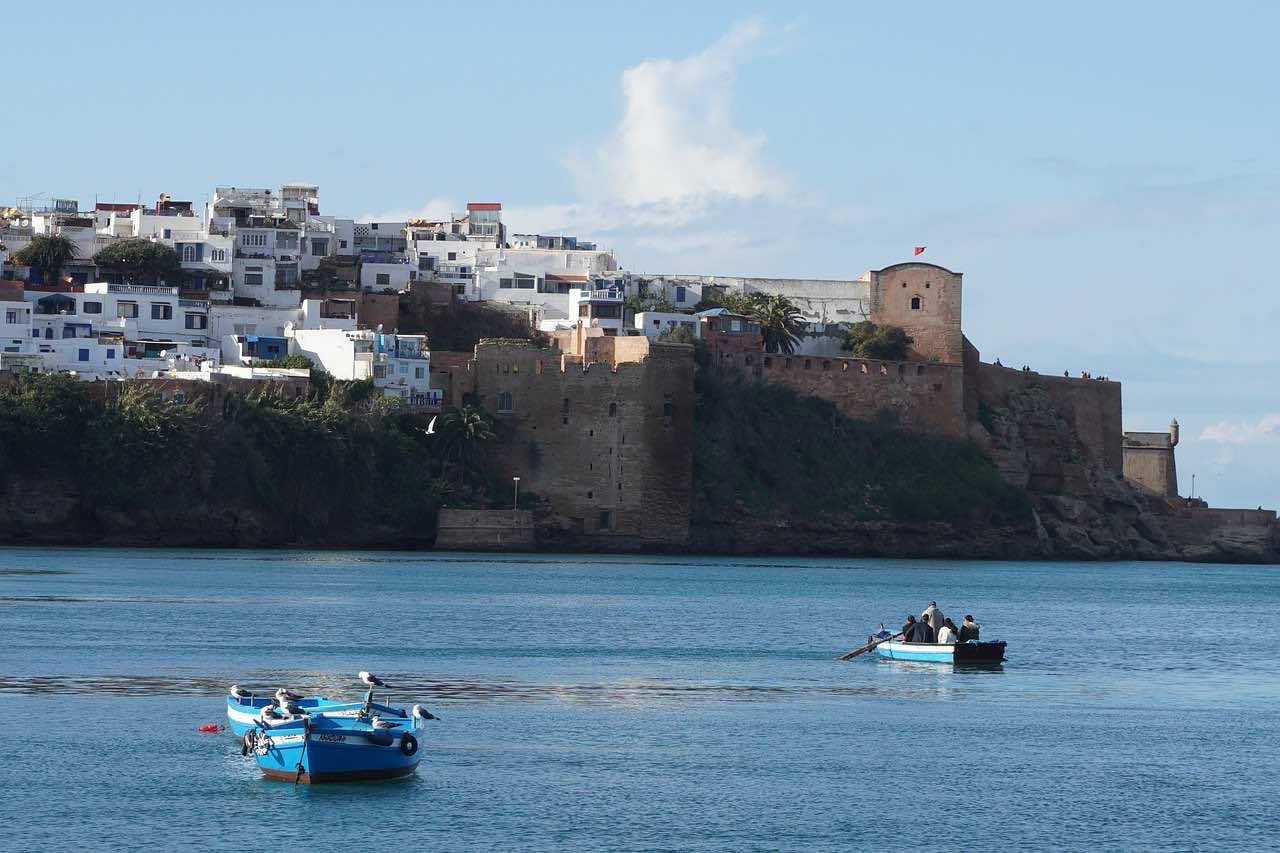
Kasbah of the Oudaya was built in the 12th century as a military camp and has many palaces that the Alaouite Dynasty constructed. The UNESCO world heritage site overlooks the Bouregreg River and the Atlantic Ocean, giving it a relaxing and peaceful atmosphere.
At the entrance of the Kasbah, there is a museum of arts and crafts dating back to the 17th century. It showcases pottery, musical instruments, jewelry, Qurans, and traditional Moroccan and Amazigh clothes and carpets.

Inside the Kasbah are the blue and white walls of Andalusian style houses, and maze-like alleys that give you the sense that you are in Morocco’s blue city, Chefchaouen. Walking the narrow alleys you will find the small, peaceful Cafe Maure. Here you can sip tea and eat Moroccan pastries with a view of the Atlantic Ocean, Bouregreg River, and the neighboring city of Sale.

Entering the Kasbah of the Oudaya, you will meet with the beautiful and elegant Andalusian Garden, laid out in the 20th century by the French. It features orange, lemon, and banana trees, date palms, a beautifully colorful array of flowers, plants, and shrubs. You will also find many stray cats yawning on the terrace walls and under the trees.
Museums
Rabat is also home to several important museums that showcase the art, history, and culture of Morocco.

For science and archaeology lovers, Rabat’s Natural Science Museum is one of the city’s must-visit places. You will find impressive displays of creatures that have lived in Morocco through the ages and the origin of earth chronicles. It is a fun museum where you will get to explore Morocco’s archaeology.
The most significant display in the Natural Science Museum is the Sauropod Dinosaur, discovered in 1979 in the Azilal regions of the High Atlas Mountains.
Another science-related Museum is Rabat’s Archaeological Museum, opened in 1932 and featuring a significant array of important artifacts that were found throughout Morocco. Visiting this museum is a good opportunity to learn more about Morocco’s past populations and discover ancient tools made of bronze.
For modern art lovers, the Mohammed VI Museum of Modern and Contemporary Art is where to go. It is an important destination for tourists and Moroccans alike, especially the young generation of Morocco that is more into modern art.

The museum was founded in 2014 and is located in the new city, just next to the central train station. It features top artwork from all over the country, with collaborations with famous international artists throughout the year. The museum has displayed pieces by prominent artists such as Ahmed Yacoubi, Paul Bowles, and Hassan Hajjaj.
Rabat Zoo

Another of the city’s must-visit places is Rabat Zoo. It is home to more than 130 species of animals and the magnificent Atlas lions, also known as Barbary lions, that used to live in the Royal Palace. The spacious zoo is the perfect place to visit for a relaxing trip.
The national zoo contains over 1,500 animals total, including hippopotamuses, African elephants, Nile crocodiles, hyenas, flamingos, giraffes, monkeys, snakes, and so many more. Most visitors spend four to five hours exploring the zoo’s environment and its animals.
Exotic Gardens

The Exotic Gardens, “Les Jardins Exotiques,” are just 13 kilometers north of Rabat and 20 minutes from Kasbah of the Oudaya, in the town of Bouknadel. Laid out by French horticulturist Marcel Francois in 1961, the gardens are famous for their diversity, and the big palm trees that offer shade through the whole space.
Marcel brought in plant species from different countries around the world, including countries in Asia, South America, and sub-Saharan Africa, to create an exotic atmosphere.
The unique gardens are busier on weekends, filled with local Moroccan families bringing their kids on picnics, and are quieter during the weekdays. At the entrance of the gardens there is a Moorish-style cafe where you can rest after your exploration and discover the history of the site.
Malls of Rabat

If you are looking for a break from historical tourism or in need of a particular item, Rabat has two big shopping malls. There is Mega Mall, which was the biggest shopping center in Rabat when it opened in 2005. In addition to shops, cafes, and restaurants, there is an entertainment area with a bowling alley, an ice skating rink, and a movie theater.
Arribat Center is the newest and currently biggest mall in Rabat, and just opened in 2020. Just like Mega Mall, the center has many familiar, brand name stores and restaurants, from Adidas and Lacoste to Burger King and McDonald’s.
The center is quite close to the national library and some beautiful botanic gardens, so you can easily resume your Moroccan adventures after a stop at the mall.
It might be difficult to choose where to visit while planning your travel to Morocco. The country certainly has many attractive options, from its High Atlas Mountains, to its coastal cities that stretch along the Atlantic Ocean and the Mediterranean Sea, to the magnificent Sahara desert.
Having more knowledge about Morocco and what if offers can help you easily identify attractions for your visit. Learning about the best places to visit in Rabat in advance will help you select your destinations easily, without wasting time being confused about where to go.
Read also: Travel to Morocco: 8 Tips for an Unforgettable Visit to Marrakech