Rabat – Morocco purchases 91% of its arms from the US, more than any other country in the Middle East and North Africa (MENA), according to a new report.
The Center for International Policy (CIP) recently released a report on the top arms suppliers to the Middle East and North Africa from 2015 to 2019 as part of its Arms and Security Program.
The American non-profit research center based its findings on data from the Stockholm International Peace Research Institute (SIPRI).
SIPRI considers major conventional weapons systems such as combat aircraft, ships, tanks, armored vehicles, bombs, and missiles. The data does not include small arms such as firearms.
The report defines the MENA region as encompassing Algeria, Bahrain, Egypt, Iran, Iraq, Israel, Jordan, Kuwait, Lebanon, Libya, Morocco, Oman, Palestine, Qatar, Saudi Arabia, Syria, Tunisia, Turkey, the UAE, and Yemen.
The US is the top arms importer to 13 MENA countries, supplying nearly half (48%) of the region’s arms from 2015 to 2019.
Russia follows with 17%, then France (11%), the UK (5%), and Germany (5%). China, meanwhile, accounts for less than 3%, although it supplies a significant portion of the region’s armed drones.
Morocco’s arms purchases
Morocco leads the MENA region in terms of the percentage of arms acquired from the US.
The US supplies 91% of Morocco’s arms. The remainder comes from France (9%) and the UK (0.3%).
In 2019, Morocco significantly increased its arms purchases. The development aligns with its five-year plan, established in 2017, to attain “regional military supremacy.” The country aims to modernize its army, airforce, and navy.
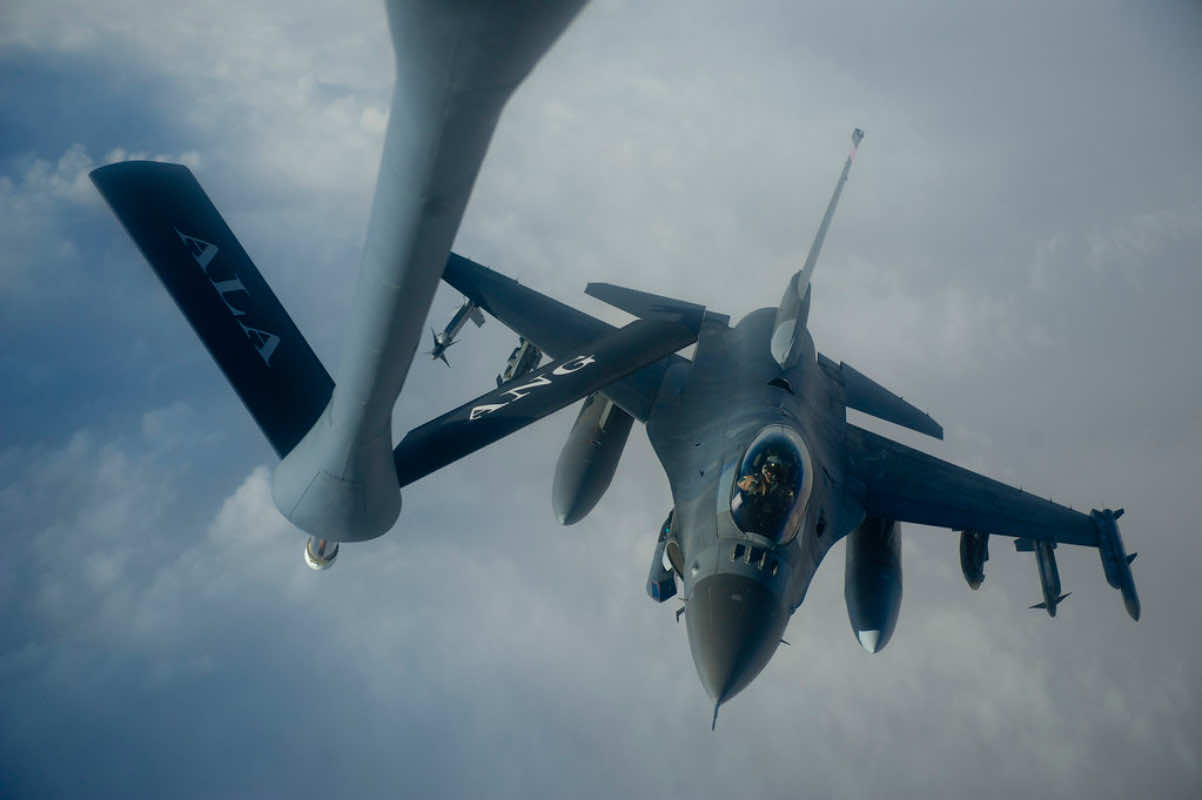
Morocco’s arms purchases from the US this year include 25 F-16 aircraft and associated equipment worth $3.8 billion, along with upgrades to Morocco’s existing fleet of F-16 fighter jets for $985 million. The US State Department also approved the sale of 36 AH-64E Apache attack helicopters and related equipment to Morocco for an estimated $4.25 billion.
Recently, in March 2020, Morocco signed a military contract with the US army to purchase 25 armored vehicles for $240 million.
Read also: COVID-19 May Tilt the Balance in the Algeria-Morocco Arms Race
However, the Committee of Foreign Affairs, Defense, and Borders at Morocco’s House of Representatives adopted a draft framework law in June that would allow for the establishment of an arms industry in Morocco. This would reduce Morocco’s need to import arms from foreign producers.
Although Morocco is beefing up its arsenal and expanding its military budget, a separate SIPRI report ranked Morocco 31st in the world in terms of arms imports. The country accounted for only 0.8% of global arms purchases in 2019. However, Morocco is one of the top three arms importers in Africa, after Egypt and Algeria.
Top patrons of US arms
Aside from Morocco, other top buyers of US arms in the MENA region are in the Gulf and the Levant.
Israel purchases 78% of its arms from the US, Saudi Arabia purchases 74%, and Jordan and Lebanon each purchase 73%. Kuwait purchases 70%.
Read also: UAE Cancels Meeting With US and Israel After Leaked F-35 Arms Deal
The UAE purchases 68% of its arms from the US, followed by Qatar (50%), Tunisia (48%), Iraq (45%), Turkey (38%), Bahrain (33%), and Jordan (30%).
Yemen purchases 20% of its arms from the US.
Top patrons of Russian arms
After the US, Russia is the second-largest arms supplier in the MENA region.
Russia supplies 67% of Algeria’s arms. The North African country acquires most of the remainder from China (13%) and Germany (11%).
Iran purchases almost all of its arms — 98% — from Russia. Syria similarly purchases 95% of its arms from Russia.
Russia also supplies 34% of both Egypt and Iraq’s arms.
Other arms suppliers
Countries in the MENA region also look to Western Europe for arms.
France is a top European supplier, accounting for 35% of Egypt’s arms purchases, followed by Qatar (34%), the UAE (11%), Kuwait (10%), and Morocco (9%).
The UK supplies the majority of Oman’s arms (45%).
Jordan and Tunisia purchase 30% and 42%, respectively, of their arms from the Netherlands.
Read also: Morocco’s F-16 Flies With US B-52 Bombers Participating in Europe Mission
Other European countries selling weapons in the MENA region include Italy, Spain, Norway, and Switzerland.
Some Middle Eastern and North African countries sell arms to their regional neighbors. Yemen, for example, purchases 71% of its arms from the UAE.
According to the CIP report, China, South Korea, and Brazil also have small shares of the MENA arms market.
Consequences of MENA arms transfers
The CIP report stresses that the transfer of weapons to the MENA region has exacerbated conflicts, worsened human rights abuses, and caused civilian injuries and deaths.
While arms can be forces of stability and sales can cement alliances, CIP underlined the devastating effects of arms transfers in Syria, Yemen, Libya, and Egypt and violations of international arms embargoes.
CIP called for more restraint on arms transfers to the MENA region, proposing recommendations that primarily target the US.
The report urges the US to end arms sales and military support for the Saudi/UAE coalition in Yemen and encourage other major suppliers to do the same. The report also emphasizes the need to revise the Missile Technology Control Regime (MTCR) to prohibit the sale of large armed drones to all nations but close allies.
The US should also lower its military aid to Egypt by at least $300 million and demand improvements in human rights, especially freedom of expression.
Major US arms sales to the MENA region should be contingent on Congressional approval rather than Congressional notification, the report added.
Finally, US Congress should pass legislation “strengthening its ability to block problematic arms sales before the equipment is delivered, not just after the initial notification.”