

 Join on WhatsApp
 Join on Telegram
Fez — Moroccan designer and artistic director Myriam Mourabit has built a creative universe where heritage does not sit still. It moves through plaster, zellige, light, objects, murals, spaces, jewelry, and even temporary tattoos.
Mourabit, who describes drawing and design as part of her life since childhood, grew up surrounded by music, culture, traditions, travel, gastronomy, and the sensory richness of Moroccan daily life.
That early environment shaped her sensitivity to materials, forms, gestures, and the stories carried by objects and encounters.
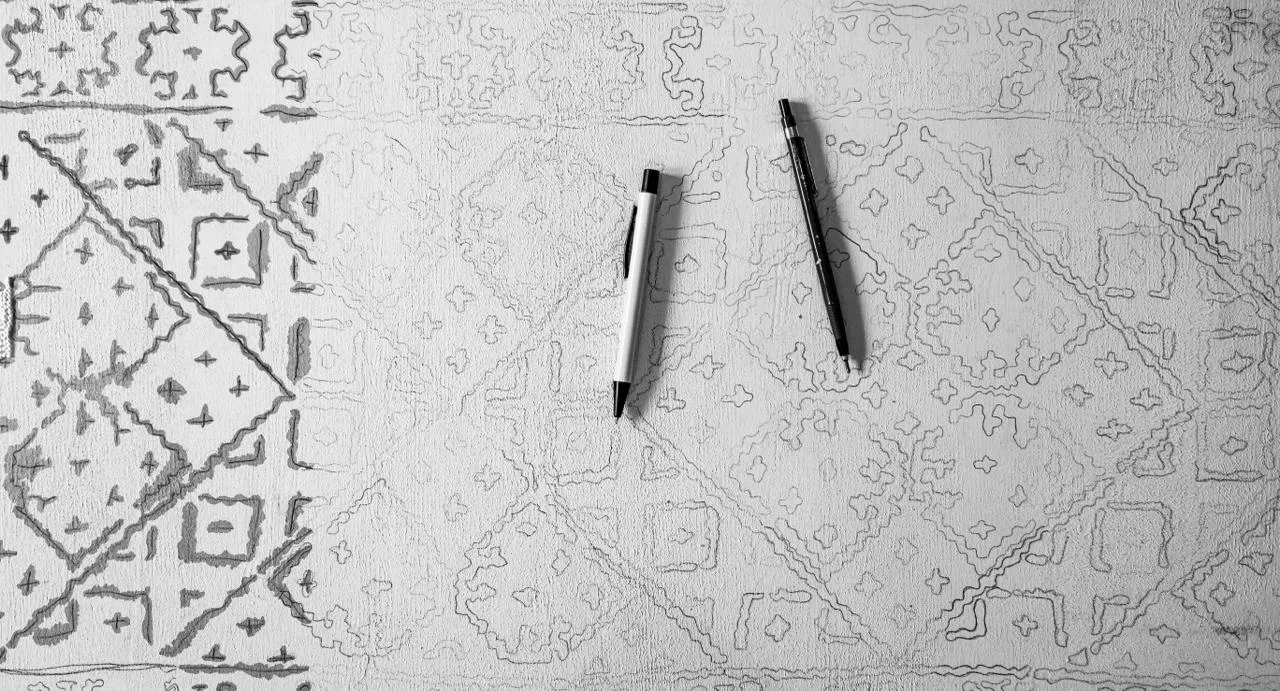
“I have always drawn. Design has been part of me since childhood,” she told MWN Lifestyle magazine, describing a path rooted as much in instinct as in formal training.
After earning a literary baccalaureate, Mourabit moved to Paris, where she studied at the Duperré School of Applied Arts and the National School of Decorative Arts.
She later returned to Morocco with the desire to develop a personal creative language between inheritance and contemporary creation.
A language shaped by Morocco and Paris
Mourabit first launched “MYRIAM MOURABIT Créations,” a project dedicated to objects and collections, before founding “ZÉCUBE,” her design and artistic direction studio.
Through the studio, she now develops custom projects across objects, murals, scenography, spaces, and collaborations.
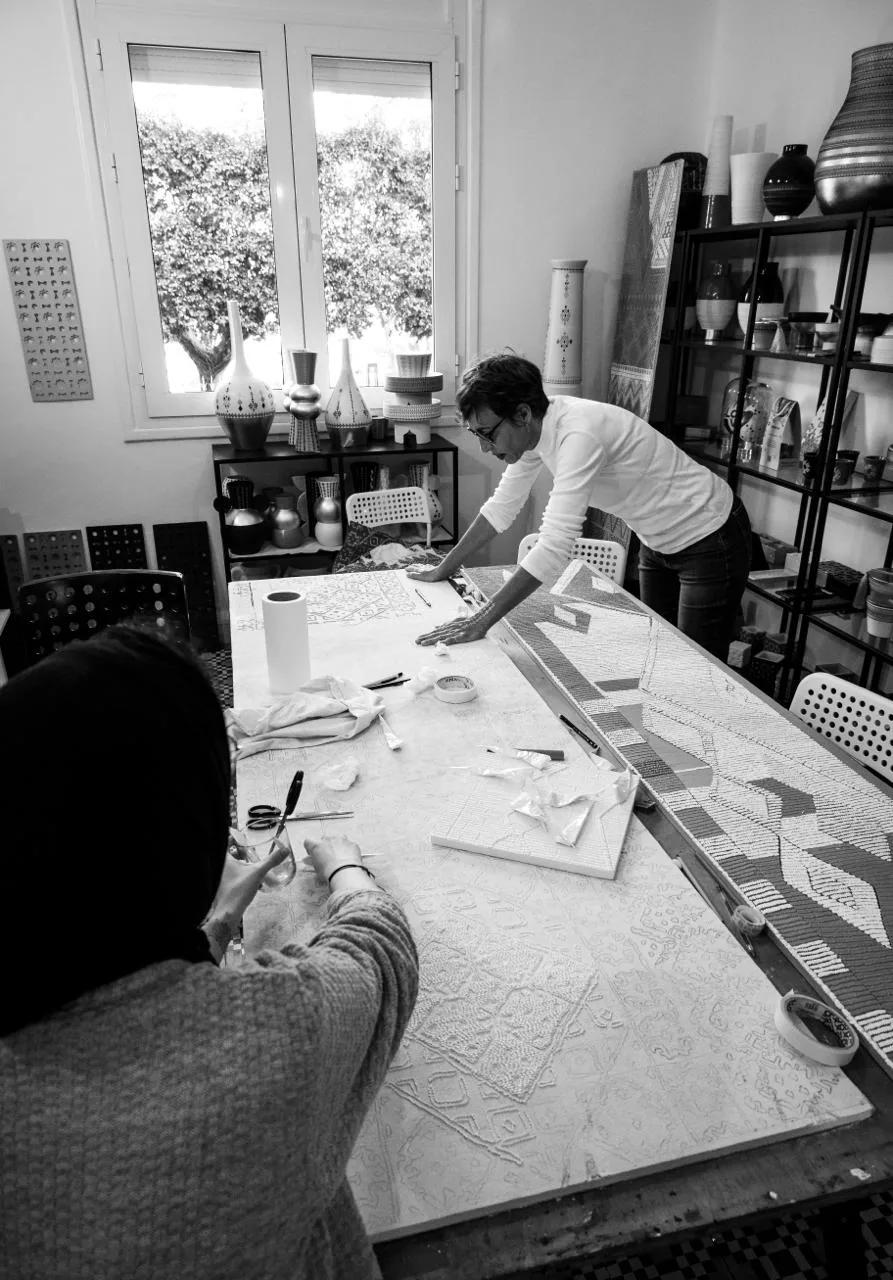
Her work is centered on what she calls the “Moroccan Imprint,” or “L’Empreinte Marocaine,” a concept that guides her creative process without turning heritage into a fixed visual formula.
“The Moroccan Imprint is not, for me, a style or a repertoire of motifs. It is above all an emotion,” Mourabit explains.
For her, this imprint begins with the way a place, a gesture, a material, or a craft touches her, then continues to tell a story through design.
She draws inspiration from details she observes across Morocco: embroidery, an old door in the High Atlas, a zellige motif, the texture of an earthen wall, or light falling on plaster.
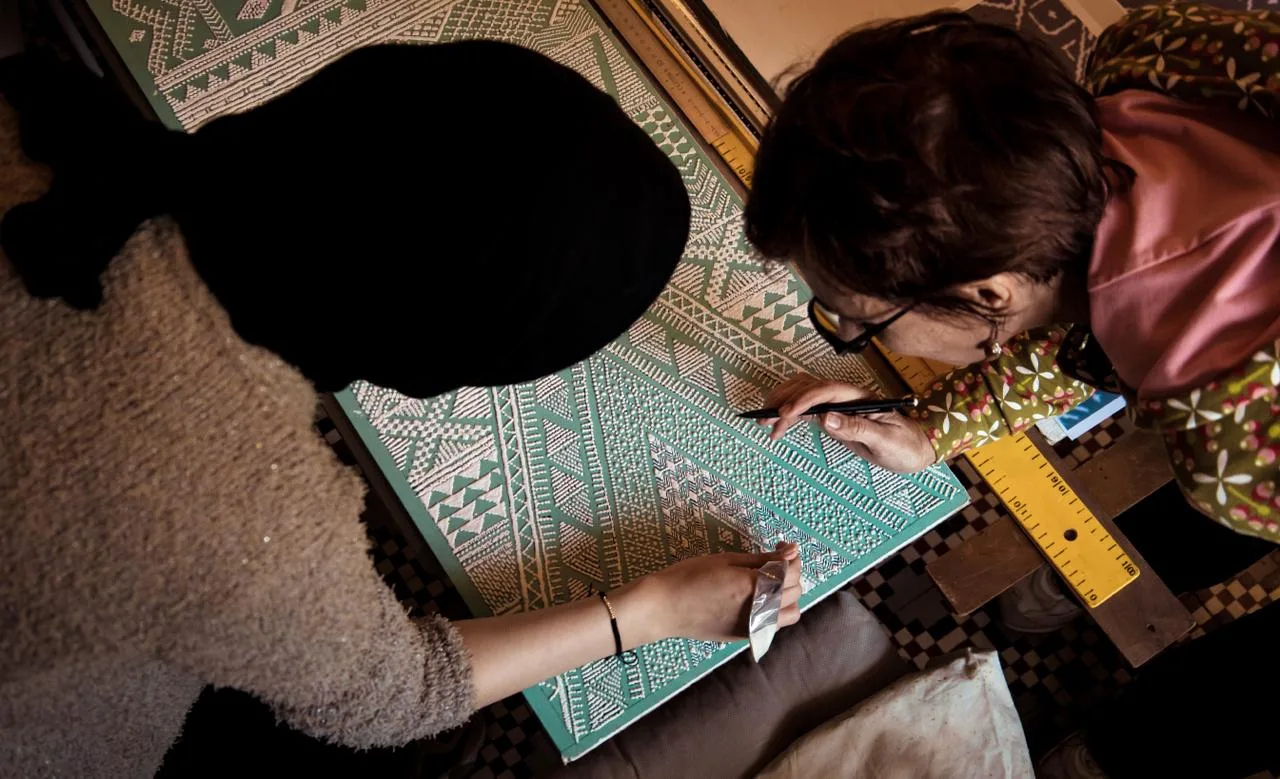
Behind each detail, she sees “centuries of intelligence, transmission, and human creation.”
Yet Mourabit does not seek to copy Moroccan heritage. She says her aim is to understand its essence, then translate it into a contemporary language.
Each project becomes a way to re-transcribe the emotional imprint she carries, creating objects, spaces, and works that can move viewers while extending a story.
Design as an emotional bridge
Mourabit’s projects often move between very different formats, from monumental murals to small pieces meant to sit directly on the skin.
But she does not see these formats as separate disciplines. For her, the link is never the medium itself, but the story she wants to recount.
“Sometimes it will be a monumental mural, sometimes an object, a light fixture, a scenography, or a skin jewel,” she says. “The medium simply becomes the fairest language to transmit an emotion.”
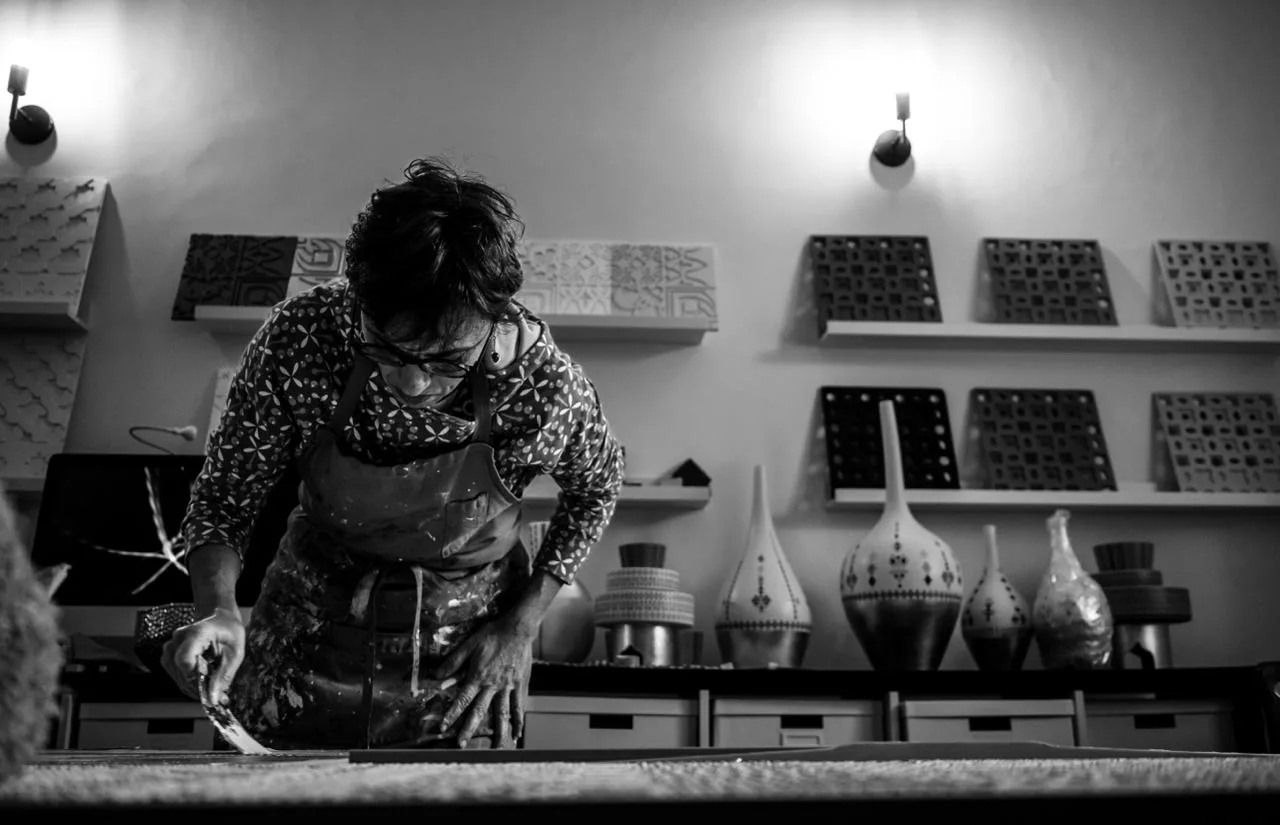
She explains that constraints linked to place, material, color, or use are not limits. Instead, they become starting points for creation.
Dialogue is also central to her work. Mourabit often collaborates with artisans, clients, architects, engineers, institutions, and communities.
She compares her role to that of an orchestra conductor, bringing together different sensibilities so they can contribute to one shared story.
“What matters to me, deep down, is emotion,” she notes. “A monumental mural can move someone as much as a temporary tattoo of a few centimeters.”
If a creation succeeds in building a sensitive connection with the person who encounters it, she believes it has fulfilled its purpose.
Returning home for meaning
Mourabit describes her years in Paris as a major opportunity that gave her a culture of design, method, rigor, critical thinking, and a deeper understanding of the designer’s role in society.
In Paris, she learned how to transform intuition into a project, structure an idea, and give form to emotion.
Still, she quickly felt the need to return to Morocco.
“It was obvious,” she recalls. “This is where my roots, my sensitivity, and the references that deeply nourish my work are found.”
In her view, Paris taught her the profession, while Morocco gave that profession meaning.
Morocco became the place where she found her own creative language, shaped by heritage, landscapes, artisans, places, and human connection.
She speaks of the country’s authenticity, generosity, and closeness to craft as daily sources of inspiration.
Today, Mourabit sees her work as the result of a meeting between two cultures: the rigor acquired during her training and the creative freedom she finds in Morocco.
“The two are inseparable,” she says, adding that both continue to enrich her approach.
Collaboration as a human adventure
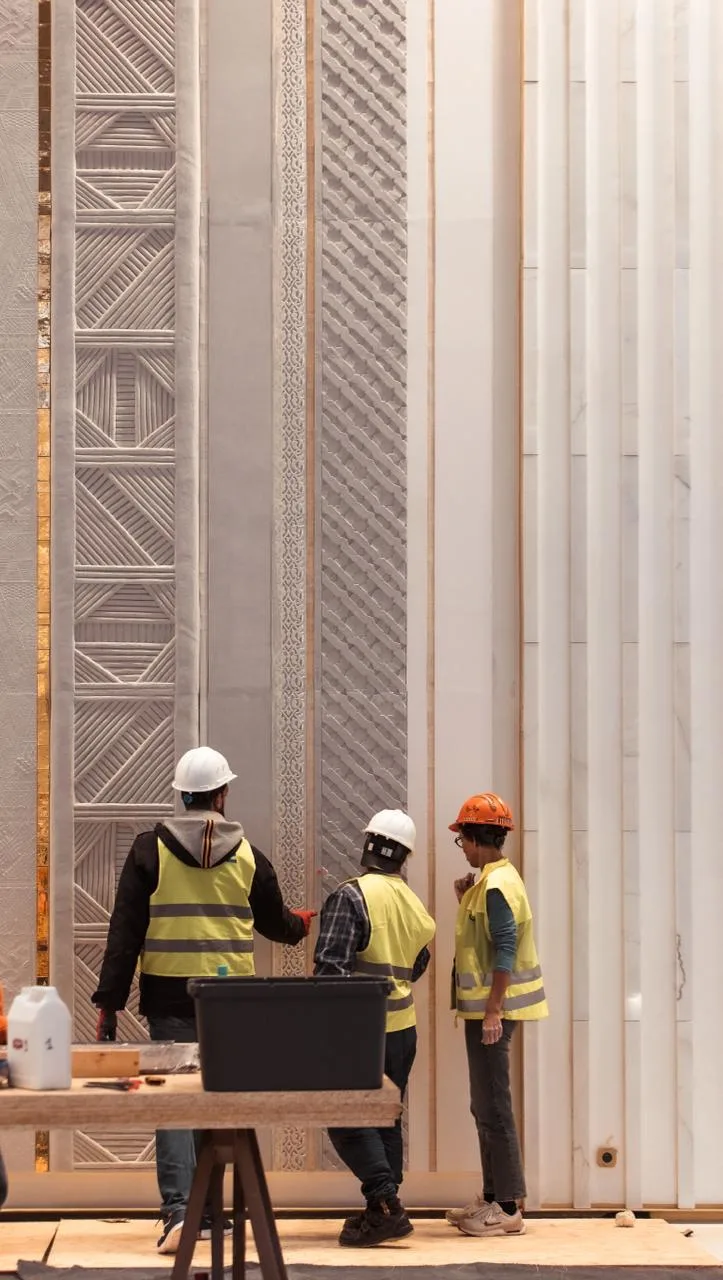
In recent years, Mourabit has worked on a wide range of projects, including the monumental “RÉMANENCE” mural for the Mohammed VI Tower in Rabat.
Her portfolio also includes collaborations with “Royal Mansour Marrakech,” “Nespresso Morocco,” and “OCP Dar Al Phosphate Marrakech,” as well as the creators’ the commercial space of the Morocco Pavilion during Expo 2020 Dubai.
She has also created custom objects for the Moroccan Embassy in Paris, worked on a restaurant in China, and exhibited “PIKZEL” zellige murals at the Arab World Institute in Paris.
For Mourabit, successful collaboration begins when everyone involved can express their vision.
Before drawing, she says she needs to understand the person, brand, or institution she is working with, including their history, values, wishes, and constraints.
The best ideas, she explains, often emerge through that exchange.
“I consider each project a human adventure,” Mourabit says. “I like everyone to be able to express themselves, bring their sensitivity, and take part in the creative process.”
She describes her role as creating dialogue between clients, artisans, engineers, companies, and teams.
A successful collaboration, she adds, is one where everyone can recognize themselves in the final project.
That is when creation moves beyond function and becomes a human experience.
Heritage that continues to evolve
Mourabit’s work often revisits Moroccan heritage through a contemporary lens, but she rejects the idea that respect for tradition means freezing it in time and place.
“I am convinced that heritage is not fixed,” she says. “It is a living material that has always evolved over centuries.”
For her, innovation is part of heritage’s history. Without it, the crafts, techniques, and forms admired today would not exist.
Innovation, in Mourabit’s view, does not mean breaking with tradition. It means understanding tradition deeply enough to help it evolve with care.
Before transforming a pattern, material, or technique, she believes a designer must first grasp its balance, logic, and meaning.
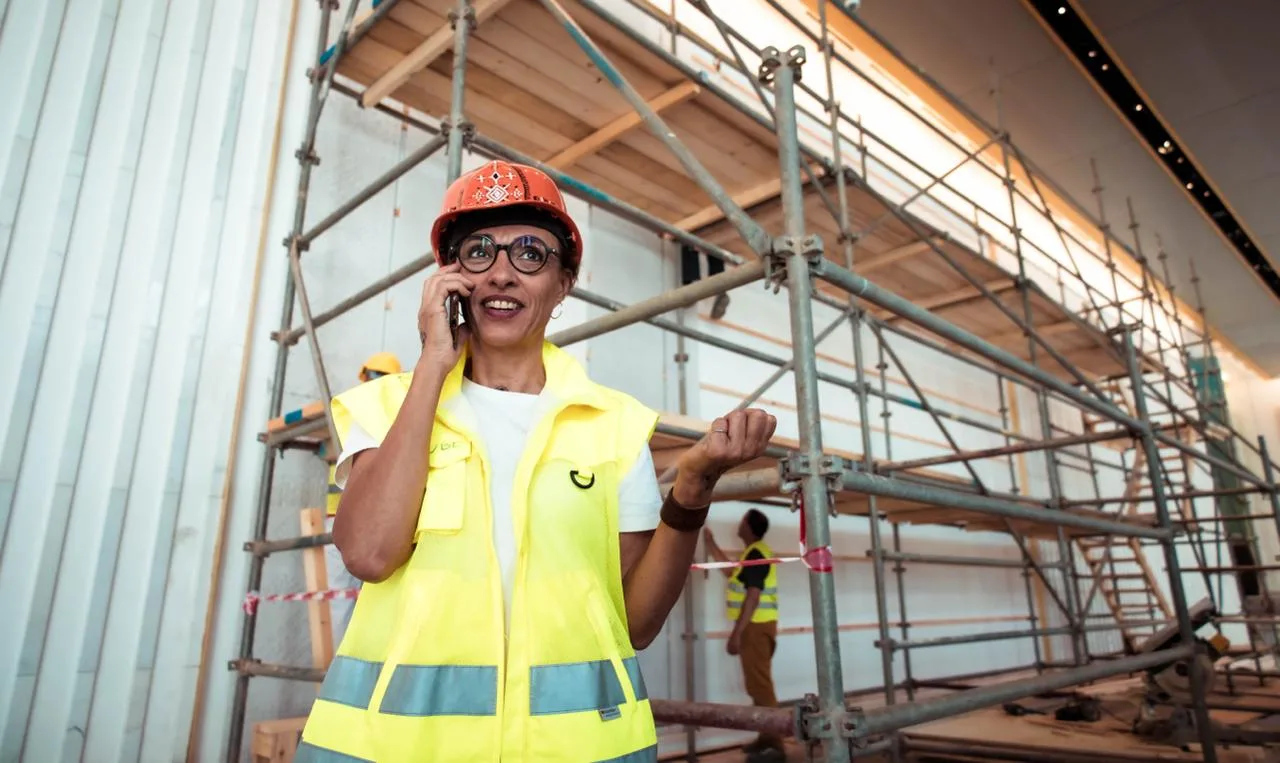
That understanding, she explains, allows innovation to happen without distortion.
She enjoys bringing traditional craft into dialogue with contemporary tools, materials, and technologies.
Her goal is not to reproduce heritage, but to allow it to keep living, surprising, and moving people.
When her creations reach both design enthusiasts and curious viewers discovering a work for the first time, she feels she has built a bridge between Moroccan inheritance and the present.
The memory in ‘RÉMANENCE’
One of Mourabit’s most ambitious recent projects is “RÉMANENCE,” a monumental mural created for the Mohammed VI Tower in Rabat.
When the architecture firm invited her to design the work, she says she was immediately moved by the scale of the project and the trust placed in her.
The theme, “Morocco and its know-how,” gave her broad creative freedom, with one imposed material: plaster.
Mourabit imagined “RÉMANENCE” as “a memory in motion.”
Rather than illustrate Moroccan crafts in a descriptive way, she wanted to evoke the traces they leave in collective memory.
Each relief, texture, and motif echoes a gesture, material, architecture, or craft that forms part of Moroccan identity.
The work also became a deeply collective adventure.
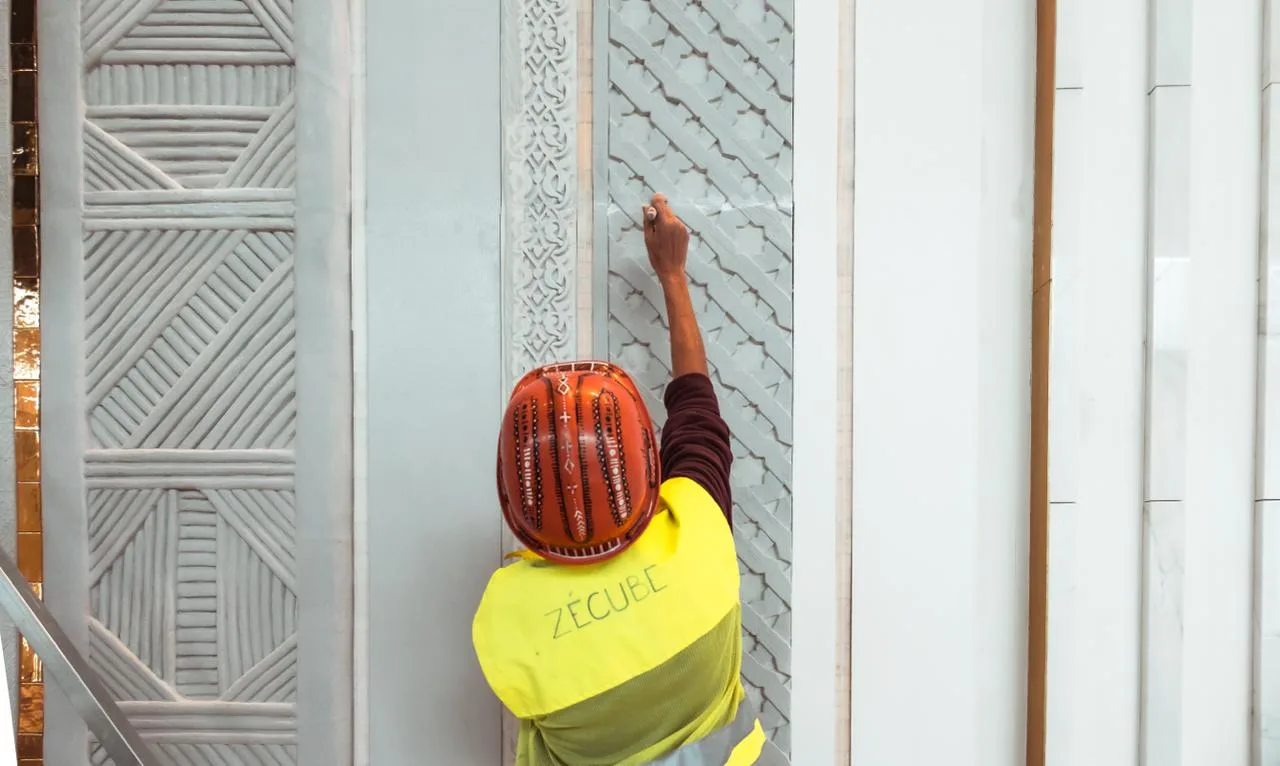
For nearly three years, Mourabit worked closely with her artistic direction, project manager, and her team, including engineers, artisans, craftspeople, and production companies.
Together, they drew, prototyped, tested, corrected, and searched for solutions to each technical challenge.
That collective intelligence, she says, became part of the artwork itself.
She was especially committed to keeping the artisan’s hand visible, even within an industrial production process.
The textures were first made manually before being adapted for industrial production, allowing each relief to preserve a sense of authenticity.
The mural also includes 2,200 hand-cut zellige pieces finished with 18-karat gold, adding the light and refinement Mourabit associates with Moroccan identity.
What moves her most today is not only seeing the mural installed, but watching visitors stop, observe it, interpret it, and discover a fragment of their own story in it.
“RÉMANENCE now belongs to everyone who takes the time to look at it,” she reflects.
A new capsule at the Royal Theatre of Rabat
Mourabit is also extending her visual language through a white and silver capsule collection presented in the boutique of the Royal Theatre of Rabat.
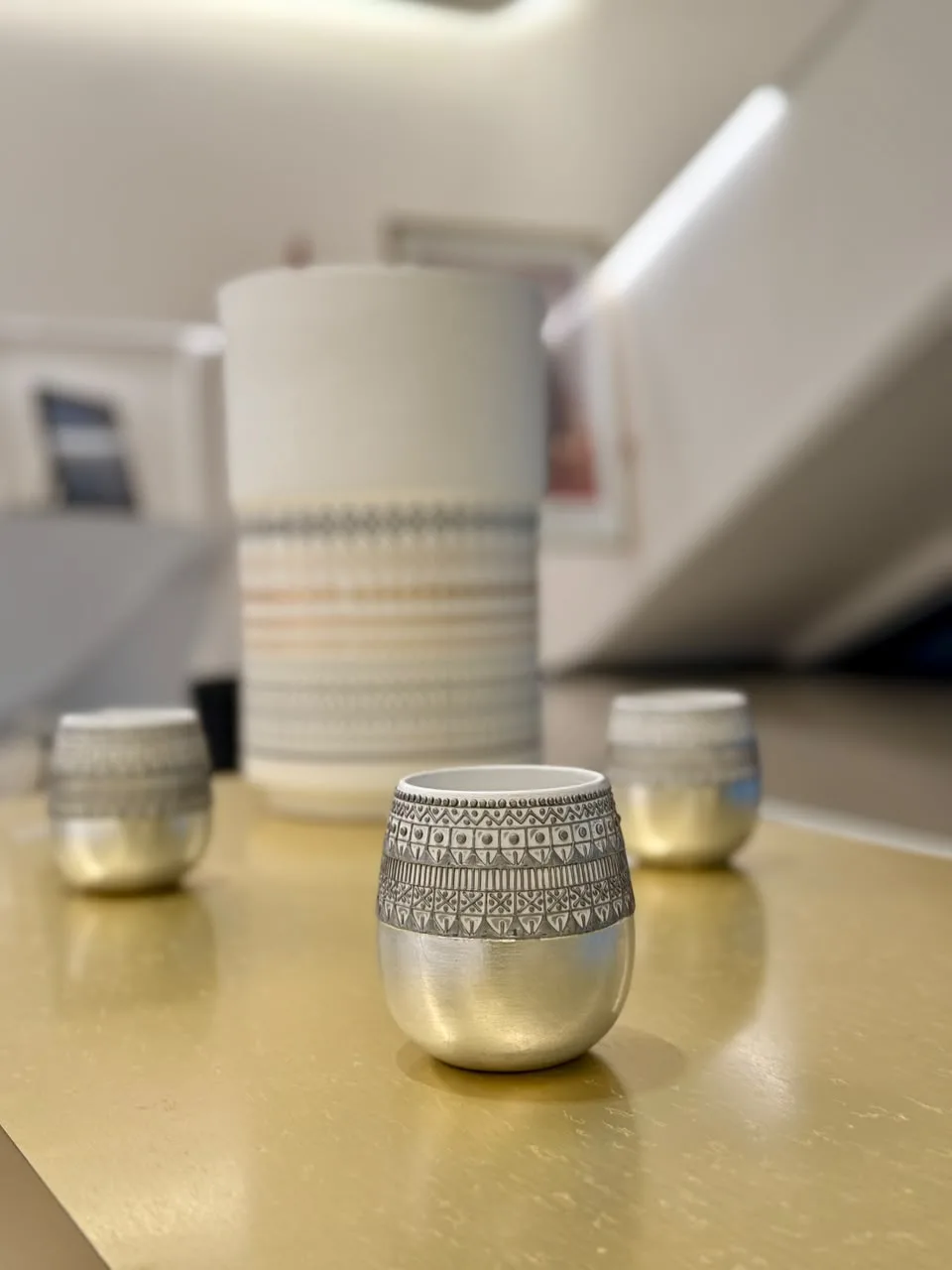
In this collection, she reinterprets one of the iconic graphic motifs of Moroccan heritage on contemporary ceramic pieces enhanced with textured reliefs and silver leaf.
The idea, she explains, was to create a subtle dialogue between Zaha Hadid’s architecture and Moroccan craftsmanship.
The capsule continues a broader thread in her work: the desire to explore new territories while remaining grounded in memory, gesture, and material.
From monumental decor to skin jewelry and temporary tattoos, Mourabit approaches each format with the same intention.
She wants to create objects and experiences that leave an imprint.
In her work, Morocco’s heritage transcends mere nostalgia; It becomes a living force, capable of moving through architecture, craft, design, and the body itself.
That is the quiet power of Mourabit’s creative language, as it invites people to see Moroccan memory not as something behind them, but as something still being shaped in the present.