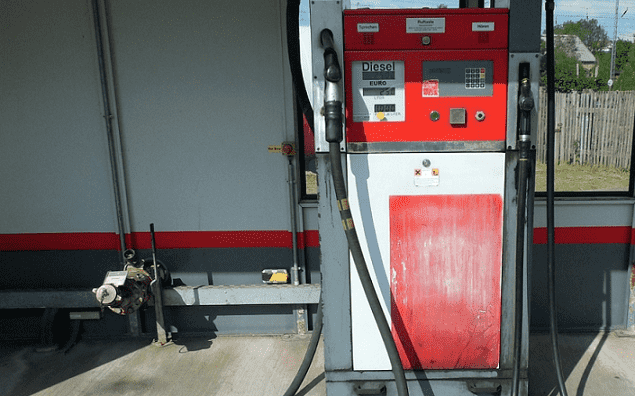
Morocco is set to establish a new lab to ensure quality of hydrocarbons in the market, Morocco’s Minister of Mines and Trade Aziz Rabbah announced on Monday.
Responding to a question regarding hydrocarbons quality during a hearing session at the House of Representatives, the minister said the project will require a budget of MAD 10 million ($1 million).
He emphasized that the ministry is now working to make sure that all international standards are implemented nationally in fuel quality control.
“The ministry launched a call for tenders to choose a company specializing in the quality control of hydrocarbon from its importation and arrival at the port until its distribution to service stations,” he said.
The government is also working on a new bill to focus on the challenges regarding competitiveness.
The hydrocarbons sector has seen the establishment of new companies and service stations after ease of procedures to ensure competitiveness in Morocco, the minister said.
With regard to market monitoring, Rabbah also recalled that 3,400 operations were carried out in service stations last year.
People in charge of monitoring stations filed 60 complaints to the public prosecutor.
Morocco continues to rely on imports of oil to satisfy its energy demands.
Read also: King Mohammed VI Orders Probe on Sanctions Against Hydrocarbon Companies
In 2018, the Moroccan government imported 91.7% of its energy supply from other countries, according to a report from Oxford Business Group.
In 2019, Morocco spent $8 billion on energy imports, a decrease of 7.2% from $8.2 billion compared to a year earlier.
Morocco remains one of the “most underexplored” countries in the Middle East and North Africa region, according to the Oxford Business Group report.
“The Atlantic coast and vast tracks of desert hold considerable potential for both onshore and offshore discoveries. However, as of 2019 only 44 offshore wells and 310 onshore wells had been drilled,” the report said.
The document also cited the findings of a study by Morocco’s Office of Hydrocarbons and Mines, which showed that the North African country has approximately 0.04 wells per 100 square kilometer.
“The authorities hope that increased exploration efforts will result in sizable discoveries in the years ahead,” it added.