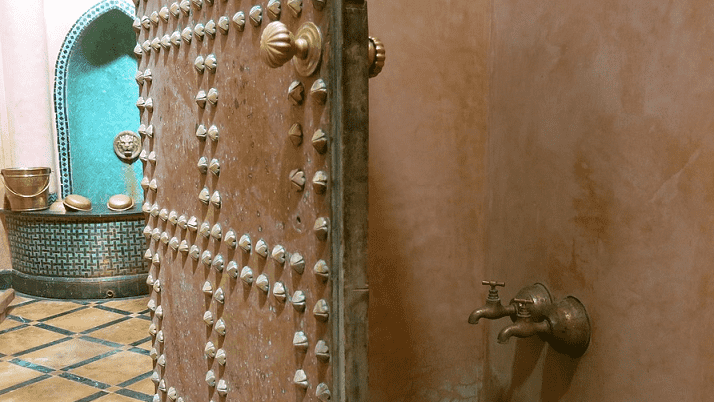
Rabat – Morocco’s Ministry of Human Rights has announced that the government will compensate employees of traditional hammams closed due to the spread of COVID-19.
Mustapha Ramid, Morocco’s Minister of Human Rights, announced the news on Monday in Rabat when answering a question during a House of Representatives session.
Ramid said that the government will list employees whose activities have been suspended due to the shutdown of traditional hammams.
The compensation takes into account the “damage suffered by this category because of the closure of their workplace,” Ramid argued.
Morocco closed hammams in 15 prefectures and provinces out of a total of 82 as part of the preventive measures to contain the spread of the COVID-19 pandemic.
The reopening of the hammams remains dependent on the improvement of the epidemiological situation and the decision of the ad-hoc local committees.
Ramid also warned against the spread and impact of COVID-19, emphasizing the need to continue to ensure efforts to mitigate the repercussions and the spread of the pandemic.
Morocco continues to record COVID-19 cases and deaths amid the launch of the vaccination campaign.
Read Also: Travel to Morocco: 5 Best Hammams to Visit in Marrakech
To date, Morocco confirmed 475, 589 cases, including 454,997 recoveries, and 8,408 deaths.
The number of vaccinated populations reached 550,149 as of February 8.
The country is still under a state of emergency, enabling Morocco’s authorities to impose lockdown whenever needed in a specific area to contain the spread of COVID-19.
Following the outbreak of the pandemic, Morocco closed hammams, mosques, and other public spaces nationwide.
The reopening of hammams in late 2020 was part of lockdown easing measures.
But several provinces are still under strict lockdown.
A night curfew continues nationwide.
On February 1, Morocco extended the night curfew to curb the spread of COVID-19 for two additional weeks.
The curfew bans movement between 9 p.m. and 6 a.m. every night, except for exceptional reasons such as professional obligations or medical emergencies.
Businesses, meanwhile, have to close before 8 p.m. every evening.