Rabat – The Canadian exploration and development company, Trigon Metals, has announced promising results from its drilling operations at Silver Hill, Morocco.
The Canadian company pins its hopes on several of the holes drilled in the Anti-Atlas region, with the most promising results stemming from hole S20, which has a 31 meter depth of approximately 0.74% copper, and 23 grams of silver per tonne (g/t) “with higher grade intervals.” The results suggest that mineralization in the area remains strong.
Other holes, from S16 through S21, also showed promising results. Some highlights include: Hole S16, 10 meters deep with 0.98% copper and 20 g/t silver, hole S17, three meters deep with 1.41% copper, as well as the aforementioned hole S20, which has a six meter section composed of 1.23% copper and 75 g/t silver.
According to UndervaluedEquity, when it comes to silver extraction, less than 10 g/t represents low-grade, 10 g/t to 50 g/t represents medium grade, and over 50 g/t represents high grade of the precious metal.
Read also: Minister Calls For More Investments to Strengthen Morocco’s Mining Sector
“Silver Hill continues to meet our highest expectations. The strength of these intercepts are particularly striking since they come at the western extent of our drilling. This firmly shows that the deposit remains open in all directions,” said Jed Richardson, President and CEO of Trigon Metals.
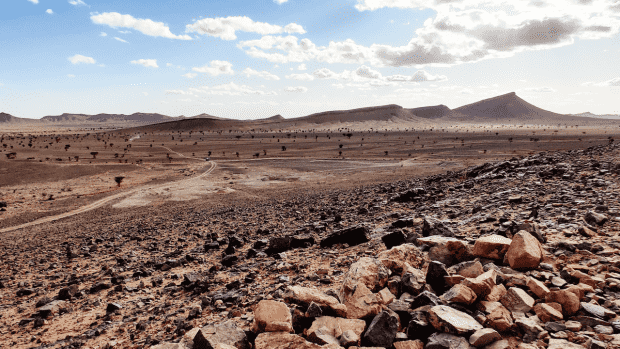
The Silver Hill Project, based in the Anti-Atlas region of Morocco, is a 16-kilometer squared property of the Canadian company. Upon initiation of the project, the preliminary surface exploration showed “copper and silver mineralization at high grades distributed over a wide surface area.”
Interestingly enough, Trigon notes that “Slags from ancient workings indicate historical large-scale mining for silver” in the region.
“We are excited to introduce another high-grade copper asset to Trigon’s portfolio,” said the CEO following the acquisition of Silver Hill, explaining that “New areas of copper production are important as production declines from the Andean resources on which the world has come to depend for the last 30 years.”