Join on WhatsApp
 Join on Telegram
Rabat – Farida Fassi is a well-established Moroccan researcher and a professor of physics at Mohammed V University in Rabat, the Moroccan capital. Morocco World News (MWN) reached out to her to discuss her experiences, her academic — and social — work, as well as the state of academia in Morocco.
Fassi recently also made it into the top ranks of the international 2021 AD Scientific Index, which looks at various metrics for productivity and academic citations to rank scientists worldwide. The Moroccan professor ranked 38th in the world, and second in Morocco, the Arab league, as well as in Africa.
Fassi’s qualifications reflect her impressive ranking. She earned a B.S.c degree in Physics from the Abdelmalek Essaadi University in Morocco in 1994, and a M.S. degree in Nuclear and Particle Physics, and a Ph.D. in Particle Physics from the University of Valencia in Spain.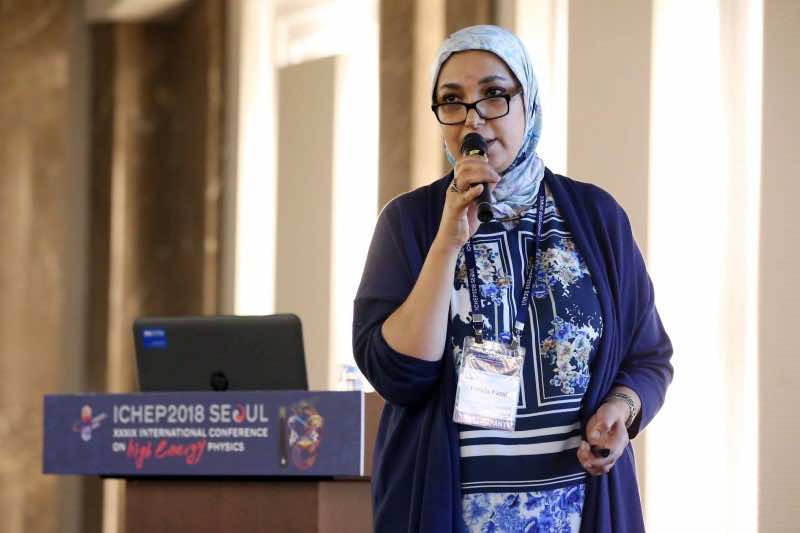
Following her education, Fassi established herself in the field of physics working through several Postdoctoral and Research positions at the Spanish National Research Council, the French National Centre for Scientific Research, and the Spanish Center for Particle, Astroparticle and Nuclear Physics over the span of 13 years.
Fassi’s long and illustrious journey began with her parents, who, as she told MWN, supported her scientific and mathematical abilities since she was a young girl. Of course, it takes more than just a supportive family to reach such prominence, and for Fassi, the driving force was her curiosity.
In high school, physics and mathematics were her favourite subjects – “Math is hard, Physics is beautiful,” she told MWN. And combining her curiosity with facts and a good foundational knowledge of mathematics, “is the best process to build scientific knowledge,” she explained.
Fassi loves science, and she loves to know how things work, and ultimately, for her, it is not “enough to accept everyday phenomena at face value.” Consequently, she also took great satisfaction from developing a greater understanding of things. This drive to explore the universe, learn how to harness energy, and to understand the environment we inhabit, led her to seeking practical solutions for problems that humanity faces today.
For the Moroccan scientist, “Physics reveal the mathematical beauty of the universe at scales ranging from subatomic to cosmological,” which is something that people take for granted.
Quantum physics
While Fassi was studying in Spain, in 1996, Morocco became an official member of the ATLAS collaboration, a part of the particle detector experiment at the Large Hadron Collider (LHC), at the CERN in Switzerland. For the Moroccan scientist, this was an “eagerly awaited day.” Morocco was the first Arabic and African country to sign an agreement with CERN to participate in the particle detector experiments.
Highlighting the academic efforts at home, Fassi explained that the scope of collaboration, and Morocco’s involvement in the project, would not have been possible without the undertaking of a small group of physicists who recognised the potential benefits of such collaborative work.
Motivated to bring new research and technology home, local scientists launched the Moroccan High Energy Physics Cluster (RUPHE) in 1996. The aim was to better the scientific training that is available for young people in Morocco while pushing along the advances in “pure scientific knowledge,” Fassi explained.
Since its conception, RUPHE has worked with ATLAS collaborators from some of the most prestigious Moroccan universities, such as the University of Hassan II in Casablanca, Mohammed V University in Rabat, Mohamed I University in Oujda, among others.
Read also: Morocco Universities Ranked Best in Africa, Arab World On Physics
Through her active involvement in the collaboration, Fassi contributed to the research of High Energy Physics, as well as to the Worldwide Large Hadron Collider Computing Grid, which sets out to solve the problem of data storage for the LHC.
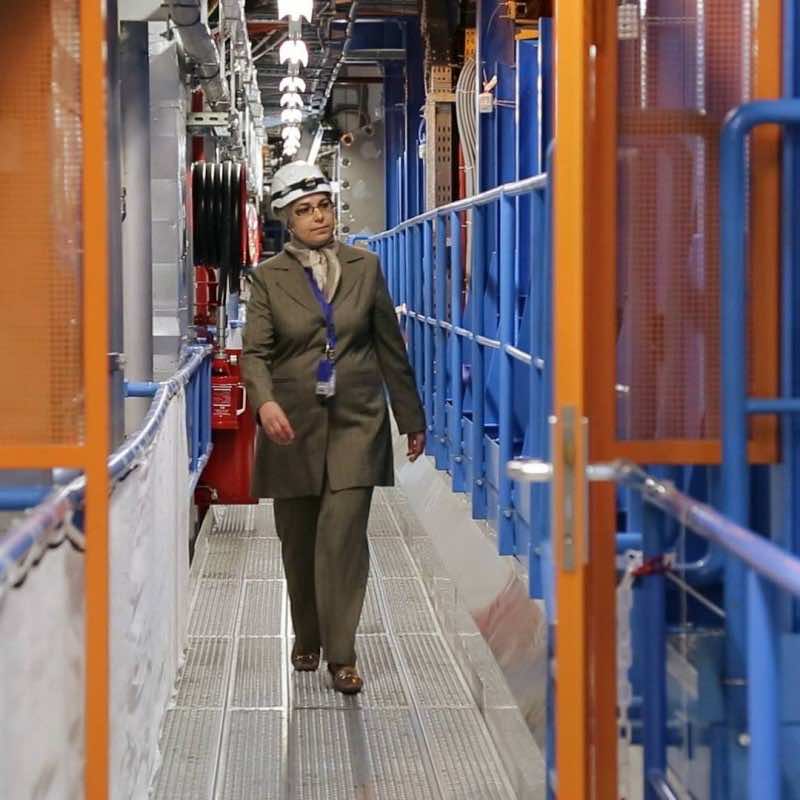
But what ultimately pushed Fassi down the path of Quantum Physics, can be traced back to a program concerned with “What is quantum physics?” at Abdelmalek Essaadi University in Tetouan.
“I was fascinated with Quantum Physics, which is a fundamental theory in physics that explains how everything works,” she said, noting that it is “the best description we have of the nature of the particles that make up matter and the forces with which they interact.”
The subject is often misunderstood, and Fassi is eager to stress that Quantum Physics can be “weird and counterintuitive.” And that, for this very reason, “the word ‘quantum’ has become shorthand for anything powerful or mystical, whether or not it has anything whatsoever to do with quantum mechanics.”
After 18 years in Europe, Fassi decided to move back home to help raise awareness of this “mathematical beauty,” and to bring both her experience and expertise to the country to help foster and promote scientific research.
“I am confident that I would be a valuable asset to convince the community of the importance of physics for the Moroccan economic development.”
African Strategy for Fundamental Applied Physics
Fassi underlined the fact that Africa has the world’s youngest population — which is growing fast — and since the continent has “incredible opportunities for science,” she and some of her colleagues launched the African Strategy for Fundamental and Applied Physics (ASFAP).
In her own words, the initiative “has the ambition and the moral responsibility to promote physics and to contribute strongly to Africa’s priority area.” It outlines their vision of a prosperous Africa, built on growth and sustainable development. As Fassi sees it, investing in physics education, promoting skills development, and teaching physics as an applied science make up the three central pillars that could help achieve this goal.

The main ambition of the initiative is to transform and reform basic physics research and the application of the discipline in higher education and scientific research systems in Africa. Fassi and her colleagues at ASFAP hope to help “energize and unlock the minds for brighter economic prospects.”
Their bet is that the process — set to last a few years — will eventually produce a final report that will help inform African policymakers, educators, researchers, and other stakeholders about the “strategic directions likely to have positive impacts on physics education and research in the next decade.” The goal, then, insists an ever eager and optimistic Fassi, is to give Africa’s policymakers direction in how to prioritize educational and research resources and activities.
“Key considerations in this process should include a strong desire for investment in African science for economic growth driven by physics-based technologies and its beneficial impact as well as the needs of other sciences that draw heavily on advances in physics,” Fassi explained.
Education and economy
For her, “governments should be persuaded to encourage and support basic research in science that is vital for the needs of a nation.” This is even more pertinent in “today’s technology, economy,” where governments’ and other stakeholders’ “impact on society is closely linked with basic physics research driven by curiosity, as well as applied research linked to technology.”
And because physics often acts as a foundation for other disciplines, or plays an important role in a wide variety of industrial sectors, “only scientific knowledge can help Morocco decide which technologies are needed to solve problems,” according to Fassi.
Fassi believes that while economics, politics, public approval, technological simplicity, and other socio-economic variables all play a crucial role in society, it is science and engineering that ultimately counts.
Her point is that the Moroccan government still has a lot to do in terms of engaging younger generations of Moroccans. In a sense, the government needs to work to ensure a high level of scientific investment, including research funding. But they also need to pay more attention to the research in both basic and applied physics, as well as to the proper application of research findings.
The current situation, Fassi notes, “is due to a limited ability to recognize research in physics as a priority and appreciate its role in developing technologies that may lead to economic growth and sustainable development.”
She explained, “An evolution in the mentalities of political powers is required to realize the stakes of science in a context as competitive as the one we live in today. Since physics education and scientific research in Morocco is about the development of human capital resources, it is essential to ascertain what macro-policy perspectives frame decisions impact them.”
Women in science: challenging stereotypes
Another problem that Morocco faces at the moment is the lack of women in scientific fields, especially in physics. According to Fassi, this state of affairs detracts from both overall human fulfillment as well as beneficial productivity in the country.
If Morocco hopes to maximise the potential benefit reaped from science and education, Fassi believes that it is essential that more women are involved in scientific endeavors.
“The solutions that science provides are not just tailored to the needs of a single gender.”
Women’s participation in positions of responsibility in the country’s academic and scientific institutions will help show the younger generations that a “brilliant career in science is possible for women,” Fassi stressed.
Everyone is responsible for promoting diversity and ensuring that we build an inclusive culture. One way to achieve this, according to the professor, could be through special initiatives aimed at encouraging young girls to undertake scientific education.
But Fassi is not one to let government policy be the lone purveyor of such change, and for the Moroccan scientist, using her position to act as a role model and an inspiration for the younger generations is essential.
“I love telling my students, ‘If I have done it, you can do it as well’ and seeing their eyes light up… I also love challenging stereotypes whenever I stumble upon them,” she recalled. Fassi’s attitude has helped her students go “from questioning whether they can be successful, to asking questions about how they can be successful.”
This is especially true for women, who, according to Fassi, often internalize impostor syndrome at a young age. With her wealth of experience, Fassi has plenty of formidable advice for for women in early-career positions
“Believe in yourself and believe that what you do matters for science and for society. Strive to create the networks and find the peer support and mentoring that you need. Be open and outspoken about the challenges that you face to help others find better ways to support you,” she said, directly addressing women and urging them to be bold and unapologetic in their determination to smash cultural barriers to fulfil their dreams
Fassi added, “But you also need to be realistic, as not everyone will be able to see things from a new perspective or change their ways. Ultimately, this is your life, and you have to decide what things are worth fighting for and what others are not worth the time or energy.”
Her positive frame of mind illuminates everything that she says, whether trying to inspire young boys and girls to join sciences, or whether she speaks of her own personal journey.
Inspiring the younger generations
“Young researchers often second-guess themselves, particularly when faced with conflicting advice from respected mentors,” Fassi told MWN, reminding any aspiring scientists that “it’s important to keep in mind that what is best for your mentors is not always best for you.”
For her, self-confidence and boldness are the keys to a successful career in a challenging field. “Trust your gut. It’s easy to doubt your intuition if you continually run into obstacles, and obstacles might pop up more for women than for men. But self-confidence is your driving force, the lever that can help you surpass yourself and develop autonomy. It’s impossible to feel sure of yourself in every situation. No one possesses the skills to cope with every situation – especially if you’re working in an uncertain environment.”
Nonetheless, the more familiar you are with your own abilities, the easier it will be to deal with professional events and challenges. “If you train yourself to do this,” she continued, “you can become more confident in the path you are taking, in facing the obstacles you will very likely have to face as a minority in science and in advocating for yourself.”
Even after decades in academia, the excitement of being one of the few women in a male-domintaed field has not yet worn off for Fassi. To her mind, the simple act of participating is already making a difference. She has also come to terms with the understanding that “there is a wide variety of professional cultures, and [she doesn’t] have to settle for one that is unwelcoming and, frankly, unsafe.”
Read also: Race2Space: Semifinalists Share Their Passion for Science
“I have many male colleagues who I consider actual friends, who have never asked me out or made a joke at my expense,” Fassi explained. “I no longer feel like I’m seen as a woman first; I am just a researcher, a scientist, a professor.”
She believes that it is essential for women to advocate for women, especially in the fields that remain male-dominated. While first and foremost — in her own words — she’s a scientist, she is also a woman.
“Being a woman in physics has been challenging and lonely at times. I have had to work hard to fit in with professional networks, to get heard and recognized, to identify role models who could show me the way forward, and perhaps even to identify with the scientific community.”
Despite the presence of the all-too-common obstacles for women in male-dominated environments, Fassi’s greatest challenge yet came from balancing between her family, husband and two daughters, and her time-consuming job. “Fortunately, I had excellent help at home with my husband who has always been very supportive,” she told MWN with a sigh of relief.
“On the flip side, by just being there and doing my work, I have been able to act as both a pioneer and a role model for others,” she recalled, highlighting the fact that “having to blaze your own trail is hard, but it also allows you a lot of freedom and creativity in your work.”
Fassi’s experience has made her more supportive, conscious of potential biases — her own, and those of others — as well open to different expressions of scientific work and different levels of excellence. Ultimately, she said, “knowing that all your efforts to open the door will one day also benefit others makes your personal achievements all the more satisfying.”