Rabat – Cuba’s celebrations of the success of its homegrown Abdala COVID-19 vaccine starkly contrast its ongoing efforts to lift the nearly 60-year-long US-led embargo against the Caribbean island.
Cubans have continued to celebrate its homegrown COVID-19 vaccine, Abdala, as it has shown to have a 92.28% efficacy rate, the Cuban government reports. The vaccine, which has entered Phase III of its trials, is one of five vaccines that Havana has begun developing since COVID-19 emerged early last year.
“Yours is the success of Soberana 02 and Abdala. Thirteen months ago, I asked our scientists for a sovereign response against COVID19. They gave not one but five answers,” tweeted the Cuban President Miguel Díaz-Cane. “That victory is only comparable to the size of our sacrifices.”
<blockquote class=”twitter-tweet”><p lang=”en” dir=”ltr”>Cuban scientists yesterday as they found out that the vaccine they had been working on (Abdala) is 92.28% effective, among the highest in the world. <a href=”https://t.co/v95iVxEZrJ”>pic.twitter.com/v95iVxEZrJ</a></p>— Kawsachun News (@KawsachunNews) <a href=”https://twitter.com/KawsachunNews/status/1407300302190096388?ref_src=twsrc%5Etfw”>June 22, 2021</a></blockquote> <script async src=”https://platform.twitter.com/widgets.js” charset=”utf-8″></script>
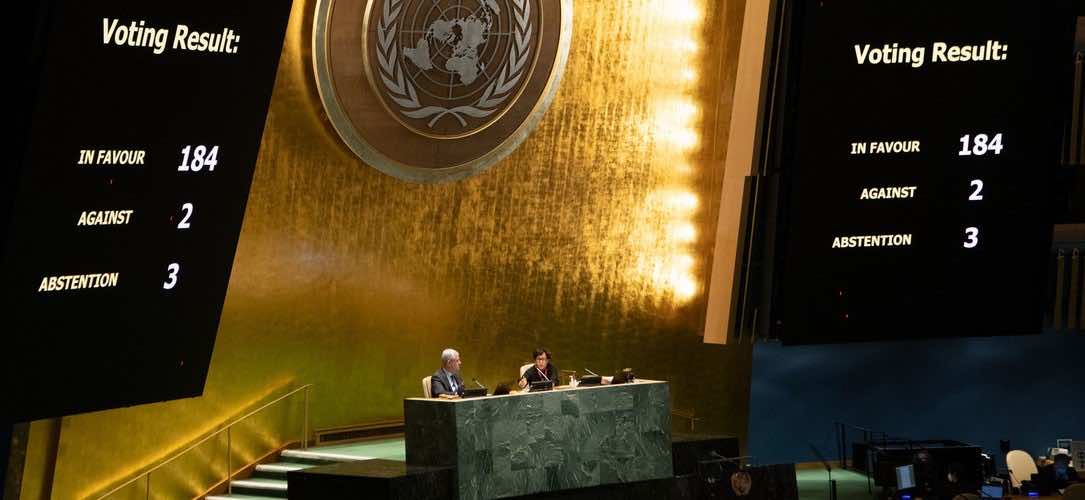
The celebration was contrasted by the fact that on June 23 — for the 29th year in a row — Cuba brought forth a resolution to the United Nations, demanding the end of the US blockade against the island. While a total of 184 countries voted in favor of the resolution, as is tradition, the US and Israel were the two countries to vote against it.
Only Colombia, Ukraine, and Brazil abstained from voting.
US PR stunts suggesting the easing of the embargo — without any tangible results — “cannot hide that Cuba has been the victim of a de facto embargo in these domains,” said CETIM. The publishing house added that the reduction of medical goods and foodstuffs is only detracting from Cubans’ quality of life and “constantly threatens its dietary security, its nutritional stability and its health.”
Since 1992, when the annual vote began, it has received overwhelming backing from the broader international community. While, as UN News notes, the Assembly’s vote carries a certain political weight when it comes to international diplomacy, ultimately, only Washington can lift the “economic, commercial, and financial embargo” that has been going on for over five decades.
Read also: Cuba-Morocco: ‘What Unites Us, More Important Than What Separates Us’
Following the vote, Diaz-Cane shared a celebratory Tweet with the results, calling it “A resounding victory!”
“The cynical, lying and slanderous imperial discourse is as immoral, shameless and outdated as is the criminal blockade,” he said, adding that “The world is with Cuba.”
For Cuban Foreign Minister Bruno Rodríguez Parrilla, the blockade is a “massive, flagrant and unacceptable” violation of Cuban peoples’ human rights.
In 2018, a UN agency said that the “unjust” embargo had cost Cuba’s economy approximately $130 billion over its six-decade-long run. Parrilla added that the embargo has made it harder for Havana to procure the much-needed medical equipment for developing its COVID-19 vaccines.
“Like the virus, the blockade asphyxiates and kills, it must stop,” he said at the UN assembly.