 Join on WhatsApp
 Join on Telegram
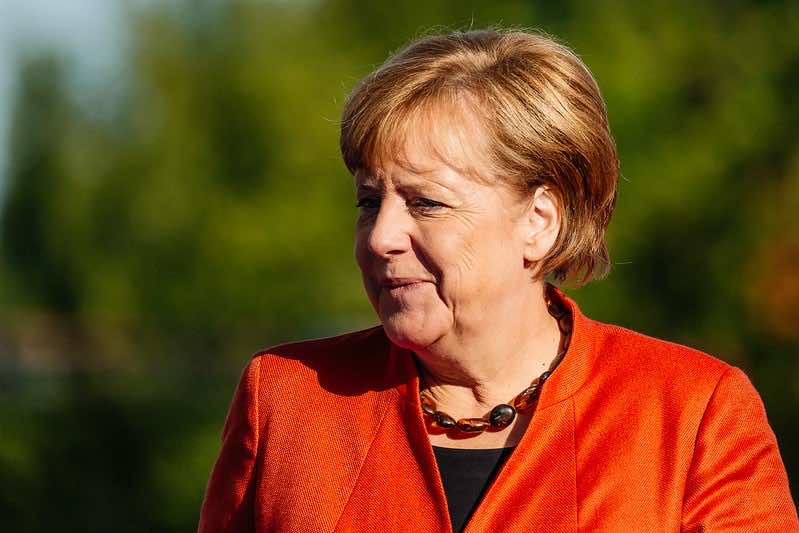
Rabat – Germany’s Chancellor Angela Merkel has called for tighter export restrictions on spyware, citing concerns that some private and government actors might misuse it.
“It is important that software configured for special situations should not land in the wrong hands, meaning there should be very restrictive conditions,” Merkel told reporters in Berlin earlier this week.
Following recent revelations about the Israeli-developed spying software Pegasus, the German leader argued that imposing stricter export restrictions on spyware would be the most effective way to curtail rogue behavior.
“In countries where judicial oversight of such programs may not be guaranteed, they should not sell such software either,” Merkel stressed.
While the NSO Group claims that the software was “only sold to law enforcement agencies and secret services of audited governments,” Western leaders appear convinced that there has been a breach of protocol.
As a result, French President Emmanuel Macron has changed his phone number following allegations of Morocco’s espionage attempts, said a presidency spokesperson earlier this week.
“He’s got several phone numbers. This does not mean he has been spied on,” stressed the spokesman, adding that “It’s just additional security.” French government spokesman Gabriel Attal reiterated the sentiment, noting that the president’s security protocols are being updated following the unraveling of the Pegasus affair.
“Obviously we’re taking [the affair] very seriously,” Attal said following an emergency cabinet meeting discussing the allegations.
Chairwoman of the German Union of Journalists, Monique Hofmann, further requested stricter controls on surveillance technology exports, claiming that “authoritarian states use Pegasus to silence critical and opposition voices.”
“Spy software must not be supplied to countries in which human rights are repeatedly violated,” she added.
While there have been other allegations and revelations of misuse of surveillance in the past years, the Pegasus affair has stirred up the biggest storm among the international press. A combination of elements has made this a particularly juicy story for Western reporters.
The accusation on quickly developing Global South countries’ “attacks” on high ranking politicians in the European political landscape, and vague calls for “freedom” and “transparency,” contribute to a credible narrative that can appeal to an average European’s subconscious bias towards countries perceived as “illebral” or “repressive.”
Read also: The Pegasus Project Affair Becomes a Question of Ethics
Morocco’s ambassador to France, Chakib Benmoussa, also recently highlighted some inconsistencies in the Pegasus project’s narrative. The leaked list – underlying all the allegations – consist of 50,000 numbers, yet NSO Group claims it has never maintained such a list.
The ambassador also questioned the outsized media focus on just 11 developing countries despite NSO’s statement that states a total of 40 countries have purchased its software. Like Benmoussa, other critics have seen the unrelenting focus on supposedly “rogue” and “ authoritarian” developing countries a sign of Western paternalism and self-righteousness.
When, nearly a decade ago, the US Spied on the German President Merkel with the aid of Danish secret services, the uproar was short, dampened, and ultimately non-consequential. Similarly, when the US’ NSA admitted to spying on over 100,000 foreign nationals outside of the US in 2017, international media’s response was almost non-existent.
It is only when such accusations are levied against countries like Morocco that they seem to matter, since that is when these accusations can be used to exert political pressure on Global South governments to adhere to some policies and interests that they might not have willingly embraced.