


 Join on WhatsApp
  Join on Telegram
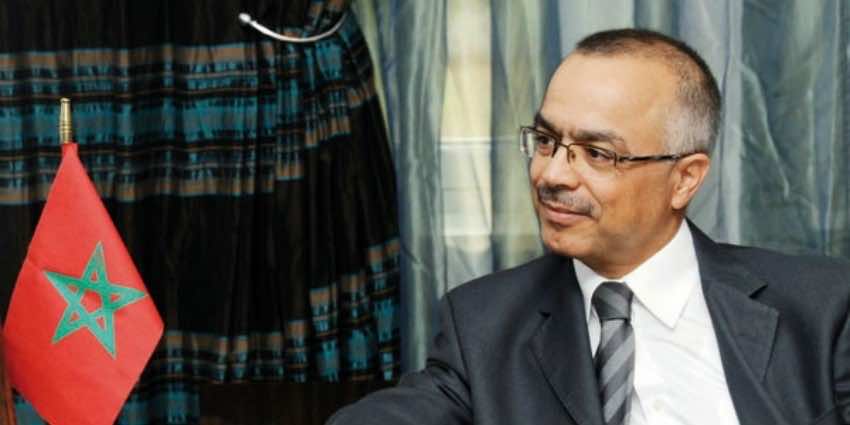
 Rabat – Morocco’s Ambassador to France, Chakib Benmoussa, denied allegations of Morocco spying on President Emmanuel Macron, pointing to the lack of evidence corroborating the claims.
“Morocco did not spy on President Emmanuel Macron. Nor did it spy on the former Prime Minister or members of the government,” said Benmoussa in an exclusive interview with French newspaper Le Journal de Dimanche. He added, “Moreover, there is no evidence to support this.”
Amidst unevidenced revelations and allegations related to the Pegasus affair, the French press has unleashed an apparent crusade against the Moroccan government, accusing Rabat for the alleged espionage on French officials, including French President Emanuel Macron, journalists, and activists.
Amnesty International, in collaboration with Forbidden Stories and 17 international media partners, published a report citing a massive data leak accusing several governments and entities of using NSO Group’s Pegasus software to spy on public and private figures.
Read also: The Pegasus Project Affair Becomes a Question of Ethics
In response to the question of whether Morocco acquired the Israeli software, the ambassador strictly denied the acquisition, recalling Amnesty International’s previous accusation of Morocco using the software several months ago.
“The head of government had already refuted such facts and asked in a letter to the NGO to provide evidence that would support its accusations,” he said, adding that the “request remained unanswered. “
Benmoussa explained that there are “networks hostile to Morocco,” which are attempting to destabilize the North African country, “in France and elsewhere.” He stressed that there are actors “who consider our country as an enemy” and are exploiting the allegations to further undermine Morocco’s credibility.
“Who has fueled all this? Who was the instigator?” the ambassador queried, adding that “These are open questions for the moment.”
“Morocco’s success in Africa does not please everyone,” mentioning Morocco’s “neighbor,” presumably referring to Algeria, as a possible party in the whole affair. The ambassador also stressed the timing, which coincides with Morocco’s Throne Day, the anniversary of Morocco’s King Mohammed VI’s enthronement on July 30, 1999. The celebration, in parallel with Morocco’s progress on a variety of issues, “may not please everyone,” the ambassador stressed.
Benmoussa also highlighted how the accusations are “inconsistent.” How could there be a list with 50,000 compromised numbers when the NSO Group claims it does not maintain such a list? If, as NSO Group claims, a total of 40 countries have bought the software, why are the latest revelations concerning only certain countries, painted as some “rogue and police states?”
Read also: Investigations Reveal Macron Was Not Spied on With Pegasus Software
The newspaper cited other publications that stated several Moroccan intelligence services having access to Pegasus, to which the ambassador replied calling it “a banality.”
“They are intelligence services and like their counterparts in the world, they are interested in software and technological tools to do their job of protecting the higher interests of the country and its citizens, except that they have not acquired Pegasus,” he stressed.
“The Moroccan Constitution and recently updated laws, in accordance with international conventions ratified by Morocco, protect personal data,” the ambassador explained, adding that “The Moroccan services are part of a rule of law approach.”
When asked about a possible meeting with the former French minister Francois de Rugy, one of the politicians allegedly targeted by Morocco, Benmoussi replied that he would be “happy to receive [Rugy] as a friend,” adding that he understands the emotion of someone who has been compromised in one way or another, but ultimately, “Morocco is not concerned in any way.”


