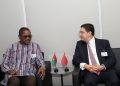
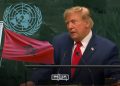
Algeria’s Ministry of Foreign Affairs has announced its decision to summon the Algerian ambassador in Rabat for consultation, demanding clarification regarding recent remarks by Omar Hilalae, Morocco’s permanent representative at the UN.
The statement comes after remarks from Hilale on the Kabyle people’s right to self-determination created uproar among Algerian officials.
Speaking during a UN session on July 15, Hilale drew attention to Algeria’s double standards when displaying to the international community its unwavering support for the “self-determination” of Western Sahara and yet denying similar rights to the Kabyle people.
In response, the Algerian foreign ministry said that is expecting Morocco to clarify its final position on the situation, describing Hilale’s remarks as being of ” extreme gravity.”
“Since then, and in the absence of any positive and appropriate echo from the Moroccan side, it was decided today, the recall, with immediate effect, for consultations, of the Ambassador of Algeria in Rabat,” the ministry said in a statement.
It also argued that “other measures” are possible “depending on the evolution of this affair.”
For decades, Algeria has been challenging Morocco’s territorial integrity and sovereignty over Western Sahara.
Algeria supports, arms, finances, trains, and shelters the Polisario Front in the Tindouf camps.
In recent weeks, the country has faced pressure from NGOs and rights activists who have repeatedly spoken up against inhumane living conditions in the Tindouf camps.
In addition to severe restrictions on freedom of movement, Sahrawis in the camps face issues of malnutrition and diseases that the UNSG outlined in many of its most recent reports on the Western Sahara conflict.
NGOs have also denounced the embezzlement of humanitarian aid to Sahrawi refugees in the camps, pointing fingers at both Polisario leaders and Algeria’s government.
Prior to the Algerian foreing ministry’s summoning of its Rabat ambassador over Hilale’s remarks, many senior Algerian officials and politicians had taken to social media to vent their frustration with what they described as a frontal and unacceptable attack on Algeria’s sovereignty.
El-Bina Movement leader Abdelkader Bengrina has said for instance that Hilale’s comments were a “declaration of war on Algeria, the country and its people, and we await a firm position from the competent authorities.”
Morocco’s government is yet to respond to both Bengrina’s and the Algerian foreign ministry’s strongly-worded response.
For watchers of the Western Sahara conflict, meanwhile, of interest in Algeria’s furious reaction to Hilale’s remarks on Kabyle self-determination is the country’s apparent disregard for its role in supporting the Polisario Front in undermining Morocco’s territorial integrity.
If anything, Algerian journalist and political analyst Oualid Kebir told Morocco World News this week, Algiers’ reaction to Hilale’s remarks suggest an uneasiness among Algerian officials over the Moroccan diplomat’s exposition of Algeria’s double standards and diversionary tactics on the Sahrawi and Kabyle issues.
“For 60 years the Algerian regime has exploited its conflict with Morocco to strengthen its home front,” Kabir said. “In 1963 this regime manipulated Morocco’s demands concerning the border issue, and Algeria launched the Sand War against Morocco to stop a rebellion in the Kabyle region and unfortunately managed to convince the opposition to believe it.”