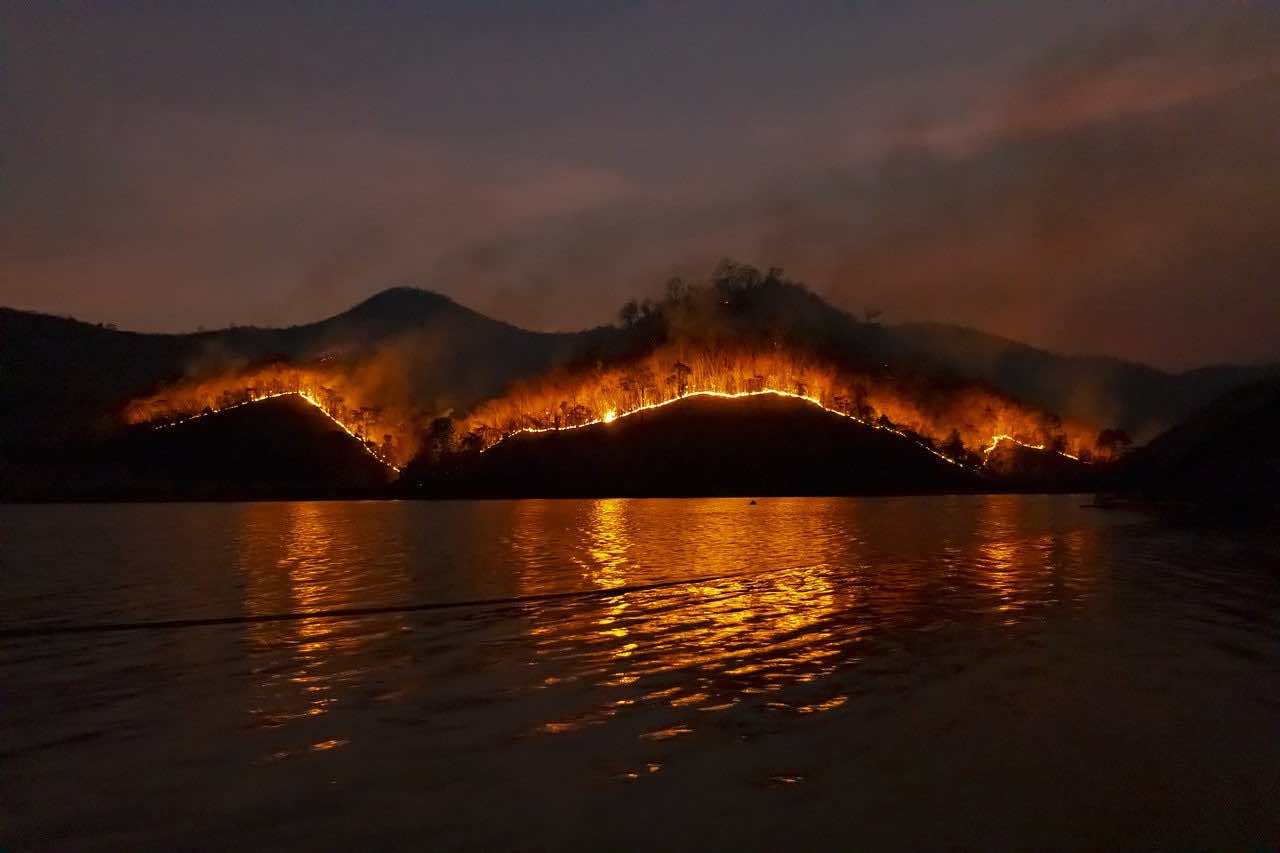
Rabat – Devastating wildfires in Algeria and Morocco have shown that political divisions are hindering what ought to be a united front against the effects of climate change.
As fires ravaged Algeria last week, Moroccan firefighting planes were ready to be deployed to assist in battling the deadly blaze. They remained grounded however, as the geopolitical rivalry with Morocco meant Algerian President Abdelmadjid Tebboune refused to accept Moroccan assistance. While two idle Moroccan Canadair planes stood ready to help, Tebboune instead asked for European assistance.
A common enemy
Tebboune’s request for European assistance came at a time when European firefighter planes were already engaged in fighting forest fires in Greece, Italy, Spain, and now the French Riviera. Similar to the international response to COVID-19, Europe is too preoccupied with its own crisis to assist its neighbors in any impactful way.
Climate change is becoming an enemy to mankind in the traditional military definition. It strikes without warning, claims countless lives, and leaves behind devastation and economic ruin. And just as with COVID-19, nations cannot depend on others to fight on their behalf.
The disastrous forest fires in Algeria and Morocco serve as a warning. Roughly 70 years after North African nations freed themselves from the shackles of European colonialism, a common foe is once again rapidly approaching the Maghreb.
However, a common enemy can bring together even the most ardent rivals if the belief of mutual destruction by the new threat can overcome long-standing grievances.
A divided front
Currently, the Maghreb is divided by geopolitics and nationalist perspectives that fail to account for the common threat to us all. Forest fires are just an example of the crippling effects climate change will have on the region if nations are left to fend for themselves.
A divided front creates the perfect conditions for the enemy to prevail. History is littered with examples of larger forces being overcome due to internal divisions. The crusades come to mind, where divisions in the Muslim world allowed a poorly equiped Western force to build a centuries-long presence in the Middle East.
Every great tale of military conquest from antiquity to now depends on a strong united force overcoming smaller more divided ones. From Alexander the Great to the ongoing fall of Kabul, those who are united come out victorious, while the divided perish.
Facing an existential threat not seen since the emergence of European colonialism in North Africa, unity can be the only recipe for success.
War-time mentality
It seems impossible for governments in Rabat and Algiers to overcome their differences in the short-term. Still, it is important to realize that worse foes have overcome their grievances facing a common threat. The British and French, for example, spilled each other’s blood for centuries but united in the face of an emerging threat from Germany.
Climate change is the obvious threat that should bring together decision-makers in Morocco and Algeria. Petty domestic and geopolitical priorities ought to be cast aside as our common foe causes widespread devastation and claims the lives of our people.
Mere days after the anniversary of the Battle of Isly, where Moroccans and Algerians worked together in the face of pending doom, a new need for collaboration is evident as images of giant fires dominate our screens.
Steps towards creating a united front do not need full reconciliation. Morocco and Algeria could agree on funding and organizing a joint regional firefighting air force, for example. Small steps that recognize our mutual interest in keeping the enemy at bay are essential in this time of international division and counterproductive competition.
Make no mistake, the enemy is already at our gates. The enemy is claiming its victims through water shortages in Algiers, floods in Casablanca, and devastating forest fires.
Divided, both nations will continue to squabble as temperatures continue to rise, foreign assistance evaporates, and domestic issues are exacerbated by the effects of climate change. Yet, if the two nations unite in the face of this looming threat, Morocco and Algeria can face this challenge and overcome this dangerous threat together.