 Join on WhatsApp
 Join on Telegram
Rabat – Algeria’s decision to sever ties with Morocco has nothing to do with geopolitics; and everything to do with the country’s domestic crises. Algeria’s government has announced it is severing diplomatic relations with Morocco citing perceived Moroccan “hostility.” Morocco’s foreign ministry has stated it “regrets” this development, describing the move as “completely unjust.”
International media have reported on the Algerian decision with little analysis besides citing the reasons given by Algerian state media, yet the truth is much more complex.
Many fear a renewed threat of conflict following the new fracture in relations between the Maghreb’s two most powerful states. Anyone familiar with Algerian political posturing however, would recognize that a “hot war” between the two countries is more unlikely than ever.
What is presented in the international press as a new low in diplomatic relations in the Maghreb could actually be a positive sign of changing dynamics in northwestern Africa.
Algeria’s given reasons
Algerian Foreign Minister Ramtane Lamamra on Tuesday, August 24, announced his country “cut diplomatic relations with the Kingdom of Morocco,” effective immediately. Presented with great bombast, Lamamra stated the move came in response to “hostile actions” from its western neighbor Morocco.
One of the cited reasons for the diplomatic break are recent accusations by a collective of international NGOs and its media partners of Moroccan abuse of Israeli spyware software Pegasus. While Algeria itself regularly accuses the involved NGOs of being biased, it is taking very seriously the unverified claim that Morocco used the Pegasus tool on Algerians.
Secondly, Algeria claims that recent remarks by Morocco’s Ambassador at the UN Omar Hilale are part of a “historic” pattern of hostility. On July 15, Hilale stated that Algeria’s overt support for separatists in the Western Sahara under the guise of self-determination was “hypocritical” as Algeria itself denies its Kabyle people a similar chance at self-determination.
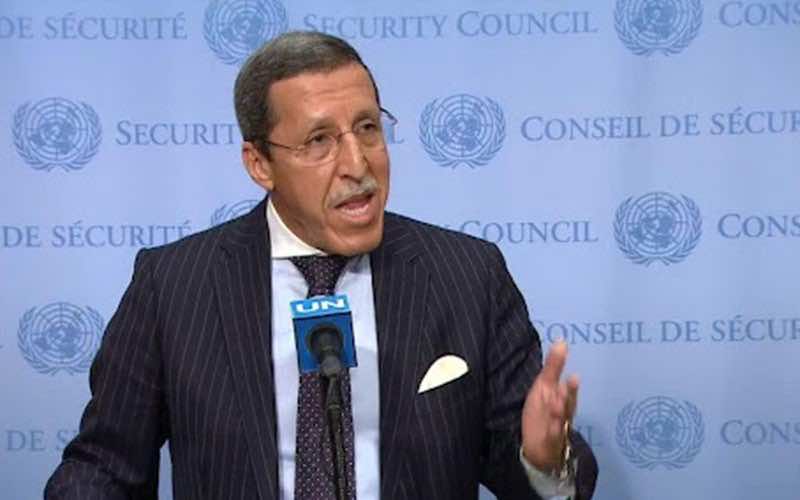
Morocco’s Ambassador to the UN Omar Hilale speaks to UN TV.
Algerian leadership presented Hilale’s remarks as a “declaration of war” and has since added a new accusation. It alleges a vast conspiracy that conveniently connects Morocco to Algiers’ domestic political opposition, as well as allegedly involving Israel. Algeria claims without evidence that this shadowy plot was behind the horrifying forest fires that have devastated parts of Algeria in recent weeks.
However, Algiers’ dramatic diplomatic move to sever ties appears to be based in an altogether different reality once considering the context.
Algeria’s reasons in context
The new break in ties appears to have little to do with the reasons cited by Algerian officials.
Whether the Pegasus accusations are true or not, the idea of Morocco spying on its key rival will not have come as a surprise in Algiers. Hilale’s remarks at the UN were indeed likely meant to provoke Algeria as part of the Moroccan frustration over Algerian meddling in its southern provinces, yet were a far cry from a “declaration of war.”
The accusations of a shadowy plot to ignite Algerian forest fires were discredited by over 500 investigations by Algerian police which concluded a group of minors were responsible.
Political operatives in Algiers appear acutely aware of Morocco’s repeatedly stated willingness to see a thawing of tensions with its neighbor. While such overtures are good news for citizens of both countries, for Algeria’s regime it presents a threat to its grip over the country’s institutions.

A 2020 protest in Berlin against the Algerian regime. Photo: Leonhard Lenz.
Algeria is facing a number of internal crises that have undermined the remaining legitimacy of its political elite which was already under visible threat of the Hirak protests. Water rationing has been introduced in the capital, every spike in COVID-19 cases overwhelms the nation’s hospitals and the country’s economic crisis continues to spiral unabated.
Amid these domestic crises, Algiers’ regional influence has similarly waned.
In the past, Algeria’s regime could simply tap the nation’s hydrocarbon wealth to placate its electorate by introducing new social support, subsidies or grants. With Algerian oil and gas production at historic lows, the government is left with few solutions to the current crises.
Instead, the country’s aging leadership is drawing inspiration from countries such as North Korea by using a perceived foreign threat in an attempt to solidify domestic support for its regime. In fact, the “diplomatic decision” by Algiers appears to have very little to do with international affairs. Instead, it is a clear case of the age-old tactic of “Diversionary Foreign Policy.”
Faking a diplomatic crisis
Algeria’s severing of ties with Morocco is mere domestic posturing, something Algiers has made clear itself. In the statement announcing the diplomatic rift, Foreign Minister Lamamra himself admitted that the two countries bilateral relations expressed through consular activities would continue unabated.
Morocco’s recent diplomatic rifts with Spain and Germany have shown that ending consular activities is normally the first step in severing diplomatic ties. Morocco’s reestablishment of ties with Israel only manifested itself officially once consular services were revived. As long as both countries’ consulates remain operational, there is no real severance of relations.
Additionally, what Algeria’s regime presents as a period of renewed hostility by Morocco is trying to conceal a period of repeated Moroccan overtures for renewed dialogue, cooperation, and mutual understanding.

King Mohammed VI stated that “Morocco and Algeria are more than just two neighboring countries: they are twins, complementing one another,” in his July 31 Throne Day speech.
The fact that Morocco can make such overtures from a position of strength amid a string of diplomatic victories and a growing regional diplomatic clout appears to worry Algeria’s leadership more than any domestic crisis ever could.
The increasingly bellicose rhetoric from Algeria’s aging and embattled elite appears to be a move of last resort, with few other options left to address domestic concerns over living standards, political representation and economic opportunities for its future generations.
It appears that Algiers appears to feel so confident of Moroccan restraint on the geopolitical level that it feels it can provoke its neighbor freely without international consequence while galvanizing domestic support.
Unfortunate consequences
Algeria is correct in its confidence that even provocative diplomatic maneuvering will not spark a conflict with Morocco. While both countries’ well-funded armed forces will remain idle, the diplomatic conflict is likely to have its effects both at home and abroad.
In Algeria, the government hopes its mock diplomatic spectacle will continue to avert public discontent with local crises while the country continues to spend astronomical amounts on its military while public issues remain unaddressed.
Yet, Algeria’s aging regime is applying a strategy fit for a hermit kingdom like North Korea, in a time when the internet means Algerians see more than just the domestic narrative.
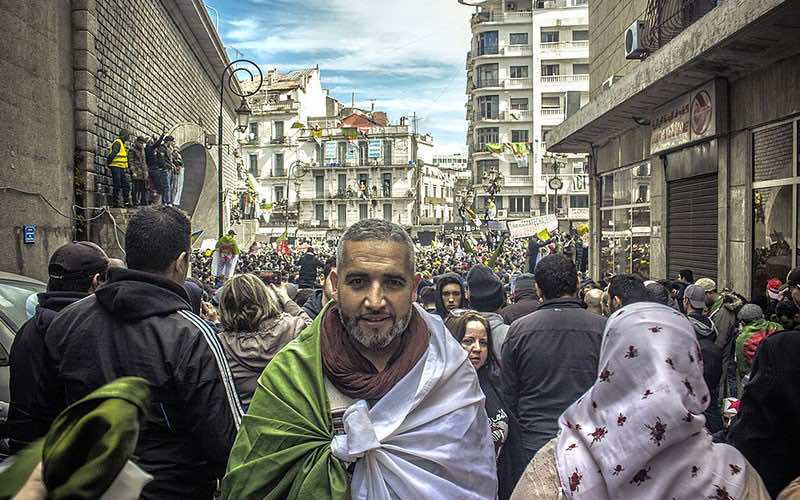
The demands of the Algerian Hirak remain unaddressed by the government it has been protesting for years. Photo: Titouhwayne.
Regionally the effects of Algeria’s warmongering rhetoric could have unfortunate unintended consequences. Undermining peace in what has traditionally been northwestern Africa’s most stable area threatens further destabilizing the region as a whole. Vying over diplomatic influence in the region cannot be done in a disingenuous way, without future consequences.
Algeria’s direct financial, logistical and military aid to the Polisario militia already undermined regional security, yet even a mock threat of bilateral conflict could embolden local non-state actors and extremists such as Al Qaeda in the Islamic Maghreb (AQIM) and Islamic State Greater Sahara (ISGS).
Uncertain future
The issues Algeria accused its neighbor of are all issues it engages in itself. It spies on Morocco as any geopolitical rival does, and it supports the “self-determination” of Moroccan separatists while disingenuously continuing to claim to the UN that it plays no role in the Western Sahara affair.
The essence of Algeria’s inward-oriented rhetoric means there is very little Morocco can do to alleviate what are essentially superficial issues.
Algeria is playing with fire through its strategy of placating domestic audiences while endangering the stabilizing role that both Algeria and Morocco have played in the region. As the country’s regime tries to ensure its own political survival, it risks plunging its own people in a vortex of unresolved interconnected crises.

Press freedom, political representation and declining living standards remain as domestic crises with few solutions offered by the government. Photo: CPJ.
Amid the threat of climate change and global crises such as the current pandemic, the region can ill-afford a renewed Maghrebi diplomatic spat. While human nature shows that the regime in Algiers is unlikely to relinquish power for the greater good, perhaps a more positive form of competition could provide a more productive race between the two countries.
Morocco and Algeria have plenty to compete over without the threat of war. The two countries could pledge to surpass each other on climate action, improving local healthcare, or compete on leading an economically resilient regional community.
There are plenty of options available, but it appears that Algeria’s military-oriented leadership faces the cognitive bias of Maslow’s hammer. Algeria appears to be using its propaganda machine as its solution of last resort. As Abraham Maslow said in 1966, “ it is tempting, if the only tool you have is a hammer, to treat everything as if it were a nail.”