


 Join on WhatsApp
  Join on Telegram
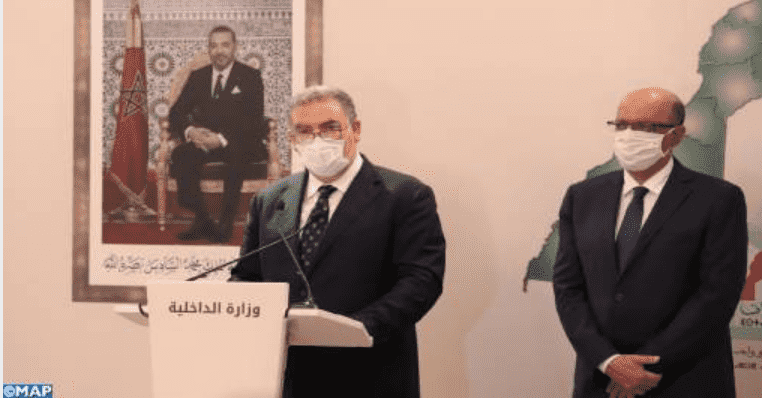
 Rabat – Morocco’s Minister of Interior Abdelouafi Laftit has expressed satisfaction with the country’s general elections, saying that they took place in the “best conditions.”
Laftit commended Morocco’s efforts to hold the regional, municipal, and legislative elections in an unprecedented atmosphere due to the health crisis.
The official emphasized that Morocco has “experienced an atmosphere of global mobilization to turn the elections into a step that condenses the broad hopes of the Moroccan people as a whole in the strengthening of the development dynamic and the consecration of the democratic choice.”
Laftit also commended the transparency of the elections, which he said was intensified owing to the presence of national and foreign observers who followed the electoral process.
The minister said that the number of observers who covered the electoral operation reached 5,020, of which 4,323 belong to civil society associations, 568 of the National Human Rights Council (CNDH), and 129 foreign observers.
“The Ministry of the Interior has worked to take all the measures and provide all the information relating to the conduct of the electoral operation,” Laftit said.
Moroccans came out in large numbers yesterday to cast their votes in spite of the ongoing COVID crisis. Polling stations opened at 8 a.m. and closed at 7 p.m. across the country.
Turnout was 50.18% nationwide and nearly 70 % in Morocco’s southern provinces, making participation in this year’s elections far higher than that of 2016.
According to results published by the interior ministry, the National Rally of Independents (RNI) topped the list, with 97 seats of the ballots counted.
Second comes the Authenticity and Modernity Party (PAM), with 82 seats, followed by the Al Istiqlal Party with 78 seats.
The big loser of the day was the incumbent Justice and Development Party (PJD), whose poor performance saw it lose 113 parliament seats. From 125 seats in the outgoing parliament, the Islamist party could only secure 12 this time around.
For observers, PJD’s embarrassing loss is a further indication of the majority of Moroccans’ frustration with 10 years of a PJD rule that failed to deliver on its major economic promises and slowed the country’s progress on controversial social issues.


