By international standards, a voter turnout of 50.35% is not a major story; in the context of North Africa and the Arab world at large, however, it is an event in itself. The thorough routing of the ruling, Islamist Justice and Development Party (PJD) in Morocco this month was a key watershed moment both for the country and the region.
It is indeed sadly a rare sight for the government of a decade to peacefully leave the political stage at the behest of the “vox populi” in a region that has long been mired in coups and counter-coups, revolution and conflict.
Aside from voter apathy in some circles and the very real challenges faced by any developing country, the success of the incumbent – billionaire – Agriculture Minister Aziz Akhannouch’s RNI was by no means a political earthquake. It is however a welcome breath of fresh air in a country which in many respects had remained transfixed in a post-Arab spring status quo.
Morocco’s election last week was its Sisi or Kais Saied moment, overhauling the dynamic brought about by the 2011 protests. However, where Morocco’s moment differs, is that unlike in Egypt and Tunisia where military and constitutional coups respectively precipitated political change, in Morocco the decision was made at the ballot box.
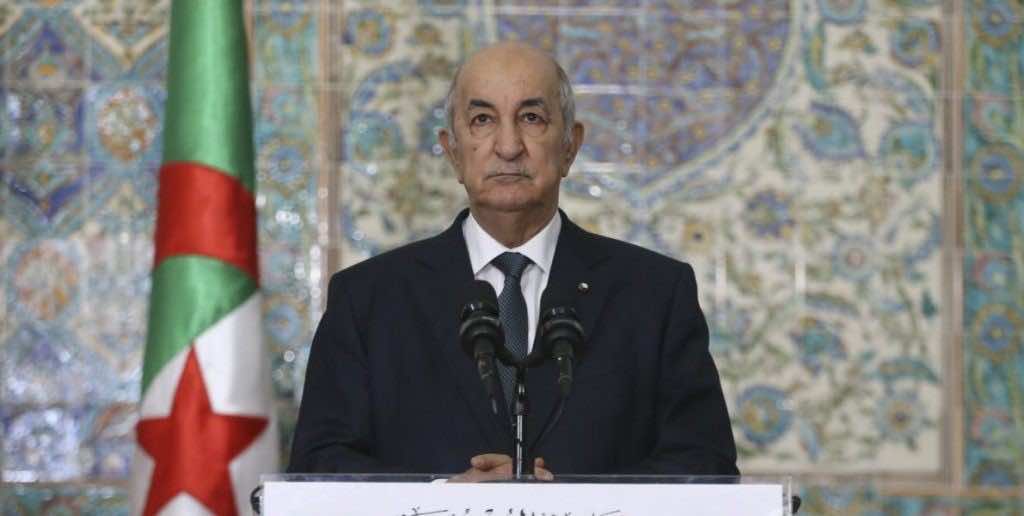
Despite the cliched perception of the long arm of Morocco’s deep state, the elections were most closely followed by Algiers and not Rabat. To the leaders of Africa’s largest country, popular will is not an opportunity for change but rather an existential threat. The daily reality of economic stagnation, a lack of faith in the political process and the unrequited ambitions of the recent Hirak protest movement, have led to an increased sense of exasperation among Algerians.
The economic and political developments taking place next door have ignited a great deal of national introspection as to why Africa’s largest gas producer remains perpetually in a state of political and economic inertia.
To “Le Pouvoir,” the ruling class of 1962 who cut their teeth fighting France, public involvement in the political process is simply not an option. As with any ruling junta, the fixation on an enemy is central to regime survival. Where De Gaulle and rule by the Metropole once focused minds in Algiers, Morocco’s trajectory towards economic development and progress is now the subject of its fixation.
Though the two countries have not exchanged blows for five decades, over the past year Morocco has only grown as a foe in the eyes of President Tebboune and the military propping him up. The neighbourliness he muted at the start of his tenure, resulted most abruptly last month in a unilateral severance of ties.
To Algiers, the rapid economic development, inventive diplomacy and increasing political maturity of its neighbor is a source of discomfort. The recent elections, though by no means without their challenges, marked increased turnout from younger voters, unprecedented female political participation and most importantly reflected a wider shifting of the political agenda that has taken place in the Arab world.
The urgent demands for regime change which characterised the so-called Arab Spring revolutions a decade ago, have given way to calls for sensible and workable reform linked to social and economic realities. Hydrocarbon largesse spared the generals then, however as the Algerian people, in worsening economic circumstances, look upon development next-door with admiration, it is clear that disruption on a large scale is inevitable.
A current account deficit and run on foreign cash reserves are Algeria’s realities following a decade of falling energy prices and demand. The government’s banning of car imports in 2016 to try and mitigate this means that Algerians now pay more for old cars than their counterparts in Tunisia and Morocco pay for new ones. Most recently, a lack of running water in July caused a public sanitary crisis as the human waste of thousands remained bagged under the hot sun.
Compounded by a shortage in basic foodstuffs and inflation, public discontent is well on its way towards boiling. Under such circumstances, the Algerian government’s tried and tested efforts to blame the country’s ills on Morocco over state media are increasingly falling upon deaf ears. Smartphones take average Algerians on tours of the touristic and retail attractions Morocco has to offer, and more worryingly for Algeria’s generals, they are also creating a renewed affinity between the two peoples who have so much in common.
The new government in Rabat provides an opportunity to once again tap into the public exasperation next door, with a view to exploring commonalities and calming tensions. Despite Algeria’s sudden rupture with its neighbour, Rabat has continued to extend an amicable hand to Algiers, urging for a much-needed political consultation to end decades of stalemate between the two countries.
In August, a week before tensions escalated, King Mohamed VI called the issues between the two a source of “shame” for countries that are “twin brothers.” In what remains the most economically disconnected region in the world, cooperation is essential to mitigate the challenges that its countries face.
If Algeria’s food shortages and rise in the price of staple products is exacerbated owing to the fact that 70% of these are imported, expanding trade with the agricultural powerhouse next door should be a priority.
Where a Soviet-era worldview has left it isolated, Algeria can work with its Maghreb neighbours to strengthen its hand internationally and find a way out of the compromising realm of funding freedom fighters and militia where it finds itself.
The success of this month’s elections in Morocco will not be lost on the Algerian people, the generals would do well to take note and rather than deride their neighbor, perhaps embrace some of its experiences in marrying tradition with modernity to seek change at a pace that is neither abrupt nor too gentle.