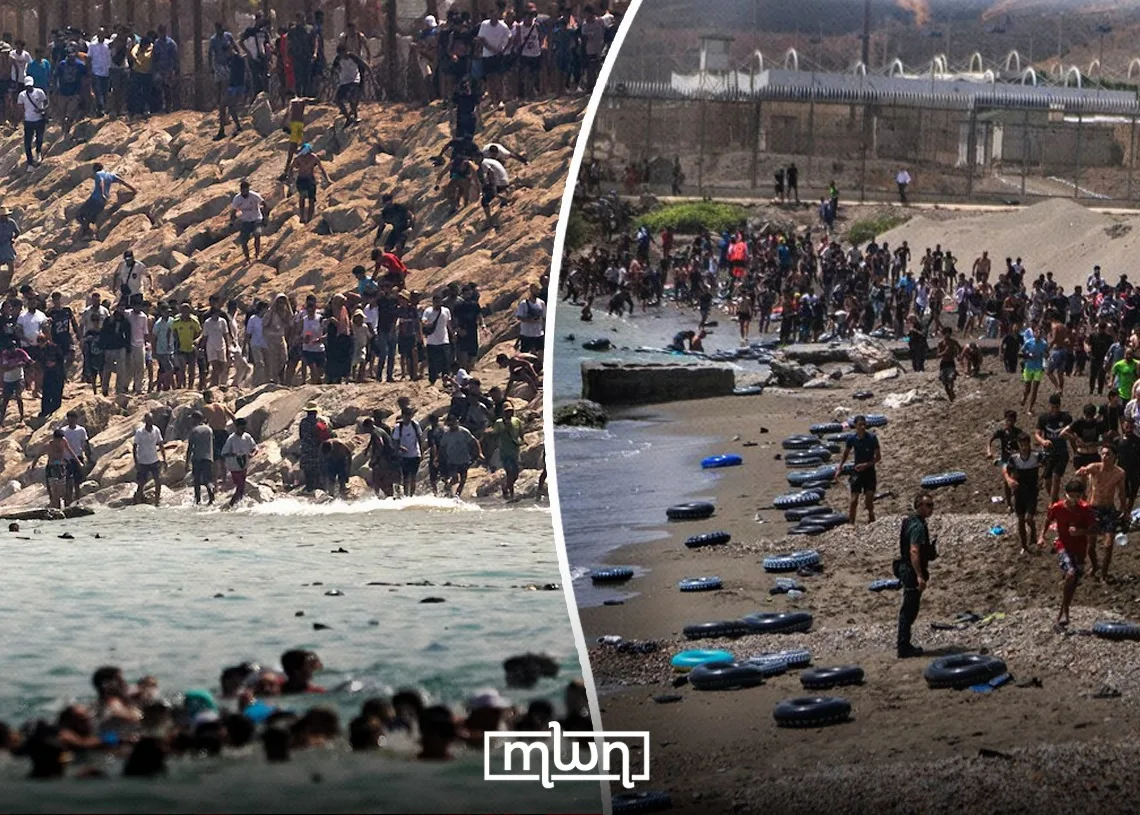
Rabat – Spain’s government spokesperson Elma Saiz announced on Tuesday that a total of 12,702 people have returned from occupied Ceuta to Morocco since August 10.
The number includes 12,142 voluntary returnees and 536 who were expelled.
The Spanish official made her remarks in a press conference, according to Spanish news agency EFE. She stated that 7,477 places are available in temporary accommodation facilities in Ceuta for migrants, while regional child protection services currently care for 3,331 minors.
The minister was referring to the Ceuta migration crisis, when over 70,000 irregular migrants entered the occupied city in July. The mass migration triggered heightened tensions between Rabat and Madrid, especially amid a smear campaign from the far-right and PP politicians who weaponized the irregular migration operation amid electoral campaigns.
Saiz also spoke about minors relocated to mainland Spain, stating that 107 have been reunited with their families, while 181 have been relocated to other Spanish regions. She said that 63 case files have been referred to Morocco.
On security in Ceuta, she said a total of 5,237 personnel have been deployed in the occupied city and that 11,375 surveillance and information-gathering patrols have been carried out.
She also addressed healthcare for migrants, stating that 83% of migrants staying in accommodation facilities have been vaccinated.
Morocco and Spain announced an agreement on the return of all migrants who entered during the mass migration of July, with both countries confirming that most of those who entered have been returned.
Despite Morocco’s efforts and also appeals urging Spain to speed up the process of returns, especially of minors, Spain’s far right and PP, as well as politicians in the occupied city, have been criticizing Rabat and Madrid.
Earlier this week, Ceuta President Juan Jesús Vivas claimed that around 15,000 migrants remain in the Spanish-occupied enclave.
He criticized Madrid’s response to the arrivals and argued that Ceuta had yet to return to normal. He based his assessment on a 20% rise in water consumption in September compared with the same month last year.
The Ceuta president claimed that departures so far had involved either voluntary returns or cases linked to criminal proceedings, rather than through administrative return decisions, accusing Madrid of allowing the situation to deteriorate and warning that local services faced mounting pressure.
His claims come as Rabat has continuously urged Spain to facilitate the return of Moroccan minors who remain in its care.
In August, Justice Minister Abdellatif Ouahbi said that Rabat would pursue the issue through legal and diplomatic channels and would not abandon Moroccan children separated from their families.
He urged Madrid to reach a solution that would allow the minors to return to Morocco and reunite with their families.