Rabat – 62 bone tools dating between 90,000 and 120,000 years ago that were used to process and smooth animal skins, have been found in a cave in Morocco.
Scientists on Thursday said the artifacts were unearthed in the Contrebandiers Cave, located roughly 250 meters from the Atlantic coastline in the town of Temara.
The discovery indicates that humans created specialized tools from bones, skinning animals and then using the tools to process skins for fur and leather.
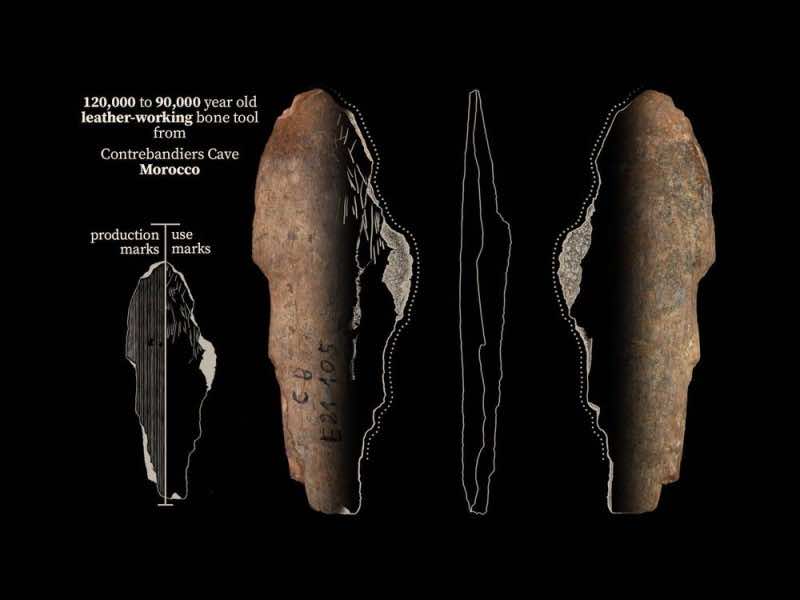
The new discovery may be the oldest proxy evidence for clothing found in archaeological records.
The tools were made from animal bones, and scientists also identified a pattern of incisions on the bones of three small carnivore species – a fox, jackal and wildcat – indicating they had been skinned for fur, not processed for meat.
The bones of antelope and wild cattle indicated that the skins of these animals may have been used to make leather, while the meat was eaten.
Back in July of this year, archaeologists in Morocco announced the discovery of north Africa’s oldest stone age hand-axe manufacturing site, dating back 1.3 million years.
The finding pushed back the beginning of the Acheulian stone-tool industry, associated with the human ancestor Homo erectus, by hundreds of thousands of years in north Africa.
The discovery was made during excavations at a quarry on the outskirts of Morocco’s economic capital, Casablanca.
In addition, a skull, teeth and bone fragments were discovered near Marrakech in 2017, and were estimated to be about 300,000 years old, making them the oldest human remains ever discovered.
Once again, this discovery changed archeologists and historians’ understandings about our species and defied preconceived theories on Human genesis.