 Join on WhatsApp
 Join on Telegram
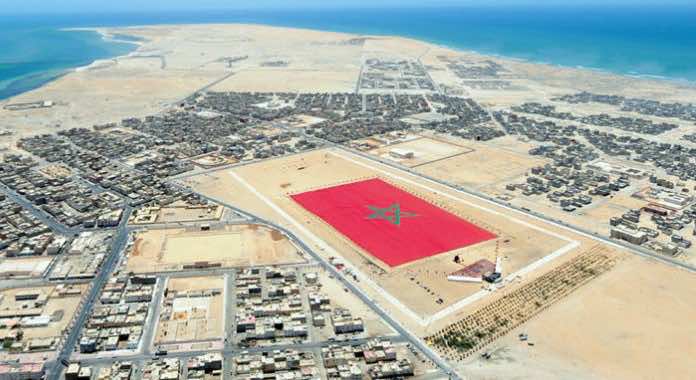
Denver- While cities such as Casablanca and Tangier have long been considered economic powerhouses in Morocco’s economy, many are now also interested in the long-term investment potential of cities further south.
After King Mohammed VI pledged to turn Morocco’s Great South into “an engine of development,” Rabat has kept its promises of developing the economic potential of its southern provinces. The southern region of Morocco has traditionally been known for its extensive phosphate reserves, which produced nearly 2 million tons of phosphate to the Moroccan economy in 2018 according to Forbes.
However, Morocco’s interest in the region has now shifted from being resource-based to a wider development framework. The new ambitious development model for Morocco consists of a hundred different projects, designed to dramatically modernize the region in the next few years.
Infrastructure Development and Growth
Rabat has dedicated enormous financial resources to transform Morocco’s southern landscape via infrastructure development, economic growth, and attractive investment opportunities.
Beginning in 2015, the government allocated a whopping $7.76 billion towards improving the region’s roads, universities, airports, hospitals, and more. The crowning jewel of this development strategy has been the “Dakhla Connect” program.
Co-financed by the US Middle East Partnership Initiative (MEPI), the Dakhla Connect program has led to both countries dedicating resources towards the development of the Dakhla and Laayoune regions. Projects such as the Tiznit-Dakhla Highway aim to link the southern provinces to the north, facilitating increased domestic trade and logistical capabilities.
In order to accommodate international travel and commerce, one of the main objectives of investment interest is in Dakhla’s airport. Previously a regional transportation hub, the airport has recently begun to expand its international reach.
In January of this year, Morocco’s flagship carrier Royal Air Maroc announced it would begin offering flights from Dakhla to Paris. Within a few months, low-cost European air carrier Ryanair followed suit, announcing the commencement of flights from Dakhla to Spain.
In a statement earlier this year, MEPI affirmed its dedication to assisting Rabat in its mission to connect “local businesses with global investors attracted to Dakhla’s little-known business advantages and opportunities.”
The investment plan has already drawn the interest of several global entrepreneurs from Europe, including tech mogul Richard Branson. A recent trip of Polish businessmen into the region further reflected the world’s growing interest in Morocco’s south as a prime investment target for future growth.
Dakhla’s port has also attracted increasing interest due to its strategic location on the Atlantic. The port enables easy access to countries across Africa’s western coast, in addition to facilitating transatlantic trade to the Americas. The Ministry of Equipment, Transport, and Logistics touted the port as a flagship project that will transition the country into an economic “gateway to Africa.”
Political Progress
The economic interest in the south has been coupled with increasing political recognition of Morocco’s sovereignty within the southern provinces. A contingent of 21 nations has recently opened consulates in both Dakhla and Laayoune. Among these were several countries in Africa, Jordan, the UAE, and the US.
These openings cemented Morocco’s political authority in the region and have helped in facilitating Dakhla and Laayoune to transition into a hub for international investment and trade. The opening of US diplomatic offices in the region followed the US decision in December 2020 to formally recognize Morocco’s undisputed sovereignty in Western Sahara.
The move prompted many countries to begin reconsidering the previously held notion that Western Sahara was a separate entity, despite Moroccan pre-colonial claims and its presence in the region for decades.
Capitalizing on this political momentum, Rabat decided to expand its vision for the south’s future through its ambitious development program.
With the debate theoretically “resolved” according to Morocco’s ambassador to the UN, the country’s focus now remains on realizing the full economic potential of the southern provinces and ensuring local populations thrive and remain involved in Morocco’s political landscape.
Future of the Region
The transition of Dakhla and Laayoune into international hubs is part of Morocco’s planned pivot into a regional bridge between a rapidly developing African continent, and entrepreneurs from the US and Europe with continued growing investment interests.
The southern provinces offer a limitless range of potential future investment opportunities. From international and regional trade to travel, leisure, and tourism, Morocco anticipates the region will serve as the first step towards widening investment into the continent. The untapped potential of Dakhla, Laayoune and the surrounding regions have already begun to spark a new era of commerce that will benefit not only Morocco but the rest of Africa as well.