


 Join on WhatsApp
  Join on Telegram
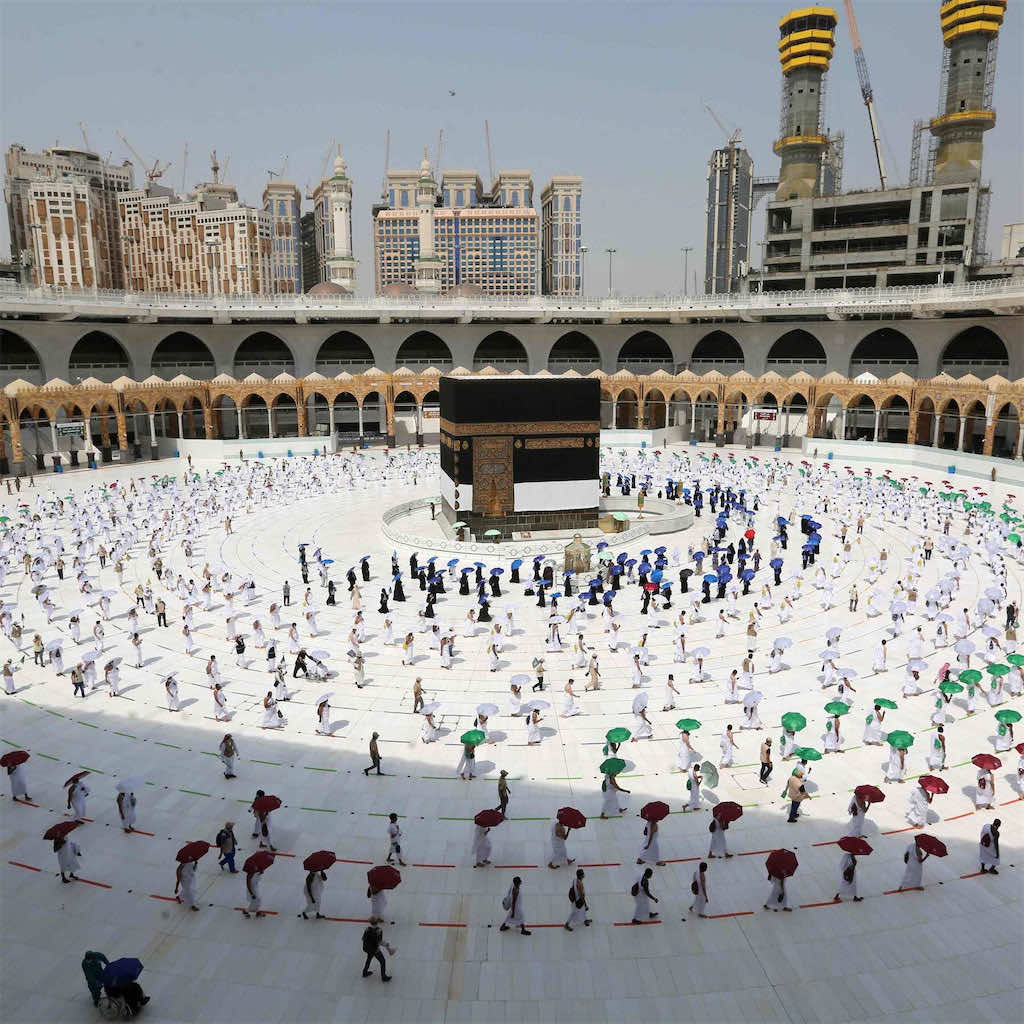
 Rabat- The Grand Mosque in the Muslim holy city of Mecca, Saudi Arabia, has returned to operating at full capacity, for the first time since the coronavirus pandemic began.
On Sunday October 17, the official Saudi Press Agency (SPA) reported that workers removed floor markings that guide people to social distance in and around the Grand Mosque.
The decision comes “to ease precautionary measures and to allow pilgrims and visitors to the Grand Mosque at full capacity,” highlighted the SPA, adding that the visitors have to be fully vaccinated against coronavirus and must continue to wear masks on mosque grounds.
According to the interior ministry, Saudi Arabia will ease COVID-19 curbs from October 17 in response to a sharp drop in daily infections and a considerable progress in vaccination numbers.
By July 2021, performing the Hajj was limited to 60,000 vaccinated residents of Saudi Arabia who must additionally be “free of chronic diseases,” and only 1,000 people performed the Hajj in 2020 due to the pandemic.
Saudi Arabia is slowly commencing a gradual return to a new state of normal in which the religious rite is once again available to all. The Saudi government announced in August that it will begin accepting vaccinated foreigners wanting to make the Umrah pilgrimage.
The Hajj – held over 10 days of every year and required of physically and financially able Muslims at least once in their lifetime – normally draws millions of pilgrims from around the globe. The Umrah, a lesser pilgrimage, can be undertaken at any time and usually draws millions from around the globe.
Nearly 32,000 Moroccan pilgrims performed Hajj rituals in 2019, but the COVID-19 pandemic hugely affected both pilgrimages. During the past decades, the kingdom has typically welcomed between 1.9 to 3.2 million pilgrims per year from across the Muslim world, generating more than US$8 billion in annual revenue for the Saudi economy.


