


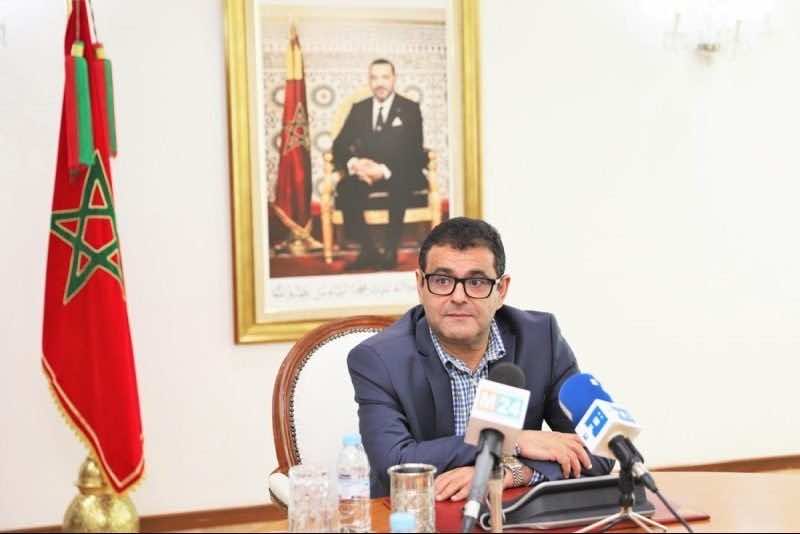
Rabat – The Ambassador Director-General of Political Affairs at the Ministry of Foreign Affairs, Fouad Yazourh, said that the “Supporting the Stability of Libya” conference was in line with Morocco’s vision for a resolution of the Libyan crisis.
Several countries concerned with the Libyan crisis participated in the conference, the first one held by Tripoli since 2010. The conference was organized by the Libyan Government of National Unity.
Yazourh represented Morocco at this ministerial conference, and said in a speech that “Morocco’s vision for resolving the Libyan crisis is a solution that can only be an internal to Libya,” adding that “it should be based on realistic foundations to overcome the blockage and create an appeasement that would preserve the country’s sovereignty and keep foreign interference at bay.”
The conference saw the participation of foreign ministers from France, Italy, the Middle-East, including officials from the US, and the UN.
The event concluded with the Libyan government of National Unity’s commitment to implementing Security Council resolutions on Libya, including the first and second Berlin Conferences, and the Libyan Political Dialogue Forum’s road map.
Several countries returned their embassies to Tripoli prior to the conference, with many participants welcoming the decision. The Libyan government also encouraged other countries to re-open their embassies in the Libyan capital.
The final statement emphasized the importance of implementing the necessary measures for confidence building and creating an appropriate environment for holding the national elections in a fair, transparent and inclusive manner on December 24.
Morocco has, on several occasions, maintained that the only solution to the crisis in Libya is a democratic election.
Fouad Yazourh concluded his speech saying that “Morocco is keen to coordinate in its conciliatory steps between Libyan actors with the United Nations, to support the course of the political process in Libya and to support national reconciliation efforts and security, economic and political plans that would build a strong and unified Libyan state.”
This is in addition to recognizing that “ending the conflict and achieving security and stability in Libya is a basis for peace and state-building, a foundation for peaceful coexistence and a driver for the economy and development,” he said.




