 Join on WhatsApp
 Join on Telegram
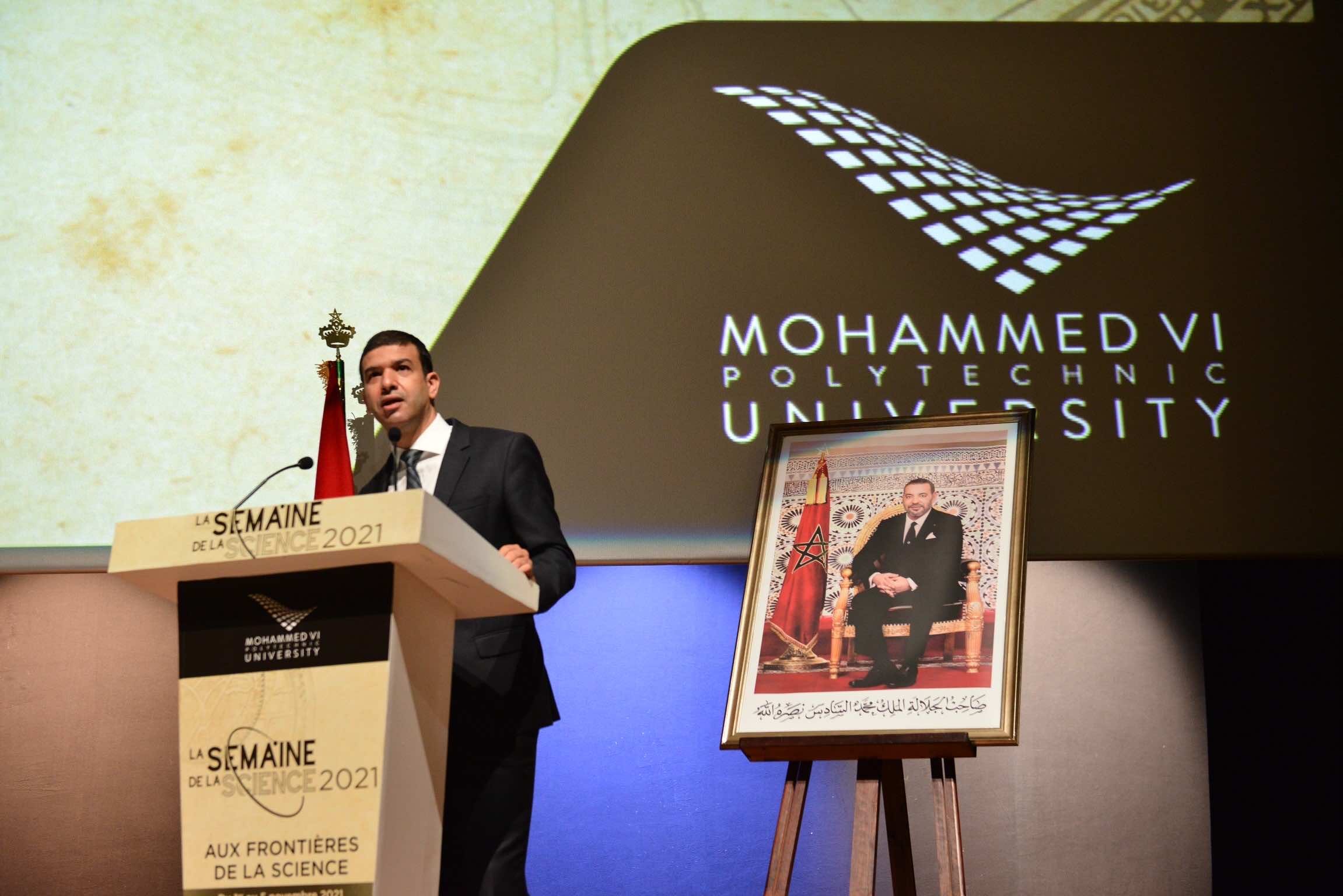
Rabat – Mohammed VI Polytechnic University (UM6P) of Benguerir is hosting the 2021 Science Week from November 1 to 5 to draw attention to the greatest scientific contributions and advances from the Arab World.
President of UM6P Hicham El Habti inaugurated the first colloquium of the Science Week on November 3, expressing his gratitude to experts and partners for their contribution to and participation in promoting science in Morocco.
He explained that the event, themed “When science spoke Arabic,” is an opportunity to highlight the scientific advances and to explore the limits science can reach through the continuous discoveries occurring across the globe.
In his speech, El Habti noted that the African population is expecting science to transform their lives positively and to bring solutions to solve several of the most pressing issues facing the continent.
Commenting on Africa’s efforts to position itself in the STEM field, he said, “The African continent is no longer a simple reserve of raw material for other continents. Science made Africa become independent, with its own experimental laboratory.”
He added, “It acquired its know-how, and built its added value with the ambition to consolidate its autonomy and hold a strategic position at the global level.”
El Habti also spoke about the major contributions UM6P students have made in STEM, showing optimism about the university’s projections for its students and researchers to help in addressing pressing concerns in Morocco and Africa based on scientific and technological innovation.
“Since its creation, UM6P has placed scientific research, excellence and knowledge at the heart of its strategy. Science Week is fully in line with this framework,” El Habti explained.
“At the UM6P, we aim to enhance the autonomy and the pre-eminence of science among UM6P students,” he said.
With several conferences, workshops, exhibitions, and round tables taking place, El Habti’s ultimate hope is for the event to give more visibility to the scientific potential of Moroccan researchers.
As Morocco and Africa face a slew of old and emerging challenges amid efforts to emerge from the COVID-induced socio-political and economic fog, many in the country – and increasingly on the continent – have high expectations of UM6P’s investments in scientific innovations.
As El Habti recently told Morocco World News, many UM6P researchers and graduate students are conducting lab experiments and producing tools designed to solve challenges related to youth, healthcare, food security, and environmental preservation.
Given UM6P’s ambition to position itself among the best in the scientific scene locally and internationally, he recalled, the Moroccan university aspires to play a central role in devising tools and policies adapted to the needs of populations in Morocco and across Africa and the Arab world.
He further recalled the contribution of Arab scientists and scholars from the 8th to the 13th century, emphasizing that their open-mindedness and audacity should be an inspiration for young people to seek knowledge and embark on research projects without any taboos or complexities.
“Arab scholars shone in the past and can still highly contribute to the sustainable development ambitions in line with digital technology that opens up a huge opportunity and facilitates the sharing of scientific knowledge across Africa,” he underlined.
When science spoke Arabic
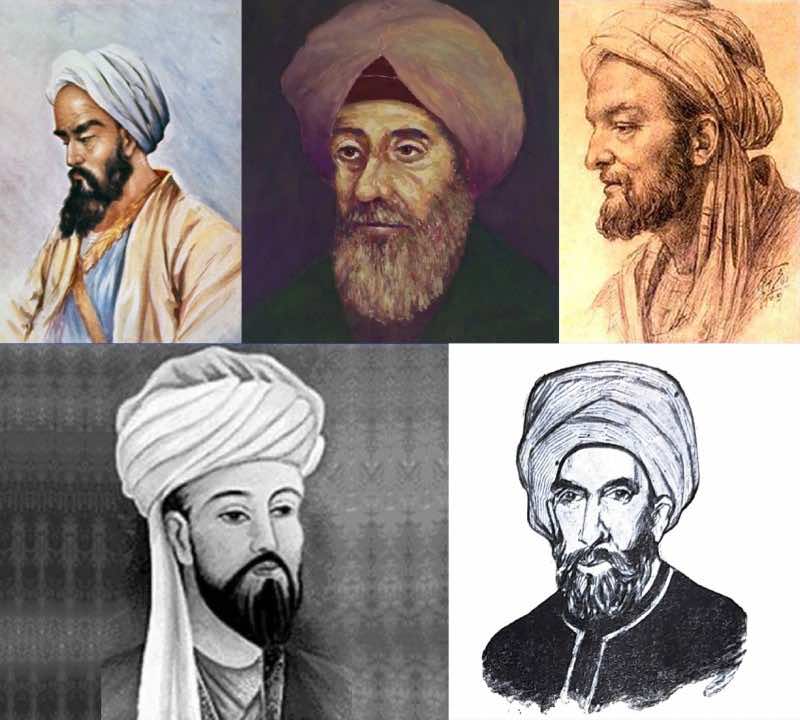
Speaking at the event, Moroccan writer Fouad Laroui traced back the catalytic role that Arab scholars played in the early phases of the scientific revolution. The era of thriving scientific discoveries began in the Arab-Islamic world, and not in Europe as many think, Laroui argued.
While the Arab and Islamic world is not as scientifcally and intellectually prolific today as the West, the Moroccan writer commented, pre-Enlightenment Muslim scientists and scholars were as critical to the making of modernity as their their European and American peers.
Laroui highlighted several concepts and scientific innovations that were first developed by Arabs: the full circulation of the blood in the human body by Ibn An-Nafis between 1213 to 1288, and the pinhole camera by Ibn Al-Haytam between 965 to 1040, among many other examples.
“Innovations developed within the Muslim communities discovered algebra, anesthesia, and the plate of conjunctions,” he explained. “If we were to award the title of the first chemist in history, it would’ve been given to Abu Bakr Mohammed Al-Razi and not Robert Boyle.”
Boyle, he argued, was solely given that title because a systematic history of science was not written until the 19th and 20th century in Europe. “If the history of science was written by a UNESCO committee where all nationalities are present, we would have never called Boyle as the first chemist in history,” said the Moroccan writer.
For Laroui, discoveries made by Arab scientists paved the way for Europe’s Renaissance and Enlightenment.
He called for a mutual understanding of Arab and Western scientific achievements, arguing that this could be a crucial element in further developing technologies and improving people’s lives.
As enthusiasm for scientific research has gradually increased among Moroccan youth in recent years, Laroui said that UM6P is currently developing an advanced and world class research program in the mathematics field as an essential first step in closing the gap between Morocco and developed nations.
The Science Week, which will be organized annually after this year’s inaugural iteration, intends to create an exchange zone between UM6P students and the best specialists across various STEM disciplines. The goal is to acquaint the students with the latest scientific advances in their respective fields and prepare them for world-class, practical, and socially relevant research.
Several UM6P students from different disciplines such as architecture, robotics, chemistry, and photography will exhibit their works and experiments during the 5-days event.
This year’s conferences are marked by the presence of many scholars, authors and representatives of various disciplines such as history, philosophy, algorithmic, cryptocurrency, astrophysics, mathematics etc.
The event held in-person in UM6P Benguerir and was live-streamed simultaneously across all UM6P campuses: Laayoune, and Rabat, as well as on the university’s social media platforms.