Rabat – Economic research firm Oxford Business Group has projected positive growth for Morocco’s economy despite the setbacks caused by the COVID-19 pandemic.
The Moroccan Agency for Investment and Export Development (AMDIE) commissioned the Oxford Business Group’s report, which was released on December 7, recognizing Morocco’s “important steps” to navigate the crisis.
“The private sector is playing a crucial supporting role, particularly in terms of attracting foreign direct investment.”
The report details Morocco’s key sectors, including automotive and aeronautics, as well as agriculture industries. The three sectors constitute economic pillars for Morocco.
In the report’s agriculture overview, the group recalled that the sector is one of Morocco’s “most important economic sectors.”
The report emphasized that the sector alone represents 13% of Morocco’s GDP, and 38% of overall employment. Agriculture also provided about 74% of jobs in rural areas in 2019.
“As such, agricultural output has a large impact on overall economic performance,” the report emphasized.
The cereal production per year has the potential to increase or lower an annual GDP growth up by 1.7 and 1.6 percentage points, according to the Oxford Business Group report.
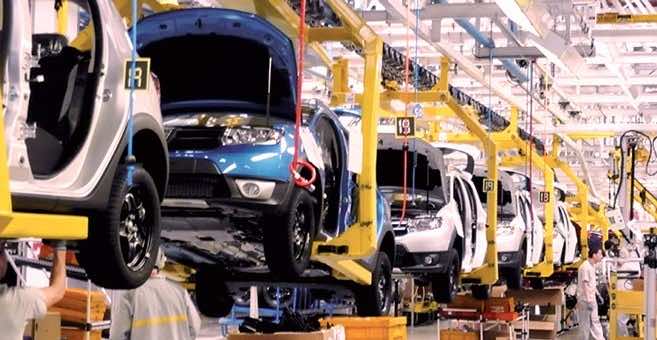
With regards to the automotive sector, the group said Morocco has “transformed itself into a global center for automotive manufacturing over the course of recent decades.”
The group said the automotive and automotive parts segments offered jobs to around 180,000 people as of late 2019.
The report also recalled the projection of Fitch Ratings for annual growth for the industry. The group forecasts a 17.5% average annual growth for the industry between 2020 and 2025.
Business website Manufacturing Global believes that the automotive industry is expected to contribute “as much as 24%” to Morocco’s GDP by 2022.
Several reports have highlighted the country’s automotive sector.
Morocco is Africa’s largest passenger car manufacturer with $7 billion in exports by the car industry at the end of 2018.
New passenger vehicles recorded an increase of 10.77% with 115,661 units sold, which enabled Morocco to transform itself as a leading automotive manufacturing hub in Africa.
As for the aeronautics industry, the group believes that the aerospace industry began developing itself “meaningfully” in the 1950s.
“The segment has expanded significantly in the intervening decades, with 140 companies in operation, some 17,000 employees and $1.7bn in annual sales as of 2019,” the Oxford Business Group report said.
The pandemic did not impact the sector remarkably, according to the Moroccan government.
In March, former Industry Minister Moulay Hafid Elalamy said Morocco experienced only a 10% of employment loss during COVID-19 compared to a 43% employment decrease in the sector across the world.
The national sector also experienced a decline of 29% in terms of export turnover, compared to the 50% decline recorded internationally, Elalamy added.