 Join on WhatsApp
 Join on Telegram
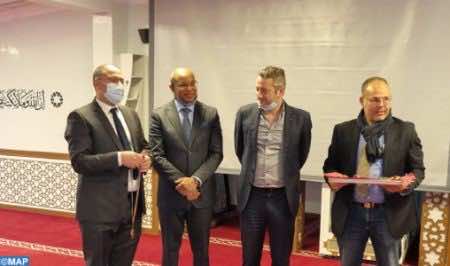
Rabat – The Islamic and Cultural Center of Ans in Liège Province, eastern Belgium, organized yesterday a ceremony to pay tribute to Moroccan miners. The event coincided with the celebration of the 58th anniversary of the 1964 Belgian-Moroccan Convention on labor supply, Morocco’s Press Agency reported.
The ceremony was marked with the presence of Morocco’s Consul General to Liege and Grand Duchy of Luxembourg Abdelkader Abidine, Mayor of Ans Gregory Philippin, and the president of Ans’ Islamic and Cultural Center Brahim Azim, along with Moroccan community members.
For the event, the cultural center displayed an archival documentary and photographs reflecting the experiences of Moroccan miners.
The story of Moroccan migrant workers is a “human story” reflecting the experiences of “Moroccan families that have been formed over the years throughout Belgium,” Abidine stated.
“This ceremony of remembrance and tribute to our old miners gives the opportunity to learn the history of Moroccan migration in Belgium and apprehend its various components,” the Consul General said, stressing that the historical experiences will “provide the younger generations with necessary tools to comprehend our contemporary society.”
Additionally, Abidine pointed to the “great sacrifices” and “outstanding” work Moroccan miners did to develop the Belgian coal industry and boost the country’s economy in the years following the end of World War II. He also praised “their tireless efforts to ensure the well-being and integration of their families, especially the education of their children.”
The diplomat concluded with a call for the promotion of intercultural dialogue and countering social exclusion and prejudices.
Read Also: Morocco Tops African Countries in French Emigration
Moroccan Migration to Belgium
The Belgian statistical office, Statbel, recorded between 1 January 2011 and 1 January 2020 an increase in Belgians with Moroccan origin. Moroccans supplanted Italians to become the first foreign-origin population in Belgium. Following Moroccans and Italians are the French, Dutch, and Turks.
In 2020, 3,756 Moroccans obtained Belgian citizenship ahead of Romanians (2,079), Afghans (1,464), Syrians (1,431), and Italians (1,217).
The surge in Moroccan-origin population in Belgium results from a long history of working class migration to Belgium in response to the European market need for labor in the aftermath of World War II.
Starting as a labor-related migration with the admission of Moroccan workers to Belgian coal mines, the phenomenon intensified and outgrew labor migration as thousands of Moroccans and their offsprings settled in Belgium.
In 1974, Belgium’s Council of Ministers decided to halt new migration to the country, control clandestine immigration, and regularize some undocumented migrant workers. Yet, the migratory flow from Morocco to Belgium has continued over the years.
An important milestone in the history of Moroccan immigration to Belgium is the adoption of a family reunion policy, which granted foreigners living legally in Belgium the right to invite their spouses and children (under 18-year-old) to join them. As a result, some second-generation Moroccans obtained Belgian citizenship.
The Moroccan migratory history in Belgium has impacted Belgian society for decades on a wide range of levels — social, economic, cultural, and political. With the increasing normalization of anti-migration and Islamophobic discourse in recent years, Belgium’s Moroccan community finds itself at the heart of vociferous, fierce debates over the need to shield “European values” from the supposed migratory “invasion” from Muslim-majority countries.