Rabat – Morocco’s High Commission for Planning (HCP) has reported that 8 out of 10 women in the country remain outside the labor market with 73.7% of them working as housewives. The low rate of women participation and productivity burdens the country’s economic growth and sustainable development.
The meeting reviewed studies conducted by HCP on women’s situation in economic sectors with the presence of representatives from the UN-Women and European Union.
The meeting was organized on the occasion of women’s day, themed by the commission under “Gender equality, the imperative of sustainable development.”
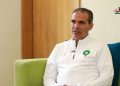
“We have often had the opportunity to underline the weight of economic structures in the precariousness of a competitive inclusion of human resources and in particular their female components in the process of economic and social transformation of our country,” said Morocco’s High Commissioner for Planning Ahmed Lahlimi.
Through leading gender-related studies, the commission seeks to address the complexity of gender issues in Morocco and better inform decision-makers on the challenges.
HCP noted that “gender equality is at the heart of more complex issues of economic growth and social progress in a country going through economic, demographic, social, and societal transition.”
The commission pointed out the difference in qualifications required for men and women amid a troubling wage gap, stressing that gender discrimination exists in different institutional branches and economic activities.
Notably, 64% of employed women have a paid job, compared to 91% of men. Yet women make 30% less than their male peers and record low productivity.
The wage gap is much more significant in the industrial sector, where women have 45% lower productivity than average.
Read Also: Morocco To Support Economic Actors Amid Current Challenges
Since October 2021, the indicators of progress among women are alarming and continue to drop, reported the commission in its latest “Moroccan Women in Figures” publication.
HCP associates the deteriorating situation with lack of sustainable development as well as environmental and climate challenges such as drought.
The low participation of women in economic activities represent a burden to the Moroccan economy as women contribution to economic growth fell from 22% in 2000-2009 period to -33% in 2010-2019.
Additionally, roughly 1.7 million women in Morocco are inactive. “8 out of 10 women remain outside the labor market. Most of them are housewives (73.7%) or pupils or students (15.1%),” said Lahlimi.
“Women are responsible for 84% of the creation of domestic activities added-value, mainly meal preparation and home maintenance services. Women spend an average of 5 hours a day on housework, almost 7 times more time spent by men,” he added.
Women have great potential to contribute to the country’s economic growth since 57% of students enrolled in higher education institutes are females, while women run 13% of organized businesses and 19% of NGOs in the country. They also hold 40% of management positions in the country.
The education and training of Moroccan girls and women open doors to greater female participation in the labor market. However, the country remains far from achieving gender equality.
Read Also: Nadia Fettah Alaoui, Leading the Moroccan Economy