
 Join on WhatsApp
 Join on Telegram
Washington DC – Whichever way you slice it, the Spanish decision to support the Moroccan Autonomy Plan for Western Sahara constitutes the most critical of all the recent diplomatic and political developments on the Sahara question.
In addition to being of great, unprecedented historical importance — this being the first time that a European country has supported the Moroccan settlement plan with such clarity and frankness — the move will have significant geostrategic implications for the future of the conflict.
That Spain was the occupying state of the Moroccan Sahara until 1975; that it signed an accord with Morocco in which it agreed to return the Sahara to its mother country; and that it never vetoed this agreement makes Madrid’s newfound position particularly important and an even greater boost to the Moroccan position.
Meanwhile, it goes without saying that, for Algeria, the Spanish decision is a disastrous development for two umbilically linked reasons. First, Madrid’s support for Rabat is a painful reminder of the failure of Algerian diplomat’s tireless efforts to sabotage or at least contain the undeniably pro-Moroccan momentum Western Sahara-related diplomacy has witnessed in the past decade.
Second, not only as Algeria lost in Spain an erstwhile accomplice with which it used to collude to undermine Moroccan interests, but the domino effect the Spanish decision is sure to set in motion constitutes a devastating blow to Algeria’s dreams of regional hegemony.
A sign of things to come
While the Algerian regime might have failed to foresee the calamitous ramifications of its ill-advised decision to terminate the contract of the Europe-Maghreb pipeline, Algerian diplomats should at least be discerning enough to know that Madrid’s siding with Rabat is the harbinger of more similar things to come.
If nothing else, the Spanish decision will push many countries, especially in Europe and Latin America, to think of following in Spain’s footsteps. In particular, the move is sure to put unprecedented diplomatic pressure on France, the other country with historical responsibility in the genesis of the Sahara conflict.
Although France has been supporting the Moroccan proposal for fifteen years, Paris’s endorsement of the Moroccan position has never been as clear or explicit as the newly-announced Spanish stance. Rather, France has long contented itself with rehashing the pro-Morocco language the UN Security Council has been using since 2007.
France has never said that the Moroccan plan is the most realistic, credible, and serious solution to the Sahara dispute. Instead, born of an apparent desire to sufficiently satisfy Morocco without completely alienating Algeria, the French position is that the Autonomy Plan constitutes “a realistic and credible” proposal.
We know the well-documented significance of language — in life as in politics. In political and diplomatic discourse especially, each word carries stupendous weight and the choice of definite or indefinite articles is pregnant with meaning, political significance. To say that the Moroccan Autonomy Plan is “a realistic and credible” proposal is not remotely the same as saying that it is “the most credible, most realistic and serious plan.”
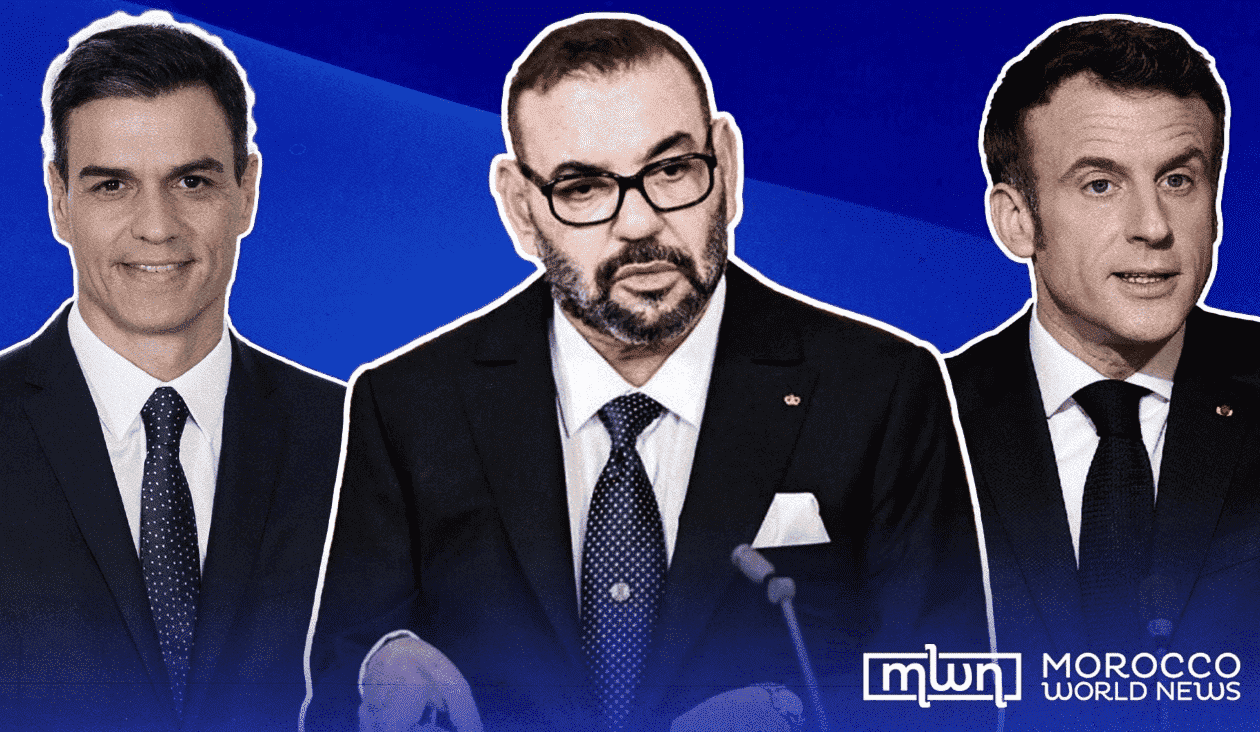
In the first instance, the speaker leaves the door open to another plan or proposal that may also be “realistic and credible.” While in the second, which Spain’s Prime Minister used in his letter to King Mohammed VI on March 18, there is no room for any other interpretation.
For the second speaker, thus, the hailed plan is the only game in town; it is either that plan or nothing. What does that leave us with regarding the issue at hand? This: Whereas Spain used to think like France in applauding Morocco’s plan while leaving the door of credibility and realism open to Algeria’s call for a self-determination referendum, Madrid now believes the Moroccan plan is the only viable route to a lasting solution to the Sahara conflict.
This shift in the Spanish position — which I consider a logical development of the Spanish position during the past two decades, given that Spain has moderately supported the Moroccan Autonomy Plan since 2008 — is widely expected to put European Union countries in front of a dreadful, terrifying truth for many: Morocco’s proposal is the best and only way toward peace, prosperity, and stability in Western Sahara.
The EU’s time for reckoning
As such, if the EU is serious about sincerely contributing to solving the Sahara conflict, and if it genuinely wishes to strengthen its relations with Morocco on the basis of mutual respect, it should consider expressing its clear and unequivocal support for the Autonomy Plan.
Such a strong declaration of support would be the first step in the right direction of furthering essential cooperation between Brussels and Rabat. More than that, however, it would also constitute a vital corroboration of the line of realism and compromise the UN Security resolutions has clearly embraced in all its Sahara conflict-related resolutions since 2007.
Since 2018 especially, the UN consensus around the Sahara question has been to disqualify an unworkable and impractical self-determination referendum in favor of a realistic, practical, feasible, and compromise-based political solution.
So, will EU countries follow in Spain’s footsteps and recognize the importance of the Sahara for Morocco and Moroccans? And are they willing to stop hiding behind vague and ambiguous declarations to actually, vigorously acknowledge the unanimity that Morocco’s Autonomy Plan has secured in the past decade?
Judging from the media statement the EU issued yesterday, in which it expressed its satisfaction with the normalization of relations between Morocco and Spain, I think the European bloc is not yet ready to discard its “positive neutrality” posture on the Sahara question to explicitly recognize the unparalleled centrality of Morocco’s Autonomy Plan.
Still, if Algeria’s feverish, ballistic response to Spain’s change of position is any indication, the upcoming months and years will see the Moroccan plan gain much wider currency among diplomats in general and UN negotiators in particular.
In this sense, Spain’s decision has made crystal clear what the US’ December 10 recognition had symbolically, though meaningfully, pointed to: That for anyone genuinely interested in preserving security, stability, and peace in an already fragile Sahel-Saharan region, Morocco’s plan is the only way forward.
Samir Bennis is the co-founder of Morocco World News. You can follow him on Twitter @SamirBennis.