Dressed in his medical coat and walking around the hospital checking on patients, the young medical student Saad Uakkas doesn’t rest until he has completed his duties for the day.
In Ramadan of 2020 and amid an ongoing COVID-19 pandemic, Uakkas had to work at the
hospital, away from home.
No succulent Iftars, an evening meal with which Muslims break their fast, or familial reunions were on the schedule for the young man, but his dedication to his work at the hospital gave him the drive to push through.
This scenario would have been unthinkable for many especially during the holy month of Ramadan, but Uakass is not your typical person. Taking care of patients when they need it the most and sacrificing some of his own time to make a difference, no matter how small, is what keeps Uakkas motivated and inspired daily.
As a young Moroccan, Uakkas grew up in Kenitra, a city in northwestern Morocco adjacent to Rabat the capital. From a young age, Uakkas developed ambitions to help the men and women of his country, especially when it came to accessing healthcare. Having witnessed the deteriorating state of public healthcare in Morocco, Uakkas was determined to pursue his studies in medicine to contribute to making a difference in the system.
“By choosing to be a doctor, of course, you try to help people. That was one of the main attractions that pushed me to become a doctor,” he said.
Read also: Morocco’s Healthcare System In ‘Desperate Need of Change’
Uakkas developed an early interest in humanitarian work in which he engaged actively since he joined the faculty of medicine and pharmacy in Rabat in 2013. His efforts centered around providing more access to healthcare to marginalized communities in rural areas. His hard work helped launch several initiatives, including a medical caravan that helped more than 28,000 people in Morocco’s rural areas.
In Morocco, approximately 37 percent of the population lives in rural areas where healthcare is often hard or impossible to access. The medical caravans, composed of young graduates and interns of medical schools across the country, offer free medical screenings in rural areas for HIV, breast cancer, colon cancer, and other diseases. In addition, medical caravans distribute free drugs to people with diabetes and infectious diseases.
However, Uakkas said that it wasn’t enough for him to “go there once, give diagnoses and treatments to people and then go and never go back again.”

Ensuring quality healthcare for marginalized communities is a lifelong passion for Uakkas. Photo: Saad Uakkas
For him, leaving a positive impact on these communities through health awareness programs is more critical and sustainable in the long term.
“We want those people to remember something. Offering them treatments in the short term is important, but we should also ensure that in the long term, they will have a healthier life so that they can be less sick,” he added.
Uakkas said that the most inspiring part of his voluntary work is when he gets to interact with the people on the ground, understand their struggles and needs. According to Uakkass, seeing the difference, however small, that the association’s work can make is always encouraging.
An active member of the IMFSA, the International Federation Medical Students’ Association, Uakkas said that they have been able to reach over 28,000 people in the past seven years thanks to the medical caravan’s initiative.
Reflecting on the work he has so diligently engaged in, Uakkas said: “Impact and numbers are important but then the quality of interactions is what matters. If you can leave something meaningful in a person’s life, they will remember it forever,”
Wahib Mehdi who has worked along Uakkas on the medical caravan’s project describes him as “full of energy” and as “committed to humanitarian values.”
“When we were working on the medical caravans project, I saw how Saad fought to provide drugs, get sponsorship and logistics so we could be able to go to the mountainous regions and help people there,” Mehdi said.
Read also: Study: Brain Drain Remains Pressing Challenge for Morocco’s Medical sector
It was precisely this reputation of being an engaged youth that earned Uakkas the Diana Award in June of 2021. The ceremony took place on June 28, 2021, and was held online due to the COVID-19 pandemic. The Diana award recognizes the achievements of young people committed to improving the lives of others in their communities.
“It was very surprising because I wasn’t much aware of the award. It was a colleague at the IFMSA who nominated me for it,” Uakkas said.
Uakkas’s professor in medical school, Amina Barakat, also lauded his engagement in the community and interest in social work.
“Saad embodies seriousness, commitment, and great humane qualities. He became interested early on in associative work, which he does with dedication and zeal,” she said.
A fresh graduate of the medical school of Rabat, the 26-year-old Uakkas won a full-ride scholarship to fund his master’s degree in public health at the University of London.
“It will be a one-year master’s degree, but it will be enriching. The purpose is to learn more about how to manage health and offer better health care to people on the systemic level,” he explained.
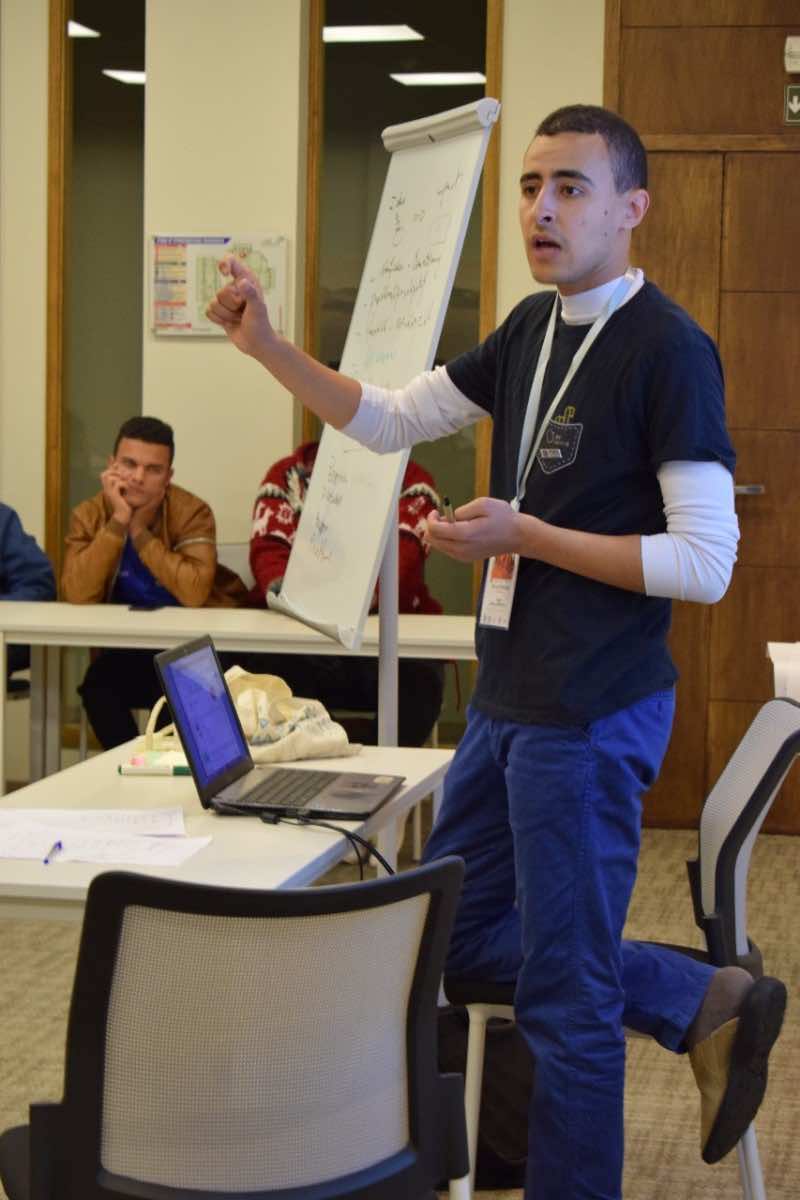
Uakkas’ professors and friends all extol his commitment to social work and community engagement. Photo: Saad Uakkas
For Uakkas, a doctor’s job is not just about helping people. Another essential aspect is promoting health awareness and engaging with the people in a meaningful way. For now, Uakass says he is looking forward to embarking on his master’s program journey and immersing himself in this “one in a lifetime experience.” His plans for the future are still not set in stone, but he says he wants to come back to Morocco and fully commit to the field of public health.
“We have so many problems, opportunities, and challenges that we have to overcome. We need people to be in touch with the local population, to identify the problems and implement new solutions, to improve people’s health,” he said.