Rabat – The African continent is facing a historic food crisis in the coming months and years, and only a proper continental response can ensure it doesn’t last an eternity.
Experts have issued apocalyptic predictions regarding the growing food crisis in Africa and beyond. “Millions could die in the coming months,” warns the NGO World Relief, while the UN has described the situation in the Sahel as a “horrendous food crisis.”
Predictions regarding the coming months and years paint a dire picture of famine, drought, and increased instability.
Yet what few experts emphasize is that without a structural solution, this food crisis might never end. While Morocco has little capacity to alleviate the short-term disaster, it could play a vital role in saving millions of lives over the coming decade.
Food security as a prerequisite
The emergence of every civilization in history has followed a certain path of development. As an emerging state produces more food, fewer citizens are required for agricultural tasks, allowing for the emergence of a class of merchants, philosophers, and other non-food based professions.
While all civilizations follow this key path, post-colonial Africa has seen a different trend. While the continent continues to gradually build new universities, erect 5G networks and state infrastructure, food security remains largely dependent on favorable weather conditions, and a stable international context.
As such, the climate and international stability are two factors where little improvement can be expected, with further deterioration as the more likely trend.
We see both factors at play in the current food crisis. Volatile supply chains and rising food and energy prices have been driven largely by increased droughts, diminished food supplies from Eastern Europe and the disruption in the supply of key agricultural inputs required to produce the food Africa needs.
Over the next decades the continent could become a microcosm of the world’s worst problems, or it could provide an example that deep structural issues and inequalities can be addressed.

International programs such as the World Food Programme often serve as people’s last resort in times of crisis. Photo: WFP.
Short-term disaster
Morocco’s geopolitical neighborhood is facing a dire short-term outlook. The UN warns that over the past three years, the number of people on the brink of starvation has increased nearly tenfold.
The World Food Programme’s Director David Beasley says that “an absolute crisis is unfolding before our eyes,” as the number of hungry people in the Sahel has risen from 3.6 million to 10.5 million in just five of the Sahelian nations over the past three years.
But this unfolding crisis is not a sudden occurrence. Experts have been warning for years that climate change alone presents a ticking time bomb for the continent.
As the current crisis evolves, the regular patterns of our global crisis-management protocols have again emerged. Whereas programs issue desperate pleas for increased funding for vital food assistance and news outlets report on the horrific conditions of people already amid famine, governments’ best response so far has been to repeatedly meet in summits to discuss abstract notions of “malnutrition” or “food insecurity.”
While underfunded food programs and distracted world-leaders are likely to be able to ease the suffering to some extent, what remains unspoken is that this food crisis has been decades in the making, and could have a decades-long impact on the continent and its youthful population.
In apparent recognition of these trends, Morocco’s Ambassador to the UN Omar Hilale stated earlier this week that “food aid cannot feed Africa.” Addressing his colleagues in New York, Hilale highlighted that Africa does not need hand-outs, it “needs seeds in the ground, and mechanical harvesters to harvest food locally.”
While Morocco has little control over the evolving food crisis in the coming months, the country has the natural resources and the apparent political will to build a new continental consensus to work towards a structural solution.
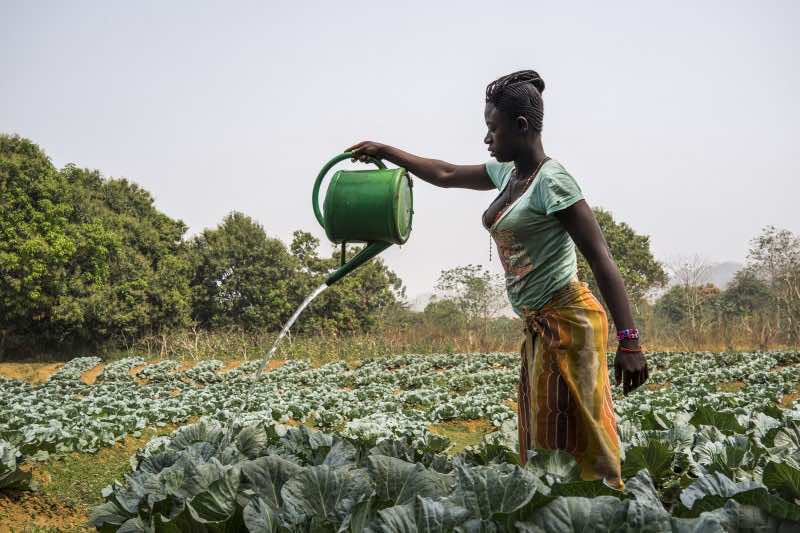
Africa holds 60% of the world’s uncultivated arable land needed to expand agriculture. Photo: Sebastian Liste/NOOR for FAO.
Long-term solutions
Agriculture needs to be Africa’s top priority. While education, unemployment and healthcare remain key topics of concern, it is important to recognize that these problems cannot be resolved while people face hunger and the instability that comes with this uncertainty.
Boosting agriculture means increasing yields, ensuring less people can produce more food. It means better management of the chemicals and fertilizer used in modern agriculture, to ensure sustainability by preventing pollution and waste. Boosting agriculture requires investments in technology, capacity-building for a new generation of farmers, and a renewed focus on intra-african trade.
Africa continues to export most of its resources abroad, with 85% of continental trade consisting of African nations trading with the West and East. African countries trade more with foreign industrial superpowers than their own neighbors, in essence maintaining the colonial structure of resource extraction resulting in foreign wealth creation.
Breaking this cycle is essential to building a robust intra-African economy that can provide rising incomes, boost efficiency, build trust in government, and reduce internal political divisions. And Morocco has in recent years been a particularly vocal proponent of taking a more unified approach to break this vicious cycle.
Moroccan officials have repeatedly highlighted the importance of boosting south-south cooperation, sealing “win-win” agreements between African nations, and producing a unified response to shared problems.
Far from being mere rhetoric or high-minded idealism, such consistent calls for a unified continental response to the coming, inevitable food crisis stem from a realistic assessment that African nations are destined to either work together, or perish together.
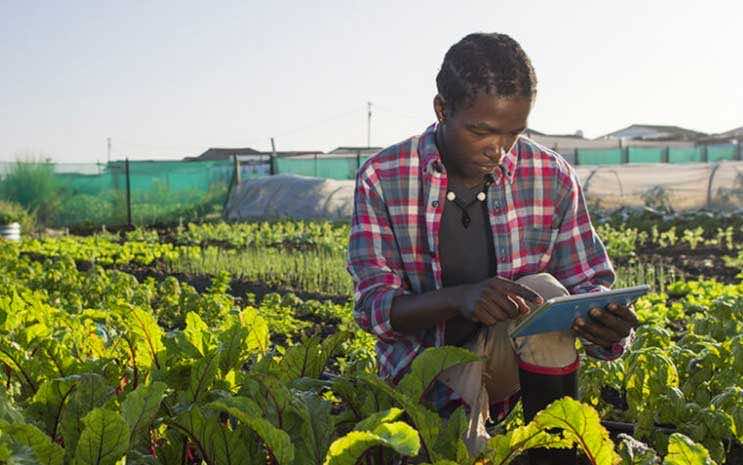
Moroccan expertise and natural resources could be the key to boost African agriculture in a sustainable way. Photo: African Plant Nutrition Institute (APNI).
Moroccan tools
The coming years will likely become a defining moment for both Morocco and the continent as a whole. Will Africa continue to depend on foreign assistance in times of disaster, or will it turn the page and provide a unified response to its structural food insecurity problem? As elites squabble and citizens see their cost of living rise, trust in governments across the continent is at stake.
Threatened with conflict, hunger and extreme weather, Africa is facing a make-or-break moment, where the coming crisis can become a new source of division, or unity. Morocco has been dubbed the future “gatekeeper of the world’s food supply,” and has a key role to play in Africa.
The country’s phosphate resources and its ever-growing agri-tech expertise could provide one key to resolving Africa’s decades-old food problem. What this means is that combining Moroccan resources and know-how with the vast human capital and natural resources available on the continent could turn a weakness into a strength.
In terms of unexploited potential, Africa is undoubtedly the richest continent on earth. It holds 30% of the globes’ minerals, 60% of the world’s uncultivated arable land, and almost a billion motivated young people eager to improve their living conditions.
The world needs Moroccan phosphates, it needs Nigerian gas, Guinean metal and Congolese cobalt. The world needs Africa. Yet African citizens continue to be the people who have benefited least from Africa’s wealth.
With disaster on the horizon, African leaders and citizens alike now have a small window left to act. Now is the time to lift trade barriers between African nations, mend internal divisions and prioritize a unified long-term approach over short-term thinking.
The most vital first step to ensure prosperity and dignity appears evident. Morocco and the rest of Africa need a self-sufficient food system that can provide the foundation for further progress and economic independence.