 Join on WhatsApp
 Join on Telegram
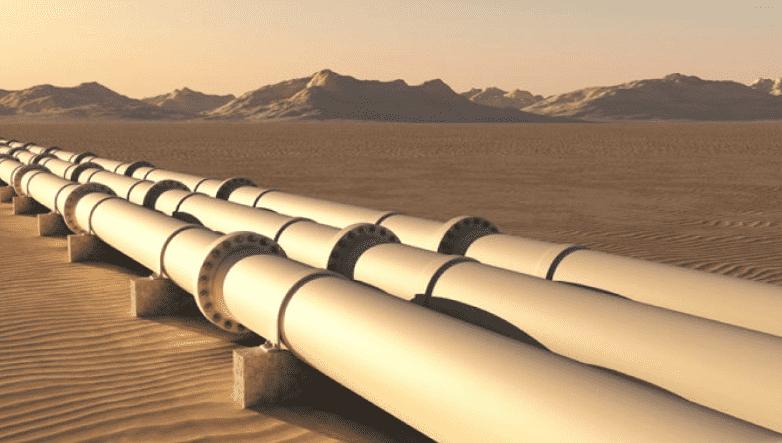
Morocco – Morocco is set to be home to 1,672 kilometers of the mega 4000 km Nigeria-Morocco Gas Pipeline Project (NMGP).
As a part of the continent’s longest gas pipeline, the NMGP will transport as much as 5.4 million cubic meters of gas to Morocco annually, representing almost half of Morocco’s gas imports in 2017, according to some estimates.
“The part of the gas pipeline inside Morocco will be around 1,672 km long…this pipeline will be used to transport gas produced in Nigeria and other African states to Europe,” Eman Mansouri, an official at the government’s National Office for Hydrocarbons (ONYHM) and Minerals said in a statement reported by Zawya, UAE-based media.
The Moroccan official further specified that the 1,672-kilometer pipeline is expected to be built over six phases, with the possibility of increasing the supply at a later stage.
First conceived in 2016, the pipeline has recently made headlines amid the ongoing Ukraine crisis, the tightening global gas supplies, and the west’s sanctioning of Russia.
Earlier this week, Nigerian president, Muhammadu Buhari, spoke to Bloomberg, saying that he is “urging” the EU and the UK to invest in the NMGP given its potential to end the current supply bottleneck in the global market.
The ambitious project is expensive, as it requires a total investment of almost $25 billion and would take 25 years to become fully operational, reports indicate.
In the course of this year, the project received significant funding from the Organization of Petroleum Exporting Countries (OPEC). The investment went to fund the project’s feasibility study also known as Front-End Engineering Design (FEED).
Aside from its potential to end western Europe’s dependency on Russian gas – – a high priority for European politicians, – – the project promises significant socio-political advantages for the African continent, experts argue.
The project will strategically cross 11 African countries, promising a reliable and stable source of gas that would boost the continent’s potential to attract investments and contribute to socio-economic development.
In Morocco, the pipeline would provide an alternative to the expensive importations of Liquified Natural Gas (LNG). The North African country currently imports almost 90% of its energy needs, making it especially vulnerable to fluctuating energy prices.
Rising energy prices are triggering a significant trade deficit in Morocco’s external trade balance in addition to increasing the budget it relocates to subsidizing energy commodities to preserve the national purchasing power and exhausting the country’s foreign currency reserves.
Read Also: Nigeria-Morocco Gas Pipeline Is Paramount to Regional Economy, Politics