
 Join on WhatsApp
 Join on Telegram
Rabat – With the digital revolution paving the way for new forms of activism – cyberactivism – JATwJABT, a new Moroccan feminist media platform, aims to promote gender equality in Morocco by advocating for women’s rights, challenging gender biases, and encouraging women to speak up for themselves.
The production company JAWJAB launched the JATwJABT platform last month, with the aim of shaping feminist issues and politics in Morocco. The platform connects activists, experts, public figures, and ordinary women to collect, display, and contextualize knowledge and practices to support the feminist struggle in Morocco.
Since the launch of the #MeToo movement in 2017, the fight for women’s rights experienced a revival, as more women were encouraged to speak out against sexual harassment and gender-based violence.
The movement’s impact reached Morocco as well, JATwJABT highlighted in a press release, with Moroccan activists and feminist organizations following suit.
Camelia Echchihab, JATwJABT’s co-founder and editorial director, told Morocco World News that “the #MeToo Movement has caused the birth of a new form of activism on social media in Morocco.” Movements such as #Masaktach (“I will not stay silent”), Moroccan Outlaws, and #MeTooUniv gained momentum in Morocco during this period.
Read also: Moroccan FM Commends Rising Female Participation in Diplomacy
“Through JATwJABT, we want to liberate women’s words and speech, and most importantly listen to them,” said Echchihab, highlighting the role that social media and the #MeToo Movement played in encouraging women to voice their experiences. Echchihab offered the example of Moroccan blogger Loubna Mourid, a victim of physical assault, who took to the internet to speak up about her abuse.
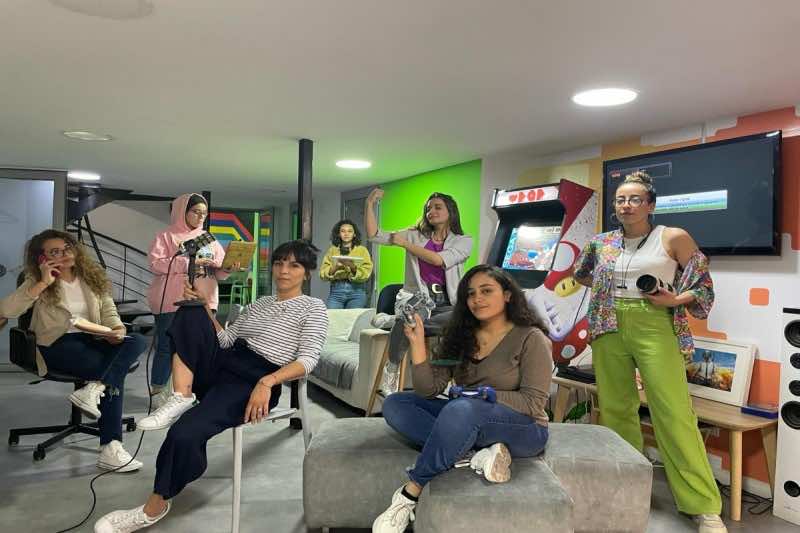
The JATwJABT team. Credit: Meryem Ait Aghnia
The right time
“I was intrigued by all these Moroccan activists who tackled these issues,” Echchihab said. “Moroccan society is ready to move the lines in terms of women’s rights,” Echchihab added, highlighting the movement’s growing influence and the urgent need for a platform dedicated solely to feminist activism.
According to Echchihab, Moroccan society today “has more awareness about women’s issues,” as she cited the example of a 2018 report released by the Moroccan government that revealed shocking statistics on violence against women.
“When we launched JATwJABT, we received a lot of messages from people saying that they are happy with the creation of a platform for this purpose,” Echchihab said, describing people’s positive feedback as “a good sign.”
Diversified strategy and original content
According to a JATwJABT press release, the platform’s two missions are to create a safe and open space for women to speak up and share their stories without judgment, and to foster feminist values that deconstruct sexist taboos and stereotypes which persist in Moroccan society.
The platform is also committed to promoting female leadership as a way of inspiring and empowering women. JATwJABT features and raises the visibility of Moroccan women who have succeeded in several domains, particularly stereotypically masculine fields, such as the sporting world and the tech sector.
The platform produces diversified content, including videos, talk shows, documentaries, and short films. For World Menstrual Hygiene Day on May 28, JATwJABT released a short film called “Bla Mika,” meaning “without a plastic bag,” which tackles the stigma and taboos associated with menstruation in Morocco.
Read also: Increase in Gender Violence, Long Way Ahead for Women’s Rights in Morocco
In an attempt to “democratize knowledge,” JATwJABT established its #Kelma segment, which features Moroccan female figures explaining feminist concepts such as “mansplaining” and “the male gaze,” Echchihab added.
According to Echchihab, JATwJABT adopts an “intersectional approach” that seeks to target and address all individuals. JATwJABT “is for everybody – men and women, transgenders, queers, and every sexual orientation and gender identity,” she explained.
Echchihab highlighted that “men have to be included in the fight [for equality] and make an effort to recognize and acknowledge the privileges they have in society.” “They have to deconstruct these privileges,” she added.
Describing JATwJABT as “the project of changing the society” and “deconstructing stereotypes,” Echchihab stressed that achieving gender equality will benefit men and women alike.