 Join on WhatsApp
 Join on Telegram
Rabat – Morocco scored 0.624 out of 1 in the global gender gap index on Wednesday, placing it 136th globally and 10th in the MENA region. The same report noted that the MENA region will need 115 years to close its gender gap.
According to the World Economic Forum, Morocco, Kuwait, and Saudi Arabia recorded a “positive increase” in their 2022 gender gap scores, whereas Algeria, Oman, and Qatar were labeled the worst-performing MENA countries in 2022.
Israel, Lebanon, and the UAE finished as the top-performing countries in the region.
Breaking down Morocco’s performance by the scores of four subindexes, the Kingdom has lowered its gender gap in the educational attainment and health and survival subindexes, receiving scores of 0.945 and 0.961 out of 1 respectively, which placed the country 114th and 131st in the global ranking.
The country’s performance faltered, however, with regard to Moroccan women’s participation in the economy and politics.
At the regional level, Morocco, Algeria, Tunisia, and Oman were the only countries with educational attainment scores less than 0.95, while the regional average for 2022 was 0.962.
The index noted, however, that all MENA countries have closed their gender gaps in tertiary education, although only some reached gender parity in primary and secondary education.
As for equal access to health, Morocco and Egypt were the only countries in the region that were “trailing behind,” with respective scores of 0.961 and 0.968. The regional average for the subindex is 0.964. Tunisia, Kuwait, and Lebanon, however, succeeded in closing at least 96% of the gender gap in health.
Read Also: Morocco Approves New Committee To Boost Gender Equality
Regarding gender parity in the economic participation and opportunity subindex, Morocco ranked 139th in the world with a score of 0.447. Tunisia, Egypt, and Morocco scored the lowest in the economic parity index in the MENA, putting them behind the region’s leading countries on the subindex: Jordan, Kuwait, and Israel.
Morocco notably received its lowest subindex score, 0.145, in the political empowerment category, placing it 99th worldwide.
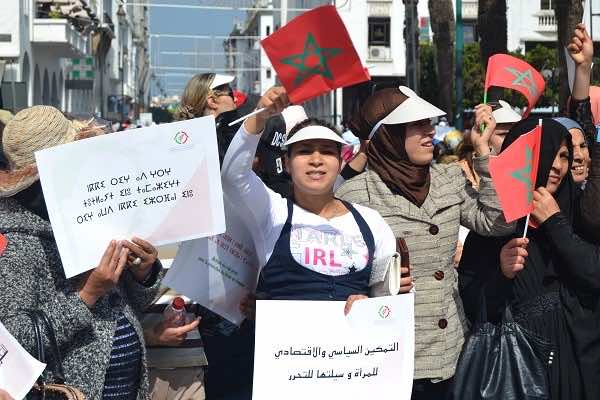
Moroccan women and their peers across the MENA have repeatedly called for gender parity in all sectors. A recent report from Morocco’s High Commission for Planning (HCP) noted earlier this week that the COVID-19 pandemic had a “major impact” on women’s access to health services in Morocco, affecting “them for many years to come.”
Other reports by the World Bank have noted that the pandemic has caused the layoff of more female than male workers, inflicting financial difficulties on already vulnerable populations.
As Morocco recovers from the COVID-19 implications on the domestic economy, which were later exacerbated by the consequences of the war in Ukraine, Moroccan women and girls have to navigate their way towards gender parity in the face of economic crises, a rigid patriarchy, and a lack of training and opportunities.