 Join on WhatsApp
 Join on Telegram
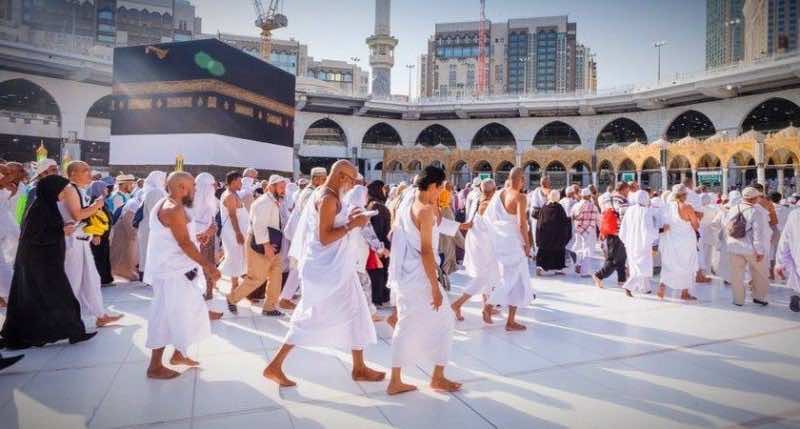
Rabat – A recent report highlighted that climate change is making Hajj increasingly dangerous, serving as yet another sign of the global need to cut greenhouse gas emissions and respect the recommendations of the Paris agreement.
Indonesia’s Center for Islamic Studies in Universitas Nasional (PPI UNAS) noted in the report that high temperatures combined with humidity can be “extremely dangerous,” as it becomes harder for people to cool down by sweating. These conditions have prevailed in Mecca, where humidity is often high “when winds blow westwards from the sea.”
The report added that even though elders are the most vulnerable to heat waves, when the heat coincides with high humidity, even young and healthy people can fall sick or die.
Such conditions are threatening the “safety and viability” of Islam’s pillar, Hajj, said Imam Saffet Catovic from the Islamic Society of North America. He added that, “As more Muslims “green” their own Hajj, governments and financial institutions must implement ambitious plans at the systemic level to scale up renewable energy development and to phase out fossil fuels.”
The eye-opening report has urged industrialized and Muslim-majority countries to cut their emissions and meet the agreed-upon degree limit of 1.5°C. However, current climate policies are pushing the limit to 2.7°C, which could render Hajj in the summer “dangerous,” and in one out of five cases “extremely dangerous” – a level never experienced before in Mecca.
As Hajj follows the Islamic calendar, its dates are constantly changing each year. Forecasts currently indicate that the danger from the heat in coming years is expected to decrease, as Hajj will occur in progressively cooler months. However, the 2045-2053 and 2079-2086 decades would fall during the peak of the summer season between August and October.
Read Also: Hajj 2022: 15,392 Moroccans to Make Pilgrimage to Mecca
To address the issue, the report called upon the US, China, Russia, Brazil, and the EU, who are primarily responsible for climate change, to quickly decarbonize their industries.
While several of these governing bodies have advanced their renewables capacity and decarbonized their industries, their greenhouse emissions remain high, placing countries in Africa and the Middle East in face of extreme climate changes ranging from severe droughts and heatwaves to floods.
Alarming levels
As climate change threatens the existence of the 1400-year-old pilgrimage to Mecca, Muslim-majority countries must also contribute to alleviating the impact of climate change by adopting responsible climate policies.
Prior to the Paris Agreement, Muslim countries established in 2015 the Islamic Declaration on Global Climate Change. However, the agenda failed to prevent some countries from expanding their use of fossil fuels at the national level.
Besides Morocco and Maldives, which have the potential to meet the 1.5°C degree limit, the remaining Muslim-majority countries are pushing the warming levels up to 3°C or over 4°C.
Under the 3°C warming level associated with Egypt, Indonesia, and Kazakhstan, 97% of summer Hajjes would reach the “danger” threshold, whereas 19% of them would be “extremely dangerous.”
As for the case of over 4°C degree limit caused by emissions in Saudi Arabia, the UAE, Iran, Türkiye (Turkey), and Bangladesh, 42% of summer Hajjes would be labeled as “extremely dangerous,” whereas Hajj, at every time of the year, would call for “extreme caution.”
These alarming warming levels are expected to be reached over the upcoming years in the Islamic holy sites in Mecca, which note the urgency of the issue.
As Nana Firman, co-founder of the Global Muslim Climate Network, noted, “It is imperative that the Muslim community band together to urge all countries – especially those who have the highest historical responsibility and capacity – to step-up their efforts in reducing emissions and implementing more ambitious strategies to mitigate climate change.”