
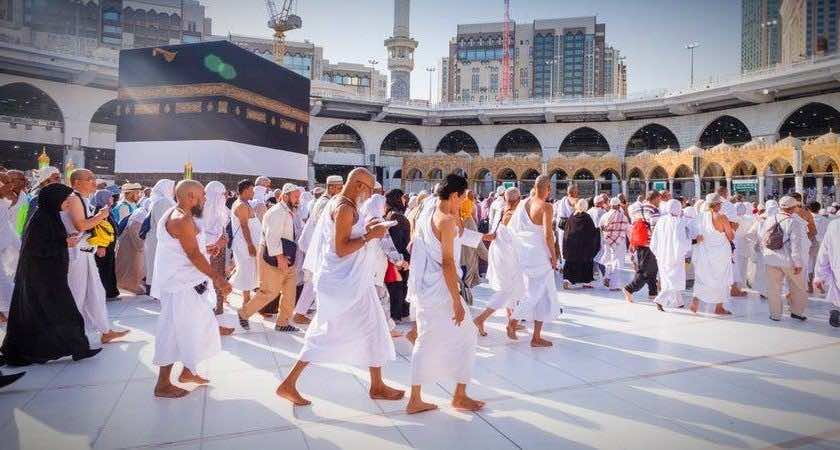
Rabat – After a two-year hiatus due to the COVID-19 pandemic, international pilgrims will perform Hajj, the annual pilgrimage to Mecca and Madina, starting on the evening of Thursday, July 7.
In the last two years, Saudi Arabia restricted the holy pilgrimage to a few thousand local pilgrims in an attempt to fight the COVID-19 outbreak.
This year, however, Saudi Arabia has eased restrictions, allowing a total of one million pilgrims, both international and local, to perform the annual Islamic ritual. 15,392 Moroccan pilgrims will perform this year’s Hajj.
In March 2022, Saudi Arabia lifted most of its COVID-19 restrictions, including precautionary measures for visiting the Grand Mosque in Mecca and the Prophet’s Mosque in Madina.
Hajj is one of the five pillars of Islam. It takes place during Dhu Al Hijjah, the twelfth and final month of the Islamic lunar calendar. The Islamic month also marks the Eid Al Adha celebration, which occurs on the 10th day of Dhu Al Hijjah.
Saudi Arabia has exerted significant effort to facilitate this year’s Hajj season, including mobilizing 10,000 employees and workers to serve and assist pilgrims during their spiritual journey.
Read also: Morocco Denies Offering Special Financial Aid to Citizens for Eid Al Adha
Saudi Arabia’s Ministry of Hajj and Umrah also introduced 13 “Hajj Awareness Guides” in 14 languages, providing “crucial health, logistics, and religious information,” said the ministry.
Last month, the Gulf country’s Ministry of Interior announced the launch of the “Makkah Route Initiative” in Morocco, Pakistan, Malaysia, Indonesia, and Bangladesh, with the aim of assisting pilgrims and facilitating their Hajj procedures.
Morocco’s King Mohammed VI congratulated Moroccan pilgrims for fulfilling the fifth pillar of Islam and urged them to positively represent their country’s values of peace, forgiveness, and tolerance.