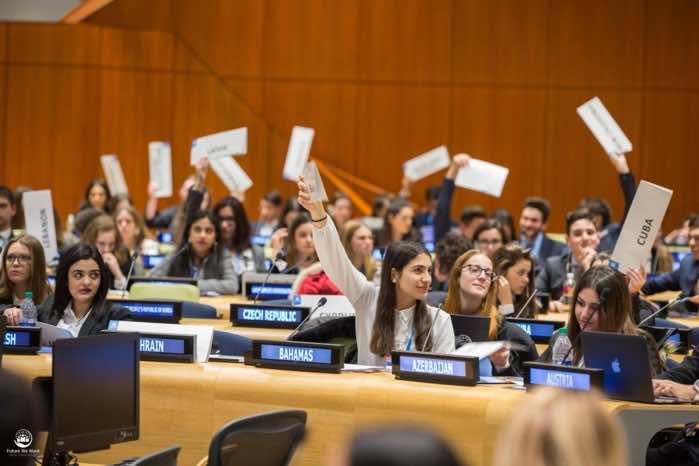
Casablanca – As part of the UN’s third “Future We Want: A Global Initiative for Young Leaders” conference, a delegation of 65 young Moroccans participated last week as ambassadors in working sessions at the UN headquarters in New York.
Sponsored by the Permanent Mission of Italy to the UN, the initiative is the world’s largest platform for empowering youth in diplomatic and international affairs, civic involvement, and global citizenship.
The delegation representing Morocco at the UN youth initiative convening over 80 nations was led by Chabib Abderrahmane, the Secretary General of the United Nations Association of Morocco.
As part of their discussions during the program, Morocco’s representatives addressed pressing issues on the UN agenda such as water scarcity, energy transition, human rights, and multilateralism as a tool for post-COVID recovery, reported Morocco’s news agency.
The Moroccan delegation also met with several ambassadors from member countries and other UN officials, the report added.
Read also: Morocco, United Nations Sign Agreement to Promote Youth Development
According to the organizers, the conference was a success and could serve as a model for future similar events involving young people and young professionals worldwide in the execution of the Sustainable Development Goals (SDGs).
Organized by the Italian Diplomatic Academy in partnership with a number of national institutions and foreign embassies, the UN-sponsored program has since 2018 offered young people who want to be diplomats or enhance their abilities in international relations and diplomacy the opportunity to participate in simulations of UN sessions.
The program’s main purpose is to instill in young people a more consensus-oriented mentality while also reminding them that states and people have a self- and shared interest in improving the UN’s performance, said the organizers.
The initiative was applauded by UN Secretary-General Antonio Guterres, General Assembly President Abdulla Shahid, Special Envoy for Youth Jayathma Wickramanayake, and the UN Economic and Social Council.