 Join on WhatsApp
 Join on Telegram
Rabat – King Mohammed VI has echoed recent concerns about the danger and challenges of cultural appropriation that affects Morocco’s cultural and traditional heritage.
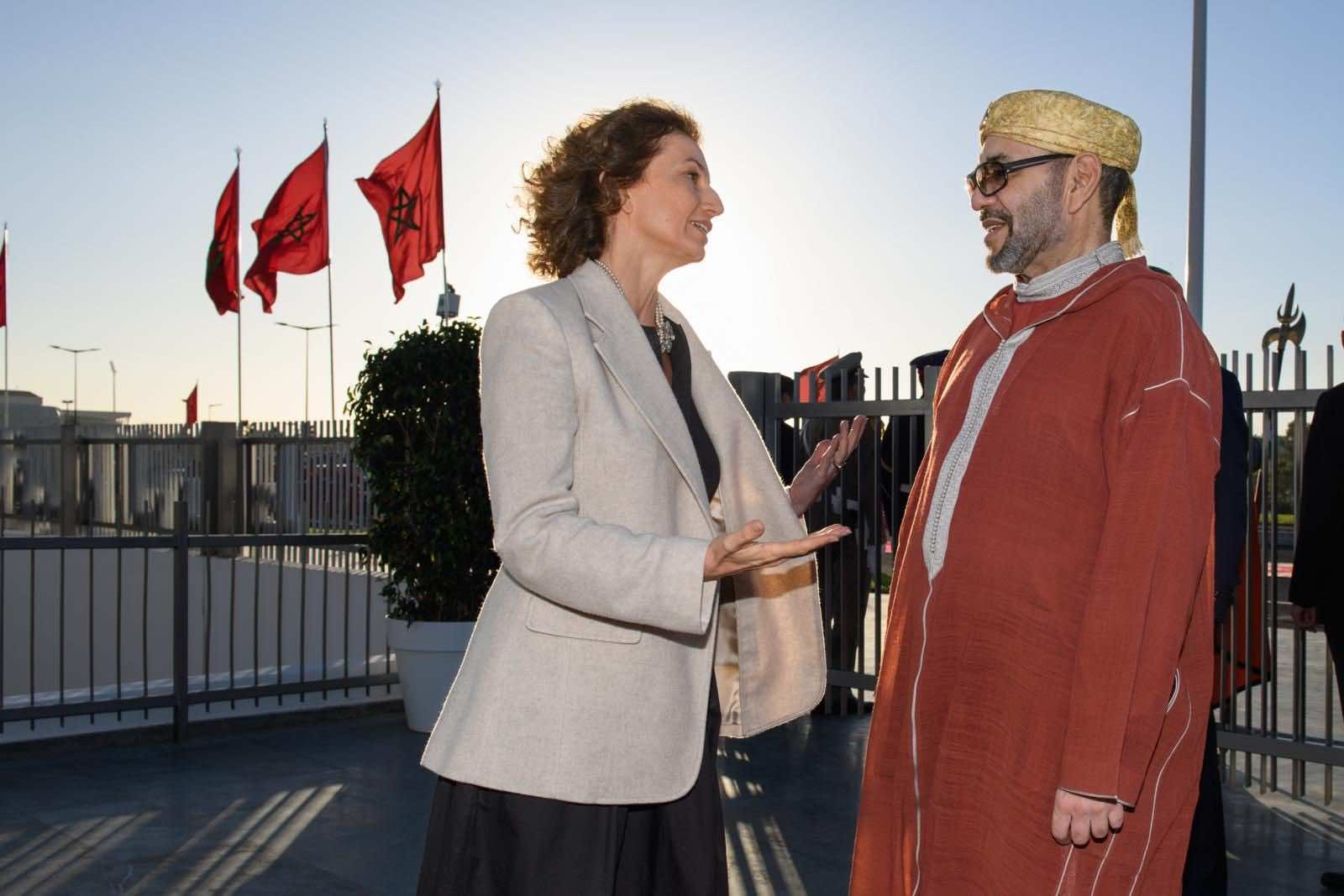
The King made his remarks in a meeting with the General Director of UNESCO, Audrey Azoulay, following her participation in the 17th session of UNESCO’s Intergovernmental Committee for the Safeguarding of the Intangible Cultural Heritage held in Rabat on Monday.
Stressing the importance of preserving cultural heritage, the monarch extended his thanks to Azoulay for her efforts to preserve the cultural heritage of all countries that are subject to appropriation by other foreign countries which imitate cultures that are not their own.
The King also expressed satisfaction with the quality of the partnership between UNESCO and Morocco, recalling the “outstanding cooperation between the UN organization and the Kingdom in order to preserve the intangible cultural heritage and preserve culture and traditions that are passed on from one generation to the next.”
Fighting Cultural Appropriation
Through his meeting with Azoulay, the monarch stressed Morocco’s determination and readiness to counter any attempts seeking to undermine Morocco’s identity and intangible heritage, recalling that a number of countries are illegally appropriating and blindly imitating the cultural heritage of other countries.
Like many countries suffering from cultural appropriation, Morocco is no exception to this threat.
One of the recent infamous cases that sparked outrage is Adidas’ use of Morocco’s Zellige (a type of mosaic tilework) under the release of an “Algerian culture” clothing collection.
In September, the international brand released its new wear, claiming that it was inspired by “the architectural design” of’ El Mechouar Palace in Tlemcen, Algeria.
Adidas’ announcement came as a shock to Moroccan communities across the world, with many denouncing the brand’s statement that attributed a symbol of Moroccan heritage to Algeria.
In response, Morocco’s Ministry of Culture announced a lawsuit against the brand.
“We have warned the corporation that this practice constitutes cultural appropriation, an attempted robbery of a form of traditional Moroccan cultural heritage, and the use of that heritage outside of its intended context, all of which contribute to the loss and distortion of the identity and history of these cultural elements,” President of Morocco Lawyers’ Club Mourad Elajouti said.
Morocco also stepped forward, deciding to officially patent the Zellige design of Fez by the World Intellectual Property Organization.
Celebrating the patenting of the Moroccan cultural heritage, the culture ministry stressed that the “Zellige industry dates back to the tenth century AD when it flourished during the Marinid era in the honorable Kingdom before moving to neighboring tribes during the following centuries.”
In addition, Morocco registered the Zellige of Fez in the Vienna Classification of Figurative Elements of the World Intellectual Property Organization in 2015 in a bid to preserve its national heritage.
Adidas inaction
Despite the controversy and uproar, Adidas failed to recognize that Zellige is part of Morocco’s heritage.
Adidas resorted to an ambiguous statement, in which it claimed that it “deeply” respects Morocco’s people and craftsmen.
Read Also: Adidas Fails To Recognize Zellige as Part of Morocco’s Heritage
The brand also claimed to have held “constructive talks” with Morocco, resulting in a “positive “resolution” to the football jersey design issue.
Adidas also expressed “regret” over the controversy, saying that it is against any act that “prejudices the cultural integrity and history of people and nationals globally.”
The statement, however, lacked an official apology to Morocco and the use of Morocco’s Zellige on the Algerian jersey without providing any credit or cultural attributions to its original Moroccan heritage.
Adidas has also not withdrawn the jerseys from the market.