


 Join on WhatsApp
  Join on Telegram
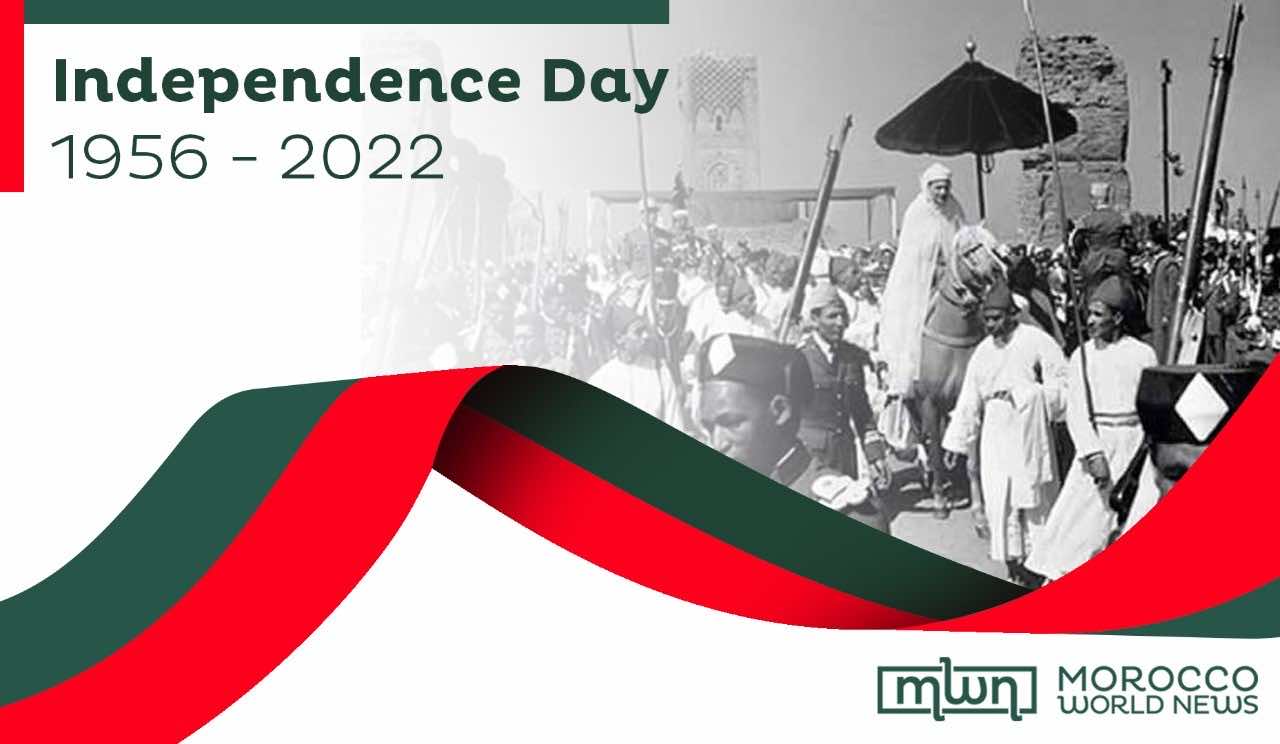
 Rabat – On November 18, Moroccans will celebrate the 67th anniversary of Morocco’s independence. The date, which once commemorated King Mohammed V’s ascension to the throne in 1927, celebrates nowadays the country’s long fight for freedom and independence against the French and Spanish protectorate.
The colonial history dates back to March 30, 1912, with the signing of the Treaty of Fez, laying the foundation for the French protectorate and the division of Moroccan territories between Paris and Madrid with Spain controlling the northern and southern provinces with the exclusion of Tangier, which became an international zone in 1923.
However, Tangier’s special status was temporarily revoked between June 14, 1940, and August 31, 1945, as Spanish dictator and general Francisco Franco occupied the international zone.
As for the Ceuta and Melilla enclaves, they have remained under Spanish control since the 17th and 15th centuries, respectively.
A fierce fight
Since the establishment of the French and Spanish protectorate regimes in Morocco, local communities led numerous revolutionary missions fighting back the expansion of the colonial forces.
The establishment of the Republic of the Rif by Abdelkrim al Khattabi in 1921 and its continuity until 1926 strongly reflected the Moroccan will for independence. Despite being defeated by the Spanish Army of Africa with the support of French forces, the republic remained a prominent example of Moroccan-led resistance movements.
In November 1925, the Moroccan nationalist movement was initiated to put an end to the oppressive colonial regimes. The movement was instrumental in voicing Moroccan demands in not only urban and rural centers but also on the international stage.
In January 1944, 66 members of the Moroccan national movement signed the country’s Manifesto of Independence and presented it to the French and Spanish colonial authorities, as well as representations of the US, Great Britain, and the Soviet Union.
Read Also: Remembering King Mohammed V, Morocco’s Revolutionary Monarch
The manifesto was a turning point in Morocco’s struggle for independence. Aware of the threat that the declaration represented to the continuity of the French protectorate in the North African country, French colonial forces worked on pressuring Sultan Mohammed V to condemn the proclamation, while leading a purge of Moroccan nationalists and intellectuals and accusing some of the signatories of spying for Nazi Germany.
This was a time when Muslim and Jewish nationalists were discussing the prospect of establishing a modern and free Morocco that can equally celebrate both communities and reverse discriminatory measures forced by colonial authorities such as the Berber Dahir and Vichy’s anti-Jewish policies.
Despite facing fierce oppression from French colonial forces, the Moroccan nationalists continued to voice their demand for self-determination.
The movement further worked in coordination with Sultan Mohammed V to obtain freedom. The Sultan’s calls for independence eventually led to his forced exile along with his family members on the eve of Eid al-Adha in August 1953 to Corsica, and then to Madagascar in 1954.
The Sultan’s forced exile fueled public uproar with many nationalists organizing protests and calling for the return of the Sultan and his family as well as the right of the people to self-determine their fate.
Read Also: World War II: US Embassy in Morocco Commemorates 80th Anniversary of Operation Torch
Faced with rising pressure from the Moroccan public for independence, France allowed the return of Sultan Mohammed V to his homeland on November 16, 1955.
Two days later, the monarch delivered an iconic speech, stating, “We are delighted to announce the end of the trusteeship system and protectorate and the advent of freedom and independence.”
Incomplete independence
By late 1955, Mohammed V agreed to the gradual restoration of the country’s territorial integrity in line with agreements reached with France.
On March 2, 1956, Morocco officially gained independence from the French regime. That same year, Morocco re-integrated Tangier and the northern part of Morocco that was under Spanish rule.
However, the Ceuta and Melilla enclaves, as well as the country’s south remained under the Spanish regime at the time.
Morocco gradually recovered its territorial integrity in the south with the withdrawal of Spain from Tarfaya in 1958, Sidi Infni in 1969, and Saqia al Hamra and Oued Eddahab region in 1975.
A significant part of the Moroccan recovery of southern territories was led by the late King Hassan II (1961-1999) who orchestrated the Green March that contributed to the full withdrawal of Spain from southern Morocco.
After over six decades of fighting for independence, Morocco regained the majority of its territories with the exception of the Ceuta and Melilla enclaves that remain under Spanish rule.
The country’s southern provinces, known as Western Sahara, are also subject to disputes with the eastern neighbor and the Polisario Front, a self-proclaimed separatist group challenging Morocco’s territorial integrity and sovereignty of the region.
Today, Rabat continues to defend its territorial integrity in international gatherings with the support of friendly states.
Read Also: Green March: A Day Forever Engraved in Moroccans’ Collective Memory


