Rabat – The General Delegation of Penitentiary Administration and Reintegration (DGAPR) responded to Human Rights Watch (HRW) and Amnesty International’s (AI) recently published reports, which claimed human rights violations against prisoners detained in connection with the Gdeim Izik case.
The DGAPR responded to the claims, stating that the detainees imprisoned across seven prison facilities in Morocco “enjoy all the rights recognized by law,” describing HRW and AI’s reports as “biased.”
The DGAPR argued that the two NGOs only “reproduce the unfounded allegations of the families of the detainees concerned,” accusing both of “remaining silent on the fate of the people killed.”
“These detainees are housed in naturally ventilated and lighted cells, benefit from family visits, collective catering provided by private companies, baths in lukewarm water and lighted playgrounds,” DGAPR said, adding that they also have televisions broadcasting sports channels in their cell.
The prisoners can also make purchases of different products at the prison canteens.
DGAPR also denied claims that the detainees lack healthcare, suggesting that the prisoners benefit from health services offered by the prison facilities.
“These prisoners enjoy their full rights to continue their studies and benefit for this purpose from the means that the administrations of the penitentiaries concerned make available to them to prepare for their exams,” DGAPR said, stressing that this gives them the opportunity to obtain university diplomas.
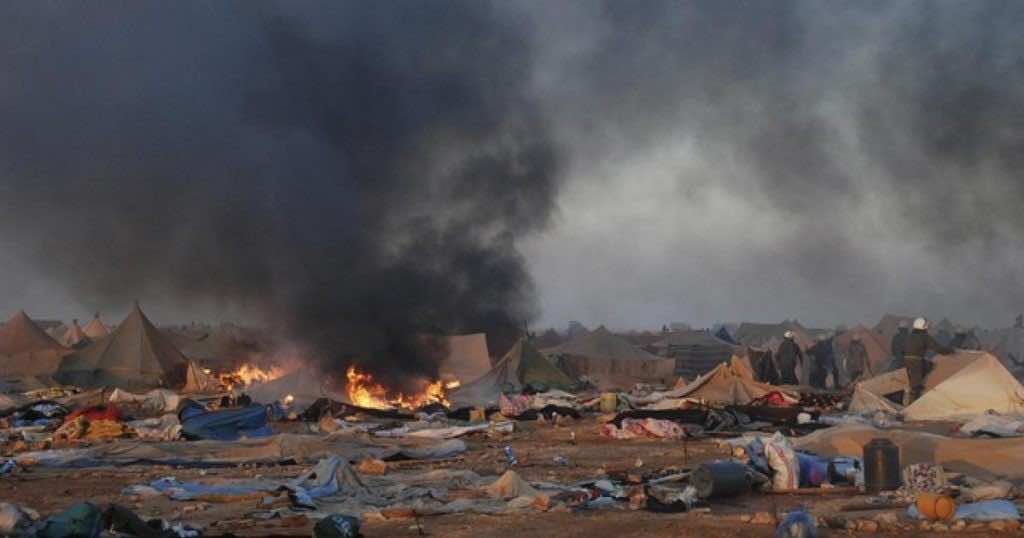
The Gdeim Izik case dates back to 2010 on the outskirts of Laayoune, when a group of Moroccan security forces were killed by Polisario members while dismantling the Gdeim Izik camp, where people had been living to protest their unemployment and lack of opportunities in the city of Laayoune.
Over 70 people were injured during the massacre, in addition to the 12 members of police that the group murdered.
Sentences against the perpetrators ranged between two years in prison to life imprisonment against 23 suspects involved in the incident. Charges were pressed against the suspects for forming “criminal gangs and violence against public forces that led to their death with premeditation, the mutilation of corpses, and complicity.”
Amid claims from NGOs about the Gdeim Izik trial, the French Association for the Promotion of Fundamental Freedoms (APLF) published a report in October 2020 about the case, suggesting that the conditions of the legal proceedings during the trial were “fair.”