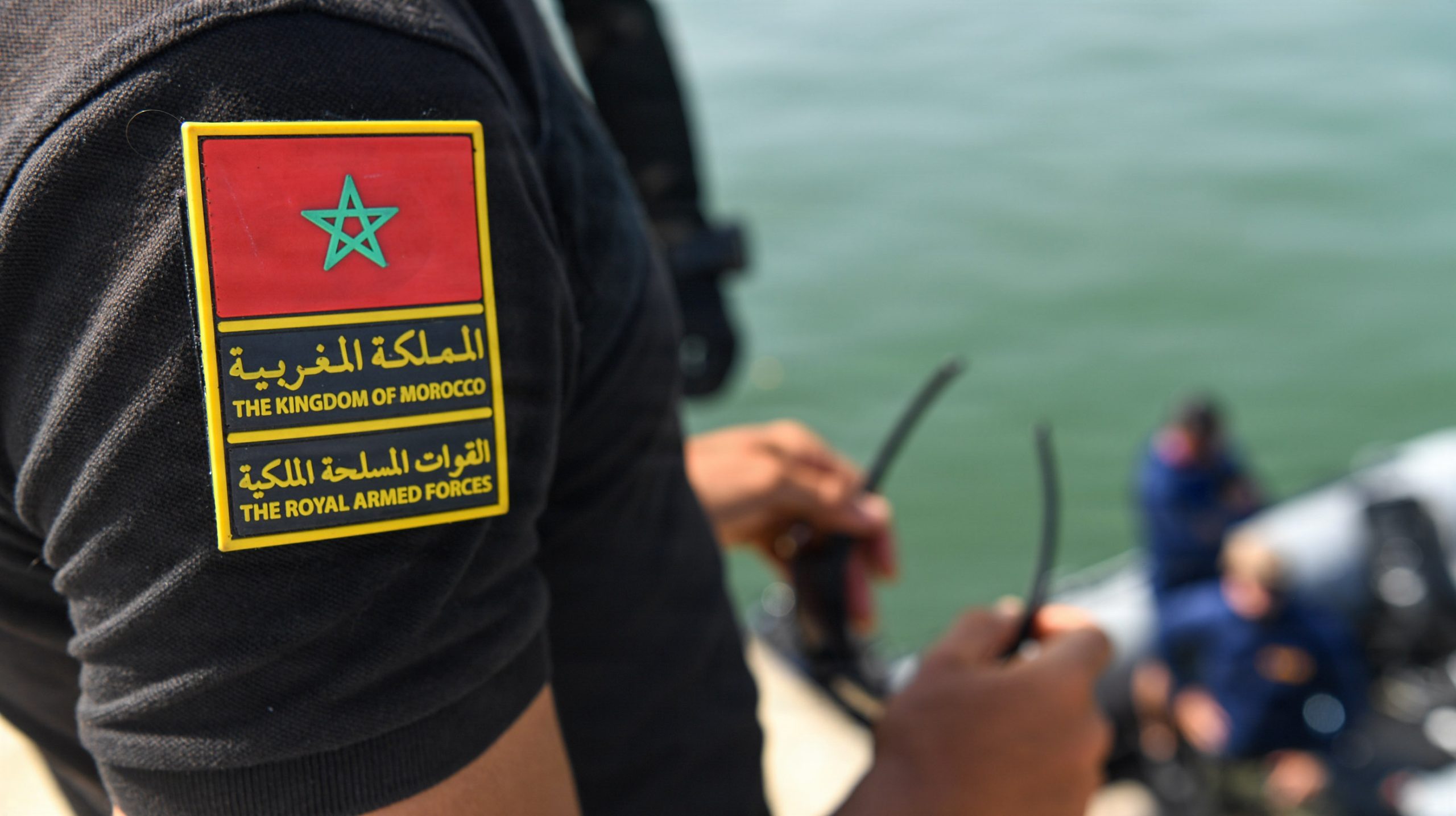
Marrakech – Morocco will form part of the first wave of an international force tasked with securing the Gaza Strip, under plans presented Wednesday at a Board of Peace briefing in New York.
US Maj. Gen. Jasper Jeffers, commander of the Gaza International Stabilization Force (ISF), told diplomats on the sidelines of the 81st UN General Assembly that an advance force of 500 troops from Morocco and Kosovo stood ready to deploy. Contingents from Albania and Kazakhstan would follow.
Jeffers outlined a five-step approach to demilitarizing Hamas. The force’s task is to decommission the group’s military infrastructure and clear the territory of weapons. Security control would then pass gradually to an interim Palestinian government, after which Israel is expected to withdraw its forces.
The plan also rests on a new Gaza police force. Jeffers reported more than 250,000 applicants, of whom 19,000 have been vetted and begun initial training. That process has stalled, though, as Israel refuses to let recruits it vetted leave the Strip for training in Egypt.
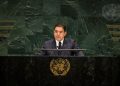
Morocco reconfirmed its role a day earlier. Addressing the 81st General Assembly on Tuesday evening, Foreign Minister Nasser Bourita reiterated the kingdom’s commitment to joining the stabilization force.
The contribution covers high-ranking Royal Armed Forces (FAR) officers detached to the mission’s joint command, Royal Gendarmerie and national security cadres, and a military field hospital. Rabat also offered to help train Palestinian police and to support a counter-extremism program.
Bourita placed the move within Morocco’s broader stance on Palestine, which he called a “constant priority” of the kingdom’s foreign policy. He reaffirmed support for an independent Palestinian state along the June 4, 1967 borders, with East Jerusalem as its capital, living beside Israel in peace and security.
A founding member of the Board of Peace, Morocco was among the first countries to honor its financial pledges to the body.
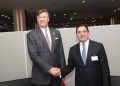
President Donald Trump acknowledged that role at the same assembly. Nearly 30 countries have joined the board he chairs, he noted, thanking member nations for contributions worth “billions and billions of dollars,” money that goes “right to the rebuilding and relief.”
View this post on Instagram
He named Morocco among the donors, alongside Bahrain, Qatar, Kuwait, Pakistan, Saudi Arabia, and Turkiye, and again among the countries sending troops, police, and training, alongside Indonesia, Albania, Kosovo, Kazakhstan, Egypt, and Jordan.
The stabilization effort forms one part of a wider recovery plan. Board officials asked donors for $2.45 billion to fund 66 programs over six months, against total reconstruction costs they estimate near $71 billion. Of some $18 billion in commitments, only $280 million has been called so far.
Ali Shaath, who heads the transitional National Committee for the Administration of Gaza, rejected proposals to move Palestinians out of the enclave. “We want them to stay and live in Gaza with hope and prosperity,” he told the briefing.
Senior envoy Nickolay Mladenov linked the delays to Israel’s October 27 election. Talks had grown “a little bit more emotional, a little bit more politically sensitive,” he acknowledged, adding that the force is “not bound by a calendar” but “bound by verification.”
Read also: Beyond Crisis Management: King Mohammed VI’s Vision for Morocco’s Global Role