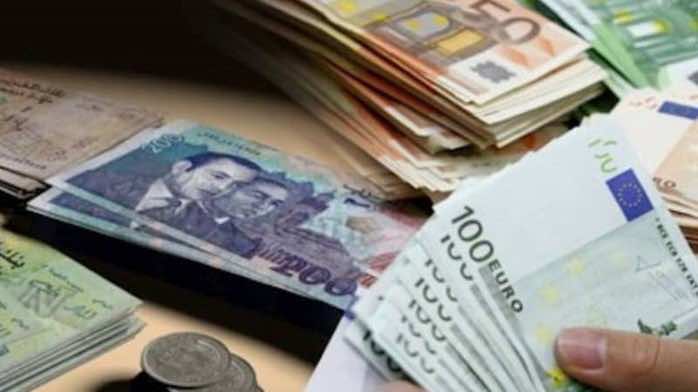
Rabat – Remittances from the Moroccan community residing abroad reached MAD 81 billion ($7.3 Billion) by the end of September, an 11.6% year-on-year increase.
According to the latest publication from Morocco’s foreign trade watchdog, Office des Changes (OC), the flow of remittances continues to grow for the second year after a slight dip in 2019.
Between 2018 and 2022, remittances rose from MAD 37.7 billion ($3.5 billion) to MAD 58.2 billion ($5.5 billion), the OC data indicates.
The volume of remittances peaked at the height of the COVID-19 pandemic, with cash transfers from abroad increasing from MAD 37 billion ($3.5 billion) in 2020 to MAD 54.1 billion ($5.1 billion) within one year.
Remittance is an important source of foreign currency for Morocco, in addition to tourism, exports, and foreign investment. In 2020, remittances accounted for 6.5% of Morocco’s Gross Domestic Product (GDP), data suggests.
A study from the Union of Arab Banks conducted in 2020 indicated that Morocco is the second Arab country in terms of the volume of cash remittances in the region, following Egypt.
The Moroccan community abroad is estimated at five million people. While remittances from Moroccans abroad provide a significant source of foreign currency, the large number of Moroccan skilled laborers emigrating to look for better working conditions abroad is continuously increasing, leading to a structural brain drain domestically.
More than 600 Moroccan engineers move abroad every year in search of better living conditions, putting the national economy at a great disadvantage.
Research into the historical impact of human capital flight maintains that, between 1970 and 2010, human capital flight cost the Moroccan economy a compound $87.7 billion.
Read Also: Over 600 Moroccan Engineers Move Overseas Every Year