Join on WhatsApp
 Join on Telegram
Rabat- Pharmaceutical company AstraZeneca and the Lalla Salma Foundation launched in Rabat on December 8 an initiative to promote equitable access to cancer care and transform the impact of cancer on patients in Morocco.
AstraZeneca Morocco and the Lalla Salma Foundation signed a Memorandum of Understanding to jointly develop the Moroccan oncology healthcare system, increase patient awareness, build infrastructure and capacity for early detection, and facilitate patient access to innovative treatments, according to a press release from AstraZeneca.
Called “Accelerating Change Together; Cancer Care in Africa” (ACT;CCA), the program offers a forum for collaborators to jointly develop the solutions required to close the gaps in care pathways, from diagnosis to treatment and beyond.
On the sidelines of the launching ceremony on Thursday, the executive director of the Lalla Salma Foundation for Cancer Prevention and Treatment, clinical experts, healthcare specialists, patient advocates, and private sector representatives discussed the evolution of cancer in Morocco and reiterated their commitment to ensuring equitable access to cancer care for all Moroccans.
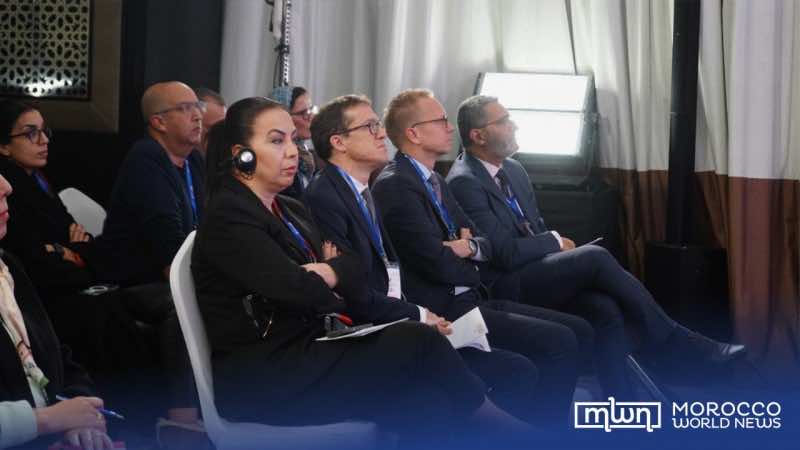 Participants in the event
Country President of AstraZeneca for the Near East and Maghreb region Rami Scandar said, “Morocco was a pioneer in the fight against cancer in Africa; it was one of the first African countries to develop a national cancer control plan and to launch several cancer-related projects, with the support of the Lalla Salma Foundation, health authorities, and the scientific community.”
He added, “Through the “Cancer Care Africa” initiative, we hope to do everything in our power to remove the barriers that prevent patients from receiving a diagnosis and treatment and, over time, make cancer the least common cause of death.”
Cancer care in Morocco
On January 26, the Swedish Institute for Health Economics (IHE) released a report on the state of cancer care in nine MENA countries. The report found that Morocco has the highest cancer mortality rate among the countries examined.
The report’s data further indicates that in 2021 the cancer share among all diseases in Morocco moved from 5% in 2000 to 9% in 2016.
Additionally, cancer ranks fourth alongside mental and substance use disorders, accidents, and unintentional injuries.
According to the same report, lung cancer in Morocco accounted for 19% of all cancer-related deaths in 2018. It was followed by breast cancer (11%) and cervix uteri and colorectal cancers (both 7%).
Read Also: Swedish Institute: Morocco Has Highest Cancer Mortality Rate in 9 MENA Countries
The report further indicates that Moroccan men had the highest mortality rates for lung, prostate, and colorectal cancers in 2018, while Moroccan women had the highest mortality risks for breast, cervix, and colorectal cancers.
The high cancer mortality rates has pushed my activists to call for improved health care access for cancer patients. Thousands of activists launched a petition in December 2019 urging the Moroccan government to establish a fund that would improve cancer patient’s access to healthcare and provide them with free medical treatment.
In light of this, the Moroccan government launched two national cancer plans (2010-2019 & 2020-2029) to ensure the efficient use of resources in cancer treatment and to reduce the country’s cancer mortality risk.
Ensuring Quality Cancer Care in Morocco
According to AstraZeneca’s press release, cancer accounts for 13.4% of fatalities, with nearly 50,000 new cases reported annually in Morocco.
With a prevalence of 137.3 new cases per 100,000 people, a number of factors, including population aging, smoking, and other lifestyle changes, act as accelerators, the statement detailed.
The regionally-launched ACT;CCA program in Morocco focuses on raising public awareness of cancer, facilitating access to cutting-edge treatments, implementing new screening and prevention initiatives, as well as training healthcare professionals to share a common vision of providing world-class care to cancer patients.
Over the next three years, the program aims to reach 35,000 patients nationwide, increase the availability of lung and ovarian cancer screening tests, promote the diagnosis of prostate cancer in patients, and introduce new artificial intelligence (AI) screening technologies.
The Lalla Salma Foundation’s Executive Director, Dr. Rachid Bekkali, emphasized the importance of the collaboration. “This collaboration not only creates a bridge between private practitioners and public health specialists, but also provides a structured program around early detection, diagnosis and treatment of cancer,” he said.