Rabat – The Swedish Institute for Health Economics (IHE) released on January 26 a report on the state of cancer care in nine MENA countries ahead of World Cancer Day, noting that Morocco has the highest cancer mortality rate among studied countries.
Established in 1979, IHE is the first health economics research center in Sweden. According to its website, the institute “has ongoing projects with over 50 clients around the globe, representing national authorities, pharmaceutical companies, healthcare providers, branch organizations, and patient interest groups.”
With the support of the Pharmaceutical Research and Manufacturers of America (PhRMA), IHE conducted “a comparative analysis of the cancer care landscape in Algeria, Egypt, Jordan, Kuwait, Lebanon, Morocco, Saudi Arabia, South Africa, and the United Arab Emirates,” the institute reported in a press release.
“The impact of cancer for the MEA 9 countries in the IHE study is immense and growing – the disease was the third leading cause of death for the nine countries at the turn of the millennium, but had become the second leading cause behind cardiovascular disease in six of the nine countries by 2016,” said Samir Khalil, Executive Director for PhRMA Middle East and Africa.
Read Also: Morocco Signs Medical Biotechnology Agreement to Boost the National Sector
On the occasion of the report publishing, the institute plans to organize a webinar on February 1 to discuss its latest key findings in the presence of notable experts in the cancer care field.
The webinar’s guest list includes Princess Dina Mired of Jordan, Former President of the Union for International Cancer Control (UICC), Thomas Hofmarcher, Health Economist at IHE, Fadia Saadah, Human Development Director for the World Bank’s Europe and Central Asia Region, Samir Khalil, Executive Director for PhRMA Middle East and Africa, and Ahmed Hassan Abdelaziz, Associate Prof of Clinical Oncology at Ain Shams University.
IHE’s report underpins UICC’s 2022-2025 campaign for World Cancer Day, February 4.
“This year’s World Cancer Day starts a three-year campaign titled: ‘Close the Care Gap,’ with its focus on understanding and recognizing that there are global inequities in cancer care,” stated Hofmarcher Health Economist at IHE.
“The research we conducted for our report highlighted that countries that invest more on healthcare have better cancer survival rates for their populations,” he added.
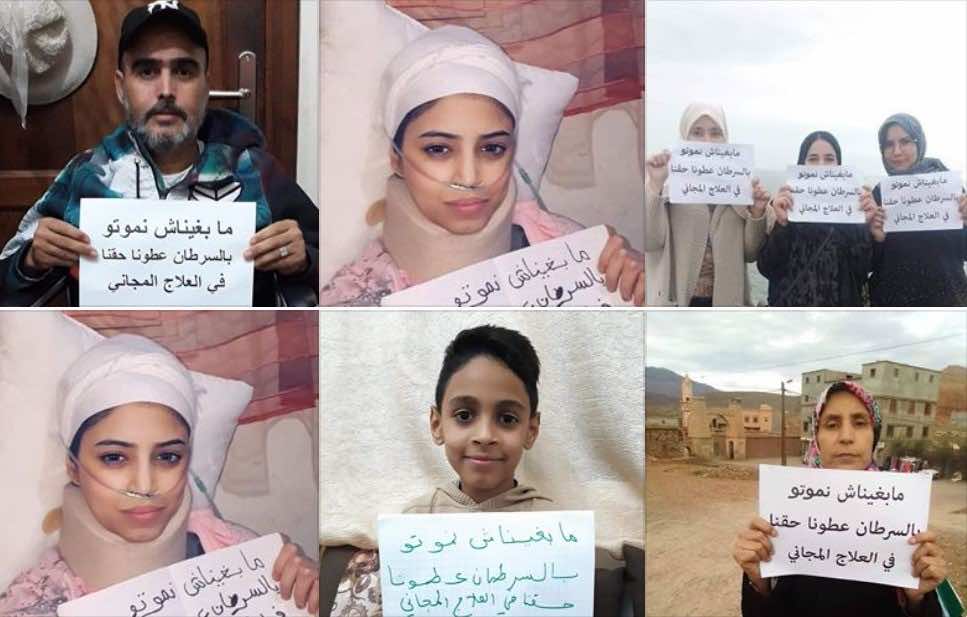
UICC’s campaign aims to highlight the inequality in access to cancer treatment. Cancer patients might be subject to discrimination based on their ethnicity, gender, age, disability, and lifestyle which limits their access to cancer care and increases their mortality risk.
“The ultimate aim of the campaign is to show that such barriers are not set in stone and can be changed through political will and with the support of multi-disciplinary stakeholders,” the statement concluded.
Read Also: In Morocco, Cancer Is More Than an Illness, It’s a Crippling Fear
State of cancer care in Morocco
IHE reported in 2021 that the cancer share among all diseases in Morocco moved from 5% in 2000 to 9% in 2016, putting cancer in fourth place along with mental and substance use disorders, and unintentional injuries.
In Morocco, lung cancer had the highest mortality by cancer type with a 19% share as of 2018. Lung cancer ranked ahead of breast cancer (11%), cervix uteri and colorectal cancers (7% for both), and prostate cancer (6%).
In 2018, Moroccan males with lung, prostate, and colorectal cancers had the highest mortality rates in the country while Moroccan women with breast, cervix uteri, and colorectum had the highest mortality risk.
Morocco along with Egypt recorded the lowest 1-MIR ratio (35%) in 2018. The 1-MR calculates the survival rate of cancer patients from 0% (no one survives) to 100% (everyone survives).
Regionally, lung cancer patients have the lowest survival prospects compared to patients with breast and colorectal cancer. Yet, Morocco’s lung cancer survival rate is 3%, which is the lowest among the selected countries. The 2018 regional average was at 15%.
In the same period, Moroccan cancer patients spent an average of $15 in their direct medical costs, marking the lowest health expenditure in cancer per capita in the nine studied countries.
While Morocco continues to have the highest cancer mortality rates in the nine selected countries, the Moroccan government launched two national cancer plans (2010-2019 & 2020-2029) to ensure efficient use of resources in cancer treatment and lower the cancer mortality risk in the country.