 Join on WhatsApp
 Join on Telegram
Rabat – The American rating agency Fitch issued on Monday a report showing that three of Morocco’s largest banking groups are rated at “BB,” reflecting the banks’ capacity to meet their financial obligations.
The rating factor in banks’ market share, larger economic context, and exposure to risks among other factors.
Attijariwafa Bank
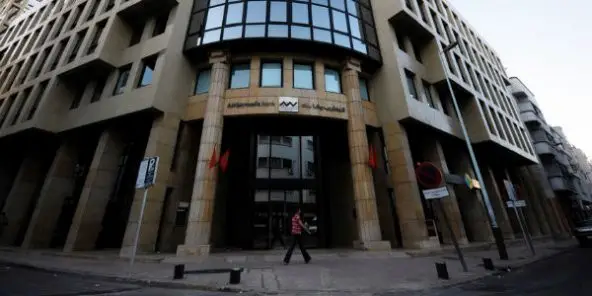
For Attijariwafa Bank, Morocco’s largest banking group, the rating reflects the bank’s resilience and “potential support from the Moroccan authorities,” in addition to the bank’s dominant market share.
According to Fitch, Attijariwafa Bank currently holds a 25% market share in loans and deposits and is a “leader in corporate finance.”
The bank equally enjoys a “stable business model, high management quality, and a good record of execution,” the report said, adding that the Moroccan bank’s wide domestic network and large presence in Africa support the diversification of its business model and boost its resilience.
Noting the bank’s risk profile, Fitch maintains that the risks associated with Attijariwafa Bank’s presence in Sub-Saharan Africa are cushioned by the bank’s robust risk management framework and extensive experience in the markets.
Fitch further notes that the bank benefits from “strong” liquidity, with customer deposits making 82% of total non-equity funding.
Bank of Africa (BoA)
As Morocco’s third largest banking group, Bank of Africa (BoA) derives its resilience from the potential access to state support among other criteria.
Much like Attijariwafa Bank, BoA has a consolidated presence throughout West Africa, reflecting a diversified business model. According to Fitch, however, BoA’s presence in some African markets increases its exposure to market volatility.
The bank’s overseas operations in 32 countries accounted for 51% of the bank’s net income in the first half of 2022.
BoA’s rating mirrors that of national peers but remains below large French banking groups operating in Morocco as they enjoy the backing of foreign shareholders.
In addition to its extensive presence in Africa, BoA holds a significant market share in Morocco at 13%, but it is below that of Attijariwafa Bank, and Banque Central Populaire (BCP).
Credit Immobilier et Hotelier (CIH)
Currently the eighth largest bank in Morocco, CIH’s market resilience stems from its profile as a major real estate lender with a focus on mortgage lending. Fitch assesses that the bank has an “acceptable profitability.”
The bank also enjoys the potential support of the state as it is considered a major player in the country’s banking sector, meaning its default chances are minimal.
Much like BoA and Attijariwafa Bank, CIH’s rating is similar to that of other Moroccan banks, but below that of French banks that benefit from the support of “highly-rated foreign shareholders,” Fitch explains.
The bank has been undergoing a transition in its business model in recent years, attempting to diversify its operations away from real estate loans. CIH transition is proving successful so far as the bank managed to boost its share of non-real-estate loans to 48% of loans at the end of the first half of 2022, up from 31% in 2016.
Morocco’s larger economic environment
Morocco’s Gross Domestic Product (GDP) is expected to grow at 2.8% in 2023 and 3.2% in 2024, down from the strong 2021’s 7.9% rebound. The recession looming over the horizon for Morocco’s largest trading partner, the Eurozone, in addition to drought and high inflation are all expected to weigh on the Moroccan economy.
The Fitch report indicates, however, that Moroccan banks are “likely to remain resilient” as they have navigated the COVID-induced recession and emerged in “reasonable shape.”
Read Also: Africa the ‘New Frontier’ for Moroccan Banks