


 Join on WhatsApp
  Join on Telegram
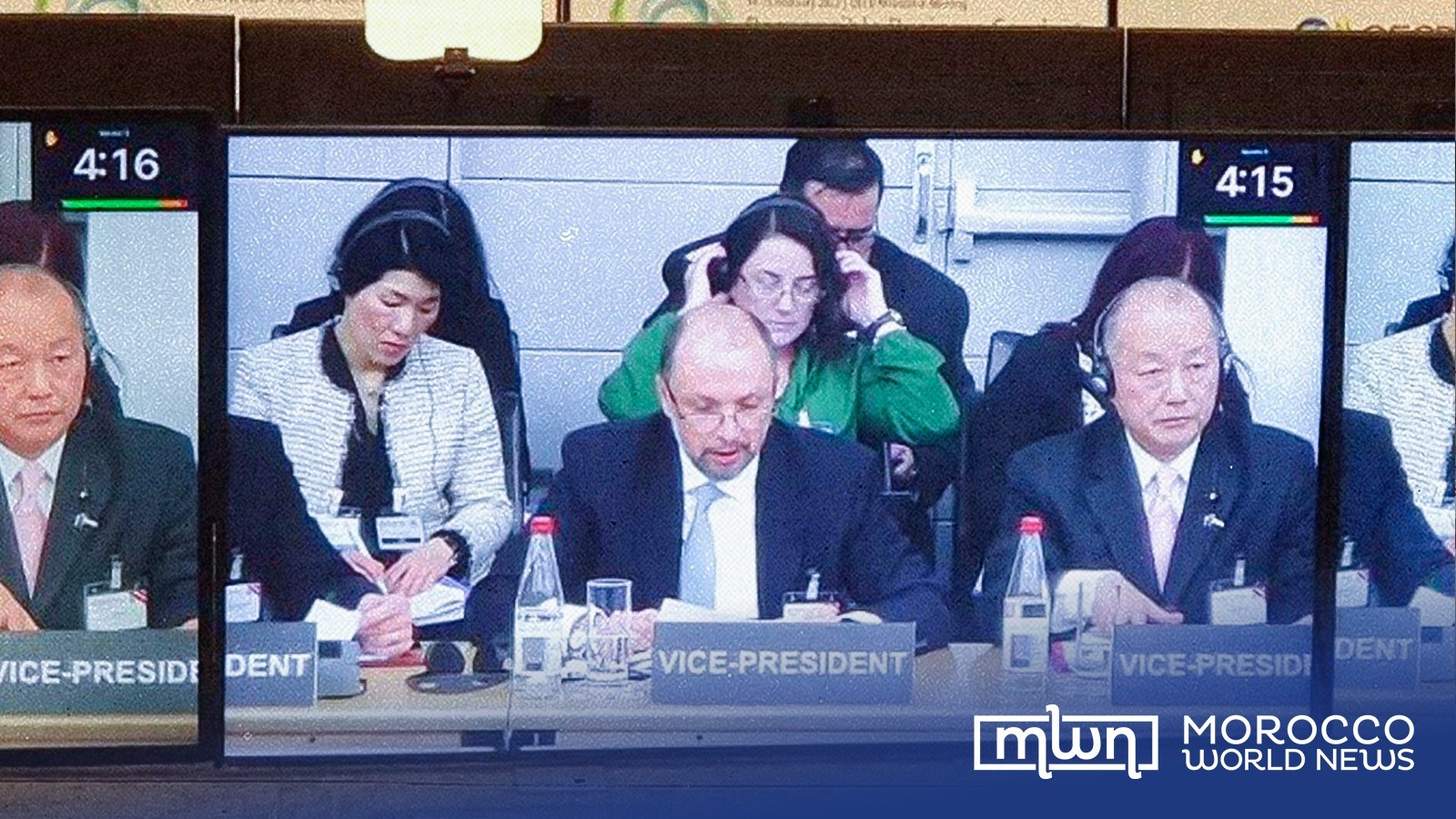
 Rabat – Morocco’s Delegate Minister of Investment Mohcine Jazouli’s speech in English during the OECD ministerial meeting taking place in Paris reflects Rabat’s new foreign policy paradigm.
On Tuesday, Jazouli delivered a speech in English to highlight Morocco’s role in responsible business conduct as a cornerstone for sustainable growth and socio-economic development.
“Our world is changing, and we need to adapt. Uncertainty is at the heart of those changes: driving inflation up, pressuring financing, decreasing productivity, and challenging existing value chains,” the minister said.
On the topic of Morocco’s economic development, Jazouli described it as “proof of a happy globalization.”
He spoke of Morocco’s commitment to sustainable development goals, emphasizing that the country’s efforts reflect its approach to strengthening corporate social responsibility.
“They also highlight its firm determination to undertake the institutional, economic, and social reforms needed to create a more open, transparent, and competitive investment regime and business environment.”
Jazouli also renewed Morocco’s commitment to continue to implement strategic reforms that seek to “unlock the full potential of investors,” with the aim of facilitating the process of entrepreneurship.
The minister then drew attention to Morocco’s determination to work along with partners who share the same values to tackle current challenges.
“Growth can be seen as challenging in the current context. But rather than separate, and exacerbate economic tensions, we should turn to partners who share the same values.” he said.
Jazouli’s Speech in English Reflects Morocco’s Shift from French
For many Jazouli’s language choice in his speech may not seem important, but for observers aware of Morocco’s recent developments – including the Rabat-Paris ties running cold – choosing English was definitely a strategic move.
Moroccan officials often deliver their speeches in Arabic and in French. Recently, however, there has been a noticeable shift towards using English instead of French in symposiums — including in Morocco.
Read also: Moroccan MP Chooses English to Speak About Tension in Europe-Africa
The speech signals Morocco’s shift from the francophone geopolitical and economic axis that has defined the country’s diplomacy and education system over the past several decades. The much-awaited shift has long been demanded by many scholars, public figures, students, as well as many ordinary citizens across Morocco.
Several online campaigns have joined the chorus recently, calling for a move away from French as the main language of education.
One of the latest campaigns took the form of an online petition signed “Yes to linguistic justice in Morocco and No to French.”
The petition argued that teaching children in French is “akin to the final nail in the coffin of the current and future generations.”
The petition harshly criticized the use of French in Morocco, writing: “The usage of French as a language for education is a sign of disrespect for the country’s direction, values, constitution, and language.”
In addition to local support, a 2021 report from the British Council backed demands calling for a shift from French to English.
Surveying 1,211 young Moroccans in 2021, a report by the British Council in Morocco found that the large majority of Moroccan youths see English as an invaluable tool to improve their social conditions.
Weeks of simmering tensions
Jazouli’s speech in English comes amid brewing diplomatic tensions between Paris and Rabat over several controversial decisions from France – including the choice to slash the number of visas issued to Moroccans by 50% in September 2021.
The decision created a backlash among ordinary Moroccan citizens as well as business people, who have continued to condemn the humiliating treatment of visa applicants to France.
In December 2022, France’s Minister of Foreign Affairs Catherine Colonna visited Morocco in an attempt to mend diplomatic ties between the two countries.
During her visit, the French minister claimed that consular services between the two countries have been “fully restored.”
Colonna also stressed Morocco’s importance as a strategic ally for France, touting cooperation with the North African kingdom at different levels — including trade.
France’s ambassador to Morocco, Christophe Lecourtier, echoed similar sentiments recently, denying the existence of any tensions between Rabat and Paris.
Yet as France continued to speak of the full-fledged restoration of good and strategic relations with Morocco, the tone coming from Rabat has been totally different over the past weeks. Moroccans continue to face humiliating and discriminatory treatment while applying for visas.
With Moroccans still facing suboptimal treatment when applying for French visas, a group of associations and organizations have recently renewed their frustration with and condemnation of what they described as France’s humiliating and discriminatory visa policy.
But the visa controversy is not even the main issue that has dictated Morocco’s discernible displeasure with France in recent months.
As foreign policy analyst Samir Bennis has argued in a recent series of articles, France’s ambiguous — and sometimes subtly hostile — position on the Western Sahara dispute is the main reason behind the growing cold snap in Paris-Rabat relations.
Read also: King Mohammed VI Terminates Benchaaboun’s Duties as Ambassador to France
With Paris continuing to hide behind its inconsequential, lip-service support for Morocco’s stance where Washington and Madrid have unambiguously embraced Rabat’s position on the Sahara, Bennis has shown, many in Rabat have increasingly pushed for Morocco to distance itself from the Paris-led francophone axis if influence to instead diversify its base of economic and geostrategic partnerships.
Other Moroccan observers and policymakers have taken the same view over the past weeks, arguing that France’s negative stance on Moroccan interests was the main driver of the hostile resolution adopted late last month by the European Parliament.
January 19, the date of the adoption of the resolution, also marked King Mohammed VI’s decision to terminate the duty of Mohamed Benchaaboun as Morocco’s ambassador to France.
The decision was published in Morocco’s Official Gazette – marking the first time ever such a press release was posted on the gazette’s platform.
Lahcen Haddad, President of the Moroccan-European Union (EU) Parliamentary Group, said last week the adoption of the hostile resolution confirmed that there have always been members within the EP who have a problem with Morocco.
“They used their position to attack Morocco as a platform of high capabilities in an instructional way to attack Morocco,” he argued.


