 Join on WhatsApp
 Join on Telegram
Rabat – Women remain heavily underrepresented in the Moroccan labor force in comparison to their male counterparts, notably in the STEM field. This overwhelming gender gap is mainly due to the burden of gender role stereotypes, which further hinder women’s professional development in many male-dominated sectors.
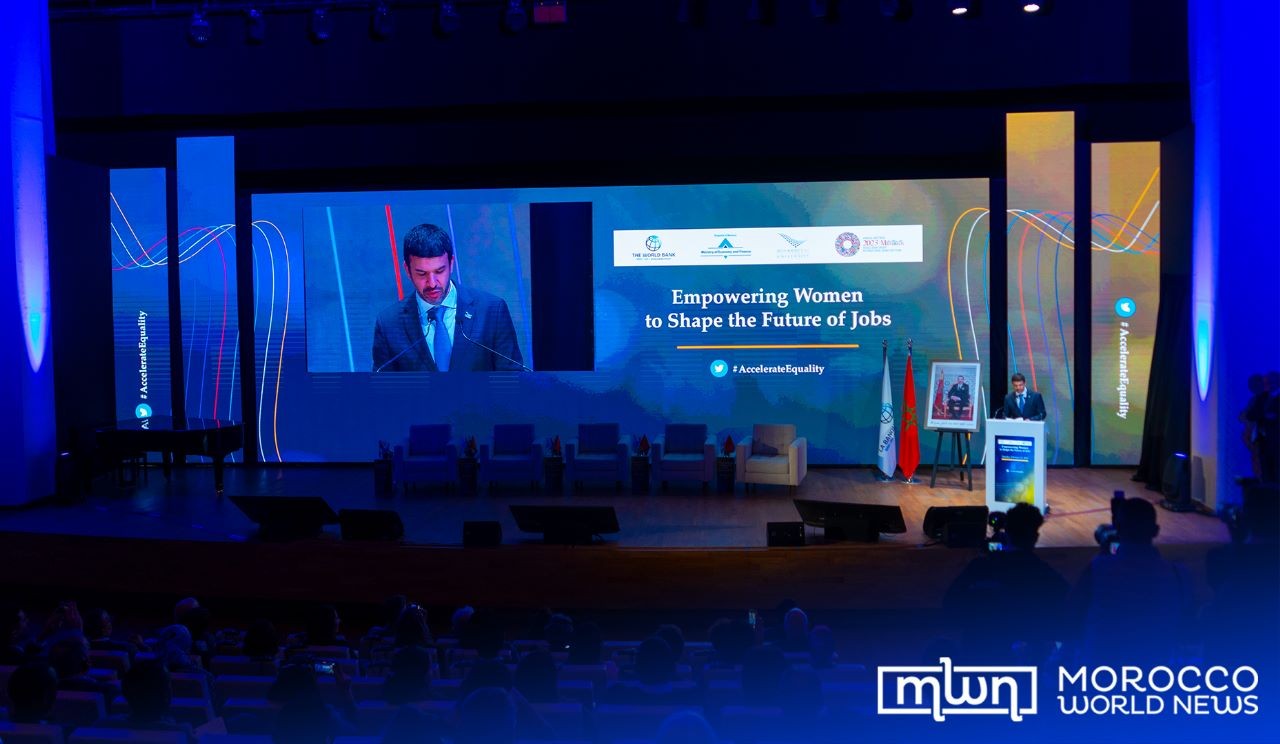
The ongoing UM6P Science Week hosted a seminar titled: “Empowering Women to Shape the Future of Jobs,” to highlight the measures and strategies Morocco and the rest of the world can implement to strengthen women’s presence in the job market.
The event is taking place between February 20 – 26 at the Mohammed VI Polytechnic University (UM6P) in Ben Guerir, under the theme of “complexity.” The Science Week has brought together a selection of the world’s high-caliber scientists, researchers, and academics.
Co-organized by Morocco’s Ministry of Economy and Finance, the World Bank, and the UM6P, the seminar focused on the importance of strengthening women’s economic opportunities, with the organizers saying that it is “essential for sustainable and inclusive growth in Morocco.”
Improving gender equality can “increase productivity and improve development outcomes for future generations and women’s representation in institutions,” said the event’s organizers.
Overwhelming Gender Gap
“Gender gaps in labor force participation persist in all regions and have remained stable over the past three decades,” they stated.
While the global average gap in labor force participation averages at 30%, it is even wider in some regions, including the Middle East and North Africa (MENA), and South Asia, where the gap reaches 56%.
This lingering gender issue poses a significant negative economic impact, as global economies lose around 20% of their GDP per capita due to the gender gap, the event organizers detailed.

Jesko Hentschel, World Bank’s Country Director for the Maghreb and Malta
The seminar comes ahead of the Annual Meetings 2023 of the International Monetary Fund and the World Bank Group, Jesko Hentschel, World Bank’s Country Director for the Maghreb and Malta explained.
The upcoming Annual Meetings will take place in October in Marrakech. It is set to discuss several issues of global concern, including gender inequality and women’s underrepresentation in the workplace, in relation to the current global context.
Read also: Morocco Ranks 136th in Global Gender Gap Index
In this regard, Hentschel indicated that the gender gap also affects how crises, such as the COVID-19 pandemic and climate change, impact men and women. “The Covid crisis has made this issue [gender inequality] worse,” he said, regretting that many girls dropped out of school and gender-based violence increased during the lockdown.
Recognizing the role of women empowerment in achieving development, Hentschel emphasized that it is “key in creating income for families and investing in the next generation.” He gave the example of East Asian countries that have empowered women and encouraged their integration into the job market, arguing that it was crucial to achieving “successful development.”
Not Enough
Meanwhile, UM6P President Hicham El Habti celebrated women’s achievements and integration in the labor market and their access to education but acknowledged that women still have a long way to go to achieve equality in this respect.
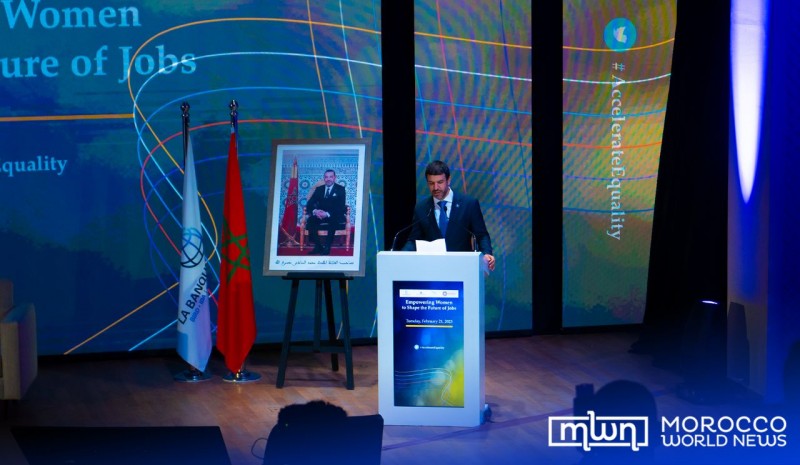
UM6P President Hicham El Habti speaking at the seminar
“Thanks to much advocacy and sacrifice, women across the globe keep conquering their deserved place as full citizens, capable of making an impact,” El Habti said.
However, he highlighted that “gender parity is very much a work in progress,” giving the example of the African continent. He noted that UNESCO estimates that no more than 40% of African girls finish secondary school.
“Gender discrimination is a liability for prosperity,” El Habti stressed, hoping that Morocco and the rest of the world would achieve more gender equality in schools and the workplace.
In this respect, he noted UM6P’s commitment to promoting gender equality, saying that 54% of the university’s student population are women, who major in male-dominated fields such as science, technology, and engineering. “We are aware of our role as an incubator of good citizenship,” he noted.
UM6P Science Week
Morocco’s Minister of Economy and Finance Nadia Fettah, who joined the seminar virtually, echoed El Habti’s statement on the pressing need to accelerate efforts to promote gender equality.
She recalled Morocco’s “commitment” to fighting gender discrimination and promoting women’s leadership. “King Mohammed VI has implemented several gender parity strategies aimed at advancing the status of women in Moroccan society and increasing the opportunities granted to women,” Fettah said.
The Moroccan minister celebrated the monarch’s efforts to increase the number of women in decision-making, support women’s entrepreneurship, and strengthen women’s access to economic opportunities.
Overcoming Gender Barriers
Stressing the importance of addressing the barriers and challenges that deepen the gender gap in education and the workplace, Fettah listed “five priorities” that one should follow to create tangible change.
One of the factors she named was the importance of giving women and girls access to education and training, saying that equipping them with these basic tools could lead to great change and open the door for more opportunities.
In addition, addressing gender biases and stereotypes, which play a crucial role in widening the gender gap, is equally important, the minister noted.
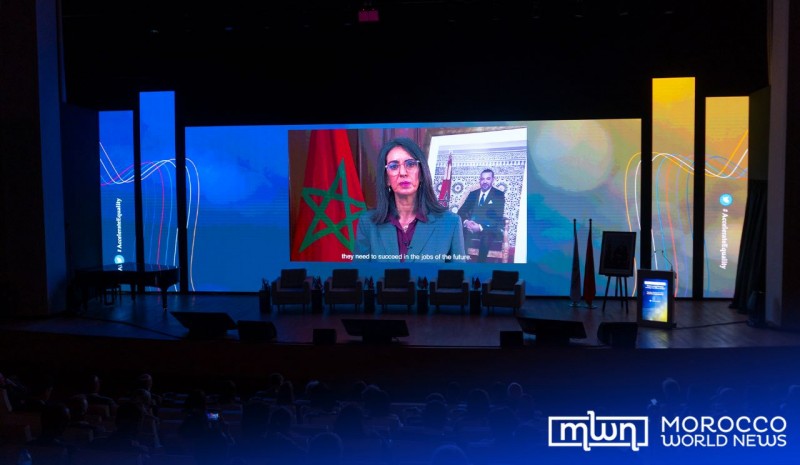
Morocco’s Minister of Economy and Finance Nadia Fettah
Fettah also called for increasing women’s access to mentorship and networks, which would provide them with support, resources, connections, and tools to navigate the workplace.
The minister addressed the lack of “flexible work arrangements” for women to be able to balance their work and personal commitments, saying that it should be a priority to offer women the opportunity to work part-time or remotely.
Fettah concluded by calling for pay equality, regretting that “women are often paid less than their male counterparts for the same job.”
Thousands of participants attended the seminar, both in person and virtually, including students, representatives from the public and private sectors, civil society, diplomatic delegations, think tanks, as well as development institutions.
The panel featured several female speakers from across the world, who shared their experience in overcoming the challenges they faced as women, notably in the workplace, and how they were able to succeed in their professions and reach their goals.
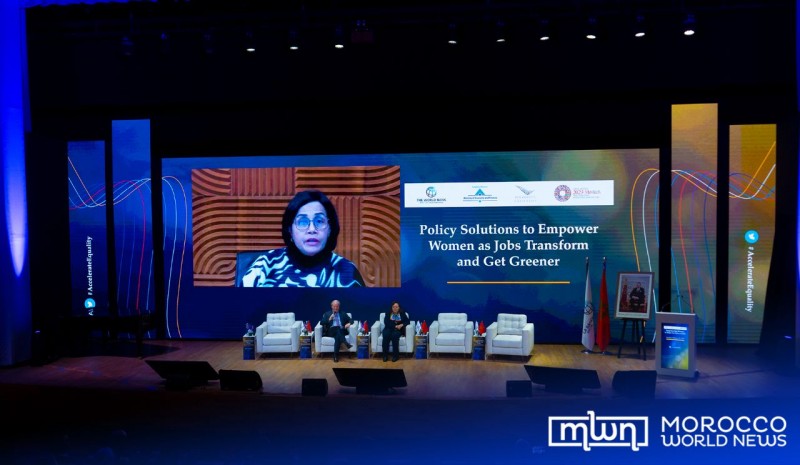
Speakers at the seminar