 Join on WhatsApp
 Join on Telegram
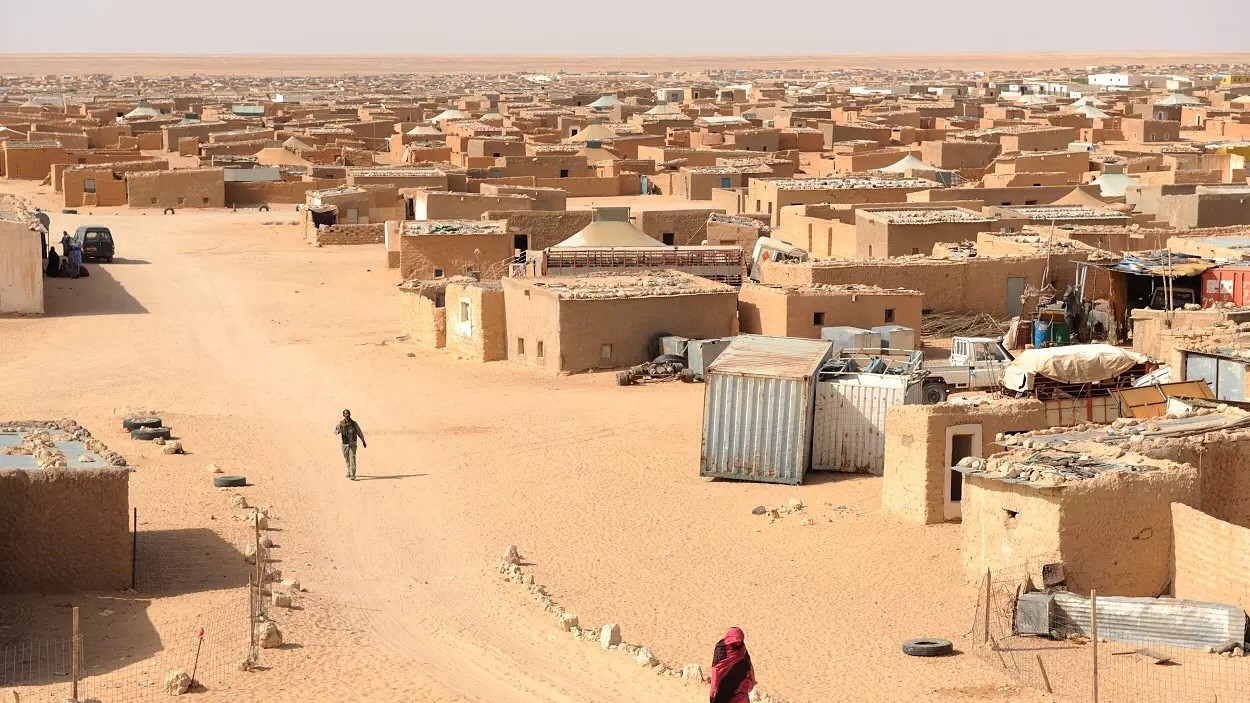
Rabat – While several reports continue to draw attention to the deteriorating living conditions of Sahrawis in Algeria’s Tindouf camps, the situation is compounded by the international community’s inaction as an additional concern.
The World Food Programme’s (WFP) recent report is one of the latest documents that confirm the inhumane living conditions of Sahrawis in Tindouf camps.
The report acknowledged the humanitarian crises that Sahrawis live in, including food insecurity due to the harsh agroecological and infertile soil as well as water scarcity in the Tindouf region.
“For the past 45 years, the population living in the camps has continued to suffer food insecurity and malnutrition, with high rates of anemia due to the scarcity of fresh and diverse food and the limited access to water, and therefore continues to depend on external food assistance,” the report recognized.
The World Food Programme (WFP) report also documents other challenges affecting the Sahrawi population in the camp, including the health crisis amid a lack of health services in the camps as well as insufficient access to drinking water of adequate quality.
“The situation of Sahrawi refugees has not fundamentally evolved over the last 45 years,” the report said, emphasizing that this is due to Polisario leaders’ refusal to allow refugees to engage in activities “that could be perceived as an acceptance of the status quo.”
The report also acknowledged that the independent external evaluation team carried out its assessment under harsh Polisario restrictions.
“An evaluability challenge was that all the participants in interviews, focus group discussions, and home visits were selected by the camp authorities,” the report said.
The report also made clear that Polisario’s restrictions made the experts unable to ensure that “the perspective of all refugee groups were included.”
Despite the concerning situation, the international community failed to address such challenges that Sahrawis face under the watch of Algeria’s regime.
Many experts and officials have condemned the continuous ignorance displayed by Algeria toward the Sahrawi population living in the camps.
Algeria also refuses to allow the conduction of a population census in the Tindouf camps.
The Algerian camps are the only refugee camps in the world where UN agencies have been prevented from conducting a census, which is one of the core functions of the UN High Commission for Refugees (UNHCR).
UNHCR data estimates the population in Tindouf at 90,000. Some activists, including former Polisario members, have emphasized that only 20% of the population in Tindouf are Sahrawis, indicating that the rest of the population living in the camps are composed of Tuareg people, hailing from countries across the Sahara desert, including Niger, Chad, Mali, Algeria, and Libya.
The WFP report is not the first of its kind to point out the plight of the Sahrawi people in the Polisario-run camps.
The UN Secretary General’s 2022 report acknowledged that malnutrition and food crises remain prevalent in the camps.
“The refugees were at risk of serious food insecurity and malnutrition,” the UN report said, stressing the international community’s concerns about the situation amid Algeria’s reluctance to shoulder its responsibility in the Western Sahara dispute.
Other reports over the past decade also linked the distressing situation in the camps to Algeria and Polisario’s embezzlement of international humanitarian aid meant for the Sahrawi population.
One of the reports documenting this was from the European Anti-Fraud Office (OLAF) in 2015. In particular, that report, showcased embezzlement of aid between 2003 and 2017 and exposed Polisario’s direct involvement in selling humanitarian aid in Algerian, Mauritanian, and sub-Saharan markets without any intervention from Algeria, the Tindouf camps’ host country.
Algeria hosts, finances, arms, and backs the Polisario Front, a separatist militia claiming independence in Western Sahara.