 Join on WhatsApp
 Join on Telegram
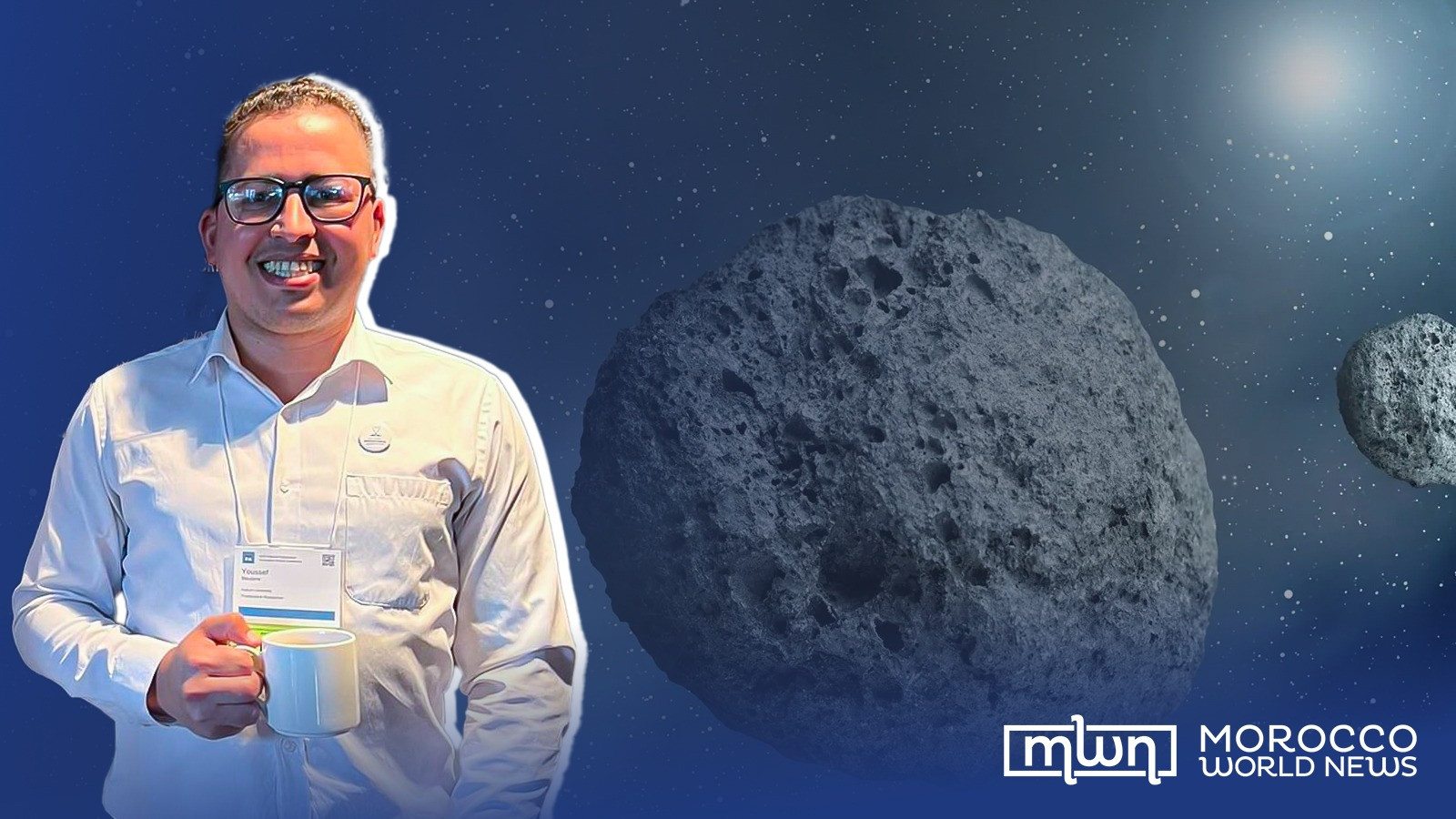
Rabat – An asteroid has been officially named after Moroccan postdoctoral researcher Youssef Moulane at the Comets and Meteors (ACM) Conference.
The conference, held from June 18th to 23rd, 2023, in Flagstaff, Arizona, serves as a prominent platform for discussing the latest developments in the study of asteroids, comets, meteors, and related celestial bodies.
Youssef Moulane, a dedicated scholar and postdoctoral researcher at Auburn University in Alabama, announced the news on his Facebook page.
“Today, as part of their recognition for the contributions made to small body research, the International Astronomical Union has named more than 300 new asteroids after scientists and researchers.” Moulane wrote.
He added: “Among these names, they have chosen mine. The asteroid now bears the name ‘Moulane’ and was discovered on May 30, 2000, at the Lowell Observatory, which happens to be near my current location. Its size measures approximately 18 kilometers.”
The International Astronomical Union (IAU), the authoritative body responsible for designating celestial bodies and their features, selected Youssef Moulane’s name to commemorate his significant contributions to research.
The acknowledgment of Youssef Moulane’s work through the naming of an asteroid after him not only highlights his personal achievements but also serves as a source of inspiration for budding astronomers and researchers worldwide.
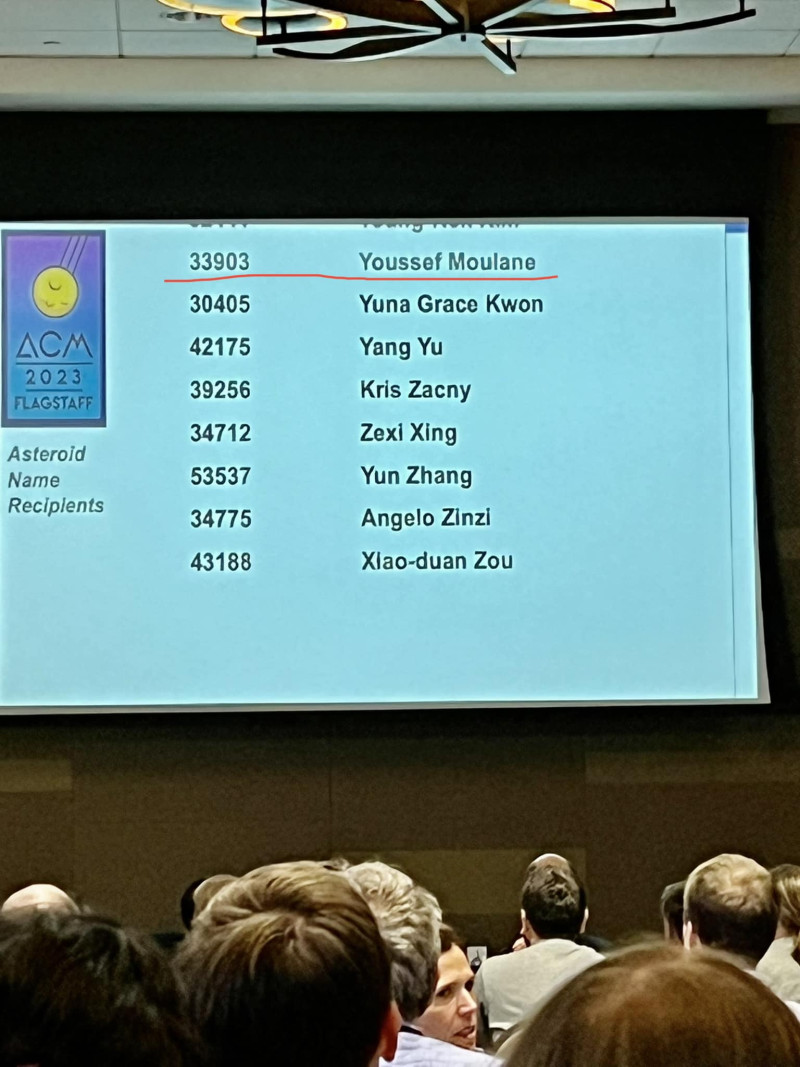
Moroccans sent congratulatory messages and comments to the researcher, expressing pride in his achievements and highlighting the importance of such recognition for scientists who devote their lives to expanding people’s understanding of the universe.
The ACM conference, now in its 14th edition, explores asteroids, comets, meteors, trans-neptunian objects, and other related topics.
Read also: Two Moroccan Scientists Win Prestigious COMSTECH Science Awards
This year’s ACM conference has been particularly significant, with researchers delving into the intricate details of asteroids, comets, meteors, and trans-neptunian objects. Participants have explored various topics, ranging from the composition and formation of these celestial bodies to their potential impact on Earth and their significance in unraveling the mysteries of our solar system.
The conference was initiated in 1983 in Uppsala, Sweden, with the aim of bringing together diverse groups within the asteroid, comet, and meteor communities who often have limited opportunities to interact.
By providing a platform for scientists from various backgrounds to share their findings, the ACM conference has facilitated the cross-pollination of ideas and spurred groundbreaking discoveries in the field of small celestial bodies.