 Join on WhatsApp
 Join on Telegram
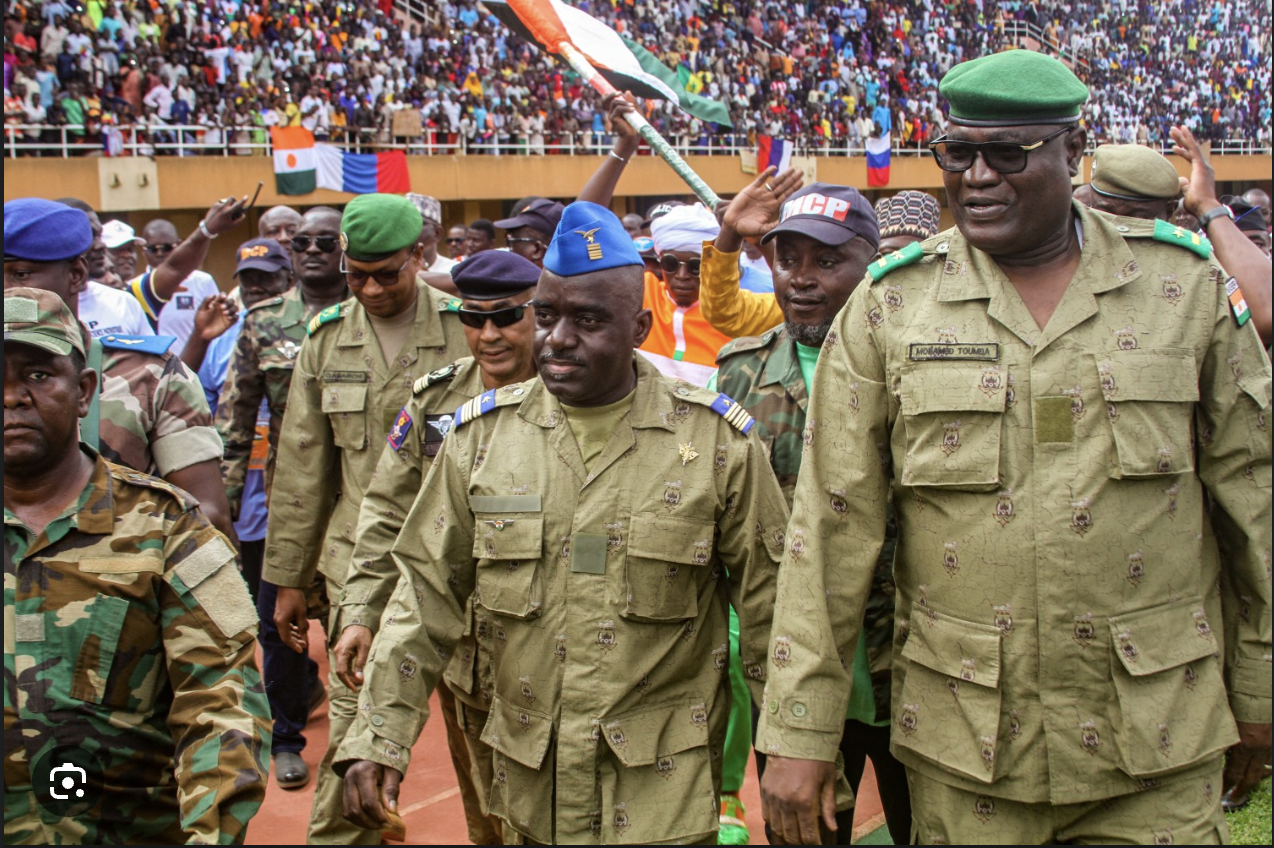
A ‘coup’ by any other name shall still essentially be a change of government by an illegal method. So what’s in a word? So much for the Biden Administration when the word concerned is “coup”. The US is bound by self-made rules to cut off aid and military assistance to a country that underwent a change in government by unconstitutional means. So, the defenestration of Niger’s President Mohamed Bazoum in the last week of July by the Presidential Guard (!) is still not christened a ‘coup d’é·tat’ by America. Well, many others, including the former colonial ruler of Niger – France – think otherwise. The regional grouping – ECOWAS [Economic Community of West African States] – was the shrillest in the criticism of the wayward generals in Niamey. ECOWAS under the leadership of the democratically inclined Nigerian President Bola Ahmed Tinubu lost no time in imposing sanctions and border closures on the landlocked Niger and a military intervention by the Group was to happen if the putschists did not back out in a week. Indeed, the rest is history so far as the brave words were not followed by an action – rightly so perhaps as ECOWAS is not NATO!
The coup leaders have not been in any considerable conciliatory mood right from day one. Bazoum, elected after a proper election – a rare phenomenon in this part of Africa – in 2021, has been under detention along with his family. Though initial reports suggested he was denied food and medicines, of late things seem to have improved. He has in fact approached the ECOWAS court (located in Nigeria) with a plea to reinstate him. Obviously, it’s an exercise in futility as the men in uniform at the helm in Niamey are not amenable to court verdicts. Still, it is reassuring that Bazoum, who was charged with treason by the new regime, is at least able to knock on court doors outside the country (through his lawyers).
Other than allowing Bazoum to physically exist, the usurpers have not shown any other sign of reconciliation. In fact, the threatened use of force by ECOWAS produced a tough message from Niamey to counter any such misadventure and also made neighboring coup-born governments of Burkina Faso and Mali declare their support to Niger. “Any attack on any one of us shall be construed as an attack on all others…” was also touted, borrowing a leaf from the NATO rule book! In fact, better sense seems to have prevailed as there is no more talk of an armed approach from ECOWAS – instead ‘diplomatic’ means have been the thread from which negotiations, if any, have so far been conducted. The coup leaders have spoken about a 3 year period apparently to set the country in order and then order fresh elections.
At this stage, it is pertinent to look at the role and relevance of France in the unfolding drama. Out of more than half a dozen coups experienced by Africa since 2021, ‘Françafrique’ or former French colonies lead the table. Invariably, each such rebellion has produced a new dispensation that is anti-France. It’s safe to assume that France miserably failed to read the room populated by its former outposts. Niger added itself to the elongating list. There have been vocal demonstrations in front of its embassy and military base housing soldiers asking France to exit, including pulling out the troops it had on Niger soil. Paris, however, has been taking a very tough stand stating that they only recognize Bazoum’s deposed government. In fact, the European Union (EU) and ECOWAS also held similar views.
The standoff went to such an extent that the French Ambassador was asked to leave Niger in August, closing his mission within 48 hrs. He and his aides have been virtual prisoners in the embassy since then as the Niger forces were disallowing entry or exit. As I write this, the news is trickling- down that President Macron at last has taken the belated right decision to close the embassy and pull out around 1,500 troops from Niger. Better late than never! Niger thus became the third, after Mali and Burkina Faso, to get rid of French troops. Well, there have been some analyses as to why and how France failed to win a single friend among its previous protectorates. The holier-than-thou approach apparently is disliked by the now independent nations and the sooner the better for Macron to correct thecondescending approach! The growing disaffection to the former ruler even in a moderate country like Morocco is a testimony, if any needed, to the French reaping what they have been sowing!
So what next in Niger? Can West write off the last ray of hope for democracy and the rule of law in the Sahel region into which the US and France have pumped in millions of moolah for defense and developmental needs? Will Niger become again the hotbed of militants like ISIS? Can the now headless Wagner forces (and in effect Russia) bag one more nation to peddle their ‘protection/ minerals’ barter?
The reluctance of America to designate the Niger episode as a coup, after all, seems a wise decision in hindsight. Refusing to call a spade a spade also has its benefits! Not that the US recognized the junta- far from it. It just desisted from naming the nefarious action of the generals as a ‘coup’ which enabled America to continue keeping the troops and aid was just paused, not withdrawn. The carrot of normalization was kept dangling! Did the soft approach bring the mutineers to the negotiating table? Well, not exactly.
The US had sent its envoy – Victoria Nuland, Acting Deputy Secretary of State – in the very early stages of the rebellion to Niamey. While the junta gave her an audience, she couldn’t meet either Bazzoum or their leader General Abdourahmane Tchiani. In fact, she was informed that if ECOWAS were to carry out a military intervention, Bazzoum would be killed. Of course, none of these happened. Many pro-coup demonstrations followed; Russian flags were seen more frequently and Niger along with the same-boat coup neighbors formed a ‘mutual defense pact’ earlier this month. The envoy of the junta was not given accreditation to address the UN General Assembly last week. ECOWAS stopped making military noises and instead sent some emissaries with not much luck in softening the coup leaders. Confirming everyone’s apprehension, Jihadis did take advantage of the vacuum and attacked Niger forces killing at least 17 in August. In the midst of all these, the living conditions of the people deteriorated steadily with the power cut imposed by Nigeria and price escalation in view of the shortages.
The US seems to have held onto the thin thread of hope and its 1000-odd troops still remain in Niger. President Biden held discussions with visiting African leaders, especially of ECOWAS honchos like Tinubu in an effort to find a solution other than a military option – the US clearly not in favor of an armed intervention due to the doubtful efficacy of such an operation in reversing the coup. On the contrary, a larger conflict that benefits no one but terrorists may erupt in the region.
A solution apparently shall be for the junta to release Bazoum, drop all charges against him, and make him wait till the election promised by the de facto rulers. Whether 3 is a long period for a turnaround shall be a point of discussion with Tchiani & co. The junta, more out of their own interest, will have to approve counterterrorism operations by the US and other Western forces till Niger’s forces gain enough training and firepower. Oh, yes Wagner forces also shall be a taboo for the generals. Worth noting that most of the coup leaders anywhere in the world initially promised a time-bound election and return to democracy once they achieved the goals that were the ostensible reason for the coup, to begin with. The period sought usually is 1 to 3 years. Usually, the system is so much manipulated in the interregnum that the General at the helm initially sheds his uniform to get the sheen of a civilian leader who, by definition, easily wins the election. The process is nowadays likened to a change of black money to white by money laundering – hence the coinage ‘Coup Laundering’.
The US seems to be seeking a coup laundering in Niger as a lesser evil compared to a destructive military intervention of one of the poorest countries in the world. One can only wish for the best outcome!
Elsewhere in Africa, there was yet another coup on 30th August – in the oil-rich Gabon the Bongo dynasty ruling for more than 55 years was overthrown again by Presidential Guards or whatever they call the innermost group protecting the head of state. Ali Bongo had just ‘won’ another election considered fraudulent by almost everyone. There was a wholehearted welcome within the country to the coup – Gabonese thought that to be a ‘salvation’ from a kleptocracy. The new rulers have released Bongo from detention with permission to go abroad for treatment. Also, the coup laundering time sought is shorter at 2 years.
The West including the Commonwealth in which Gabon is a member initially made boilerplate statements condemning the coup, but the apparent realization of the relief people feel in Gabon has made everyone quiet. The Commonwealth in fact has ‘agreed’ to the 2-year gestation period for the next fair election.
The better part of the valor is obviously discretion – so coup laundering can be tolerated when there is a doubt if what happened is really a coup in the first place!
Read Also: Morocco Stresses Importance of Maintaining Stability in Niger