

 Join on WhatsApp
 Join on Telegram
Marrakech – After the devastating 6.8 magnitude earthquake hit the Marrakech area on the night of Friday, September 8, there was a swift and heartening response from the international community.
The quake’s epicenter was in the High Atlas Mountains region, with rural mountain communities like Al Haouz being the hardest hit. With more than 2,122 confirmed fatalities and 2,000 injured, the earthquake marks Morocco’s most severe quake in nearly 60 years.
The Interior Ministry of Morocco has been delivering statistics on casualties as the numbers update, as well as instructions for residents. King Mohommad VI also ordered the formation of a commission to investigate the source of the earthquake and to deploy all necessary and possible aid to communities in affected regions.
The monarch also declared three days of national mourning for the victims of the devastating disaster.
Seen in Marrakech today, Abdellatif Hammouchi, Head of the General Directorate for Territorial Security (DGST), arrived to further investigate, administer information, and liaise between the King and officials in Marrakech. The streets of Marrakech, known for their bustling and vibrant life, now bear the scars of this natural disaster. Iconic attractions such as Bal Elmaleh, the intricate souk alleyways, and the renowned Jemaa el-Fnaa square are marred by piles of rubble and collapsed building domes. Mosques and multi-level buildings have borne the brunt of the devastation, and entire streets remain impassable due to debris.
Survivors recount the harrowing two-minute ordeal as the earthquake struck and they were forced to flee their homes. Many abandoned their residences so quickly that they were without shoes, wallets, or any necessary personal items.
Marrakech returns to life
Despite the apocalyptic conditions, tourists and locals persist, wandering through the souks and even climbing over the remnants of the destruction. Meanwhile, vendors whose businesses were spared continue with their daily routines.

Restaurants and cafes, while mindful of the hazards, continue to bustle with patrons. Authorities have cordoned off hazardous areas while reporters set up their stations in front of debris, highlighting the destruction of lives and structures throughout the city.
As night falls, families gather in squares and parks that have been transformed into mass makeshift shelters. Rows of mattresses and pillows are clustered together alongside personal belongings, a stark reminder of the hundreds of thousands of residents rendered homeless by the quake.
For some, sleeping outdoors is not a choice but a necessity. Others, too frightened to seek refuge in buildings, prefer to brave the elements rather than risk being trapped indoors during aftershock tremors.
The city’s busier streets are now lined with service vehicles. Waves of authorities tirelessly patrol the area, assessing the extent of the damage and rendering assistance where it is needed most urgently.
Moroccan solidarity
Two men, Abdallah ait Iguarde and Soufiane Hijab, have set up near Hay Iziki V, where they have jumped into action to enlist aid for their community.
With the help of their neighbors, they are collecting boxes of water, soap, coffee, flour, and rice. They are in need of clothing, food, and any form of transport to get these items to heavily affected rural areas. Abdallah and Soufiane are one strong example of many Morroccans who have taken initiative.

Read Also: Morocco Earthquake: Red Cross Allocates Over $1 Million for Rescue Efforts
Throughout the rest of Marrakech today, truckloads of water and food navigated through the blocked off streets to get to groups of those displaced.
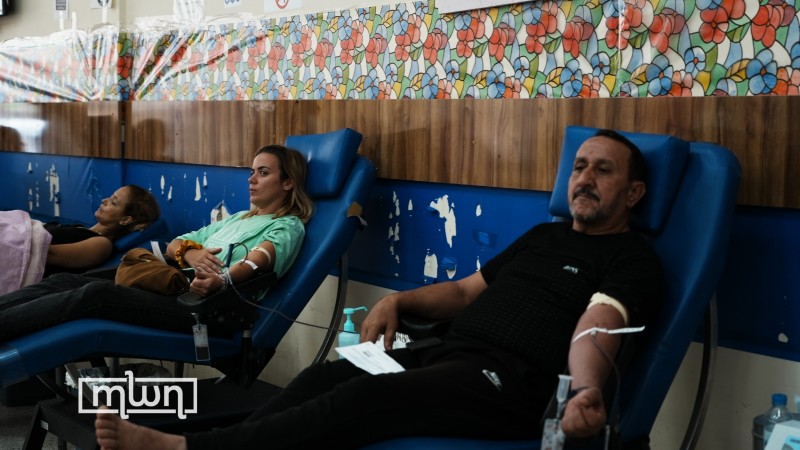
Marrakech’s Blood Transfusion Center has been crowded with people eager to donate blood. With over 6,000 bags donated so far, people hailing from a variety of backgrounds wait patiently in line.
Football teams, mothers, associations, and entire families are seen lining up outside the corner of the center. Blood donation is currently critical for the volume of victims. The blood transfusion center boasted efficient, compassionate, and patient medical workers.
Aid from around the world
In the wake of the catastrophe, the world has rallied behind Morocco, offering aid and condolences while Moroccan authorities and communities continue to lead in aid efforts. Nearly every region of the world has offered aid to Morocco.
Tunisia, Spain, the United States, Turkey, and Taiwan have offered boots on the ground with expertised rescue-workers. France, Canada, the Netherlands, and the UAE have also offered condolences and aid to the disaster-stricken country.
Even Algeria, in the midst of a years-long impasse with Morocco, suspended its no-fly zone to allow the transport of aid.
Figures such as Pope Francis and footballers like Lionel Messi and Cristiano Ronaldo also offered their condolences to the families affected by the hardship.
The African Cup of Nations postponed the game between Liberia and Morocco, while Badr Hari canceled his fight, and the Eiffel Tower switched off its lights to honor victims of the earthquake.